
How to Talk to Kids About Mistakes Without Shame
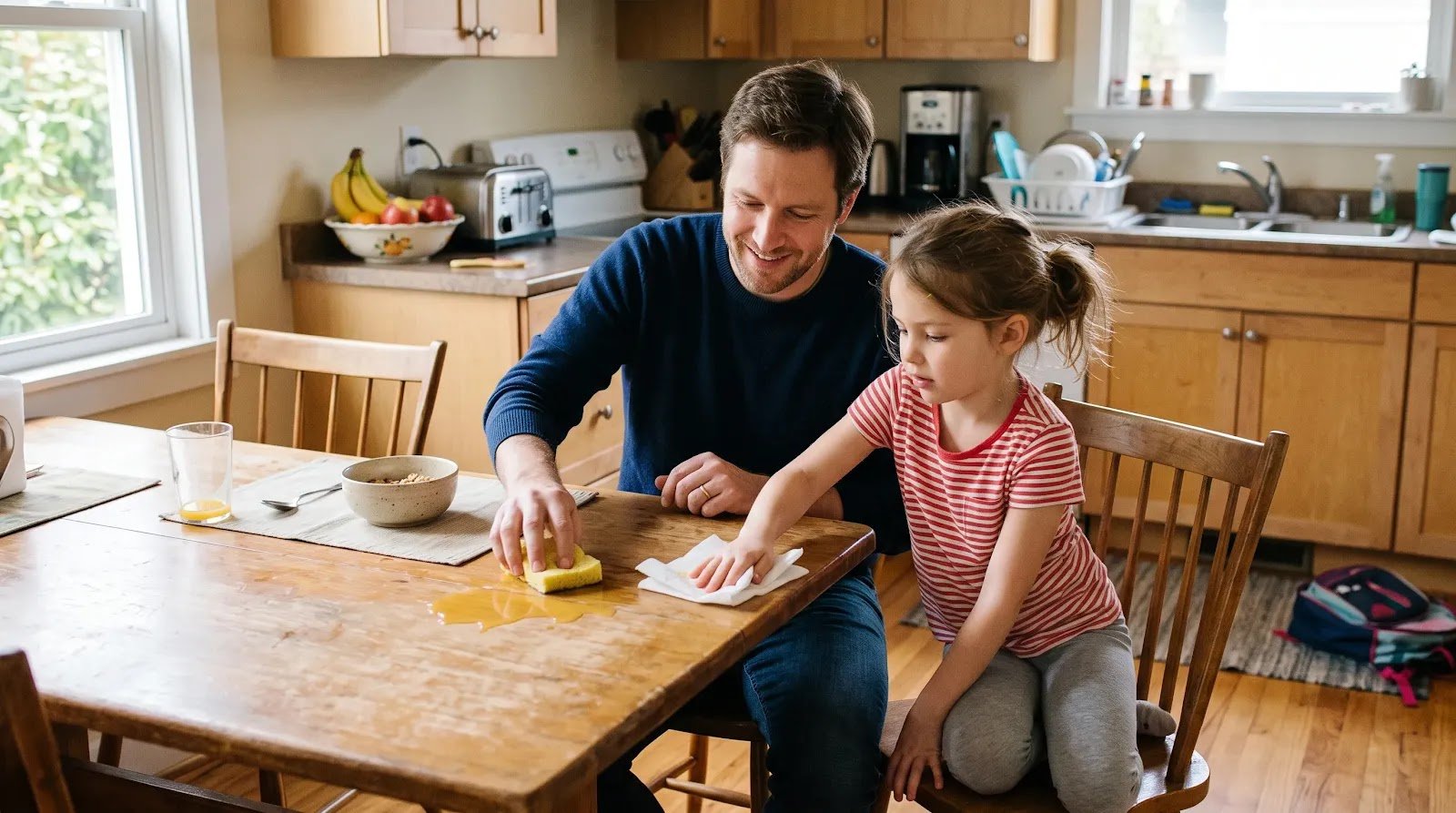
Your child spills something, forgets an important responsibility, hurts a sibling’s feelings, or makes a choice they already knew was not okay.
You need to address it.
But you do not want one mistake to turn into:
“Something is wrong with me.”
Talking about mistakes without shame does not mean ignoring the behavior, protecting children from every uncomfortable feeling, or removing reasonable consequences.
It means keeping the correction focused on:
What Happened → Impact → Repair → Next Time.
The mistake stays important without becoming the child’s identity.
Talk About the Behavior, Not the Child
When you are frustrated, one description can quietly become another.
Compare:
- “You’re careless.” → “The drink was left close to the edge and spilled.”
- “You’re irresponsible.” → “The library book wasn’t returned when we agreed.”
- “You’re always mean to your brother.” → “Calling him that name was hurtful.”
The second version is not softer about what happened.
It is more specific.
Specific behavior can be understood, repaired, and changed.
A character label gives the child much less useful information.
The American Academy of Pediatrics recommends discipline that teaches appropriate behavior and advises parents to avoid yelling, humiliation, insults, and shaming. Its positive-discipline guidance also encourages parents to model how to acknowledge and recover from their own mistakes.
Use a Four-Part Mistake Conversation
Most everyday mistakes do not need a long lecture.
Walk through four questions instead.
1. What Happened?
Name the behavior or let your child briefly describe it.
“You borrowed your sister’s markers without asking, and several were left uncapped.”
2. What Was the Impact?
Connect the behavior to what happened next.
“Some of the markers dried out, and she’s upset because they belonged to her.”
3. What Needs Repair?
Move toward action.
“Let’s cap the ones that still work, return the set, and figure out how to make this right with her.”
4. What Can Happen Differently Next Time?
End with a usable alternative.
“What can you do before using somebody else’s things next time?”
The conversation still holds the child accountable.
But most of its energy goes toward understanding and repair—not making the child feel bad enough to prove that the lesson worked.
Separate an Accident From a Choice
Not every mistake needs the same response.
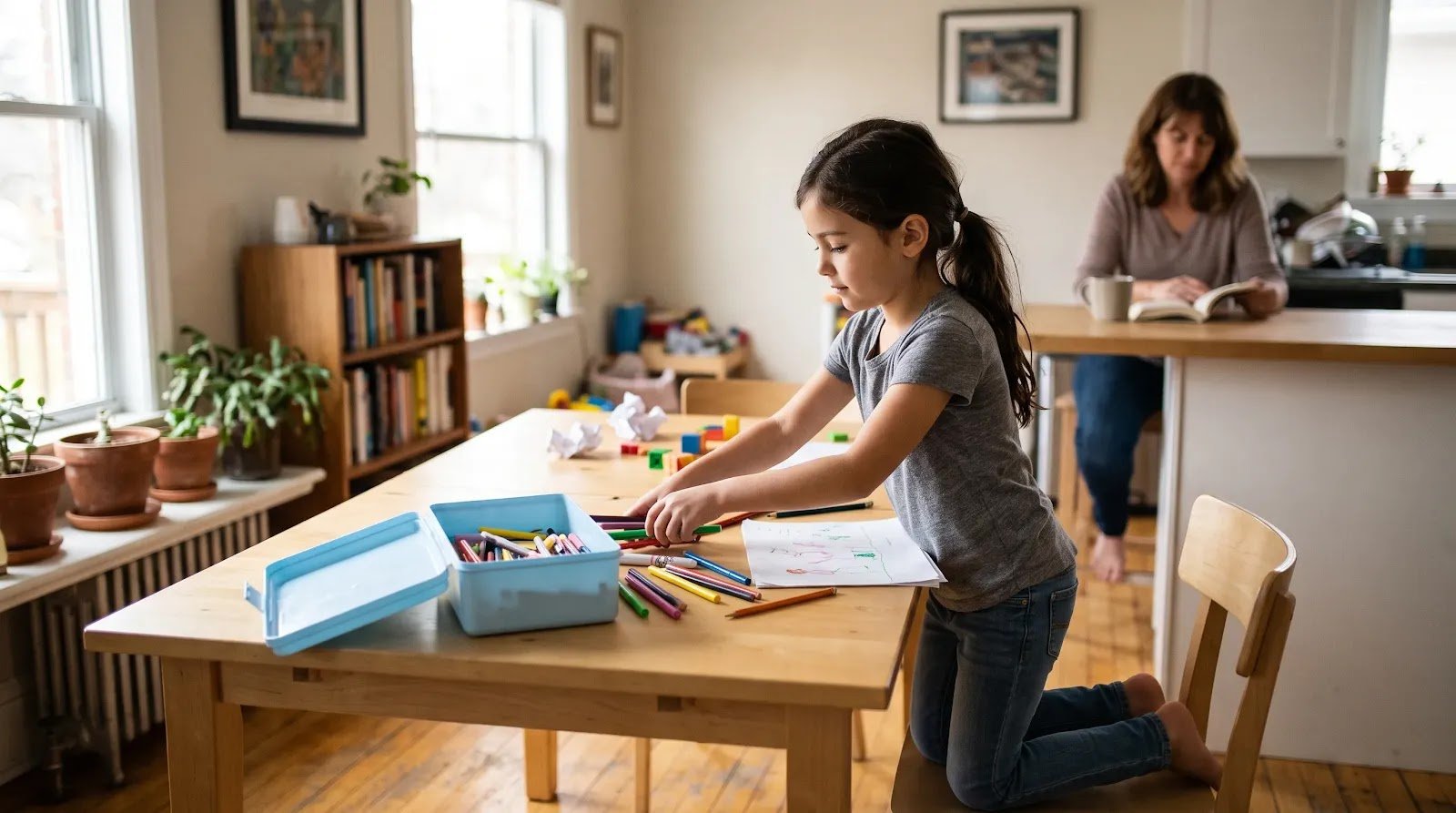
A child reaches across the table and accidentally knocks over a drink.
The useful response may be:
“Let’s get a towel and clean it up. Next time, move the glass before reaching across.”
Now imagine the child deliberately throws the glass after being told to stop.
That involves a different level of responsibility and may need a consequence as well as repair.
Before reacting, ask:
- Was it accidental or intentional?
- Did the child understand the expectation?
- Was anyone hurt or was something damaged?
- What can the child reasonably repair?
- Does this situation need practice, a consequence, or simply another attempt?
Shame is not required in either case.
But neither is pretending that an accident and a deliberate choice are identical.
Do Not Confuse Feeling Bad With Learning
Your child may feel disappointed, embarrassed, guilty, frustrated, or regretful after a mistake.
You do not need to erase every uncomfortable feeling.
But discomfort is different from a global conclusion such as:
“I’m stupid.”
“I’m a bad kid.”
“I ruin everything.”
HealthyChildren.org’s guidance on healthy self-esteem encourages helping children see mistakes and setbacks as part of learning rather than experiences that leave them feeling defeated.
You can say:
“That wasn’t an okay choice. Let’s figure out how to fix it.”
Or:
“You made a mistake. You’re still responsible for what happened, and we can work out the next step.”
Or, when your child starts attacking themselves:
“You can be upset about what happened without calling yourself stupid.”
Keep Consequences About the Behavior Too
A no-shame approach can still include consequences.
If your child damaged something intentionally, ignored a clear safety rule, or repeatedly chose behavior they understood was not acceptable, a reasonable consequence may be appropriate.
Keep it connected to what happened.
For example:
A child who misused an item may temporarily lose access to that item.
A child who damaged property may participate appropriately in repair or replacement.
A child who cannot use something safely may need another chance later rather than continued access right now.
Avoid turning the consequence explanation into a character judgment:
“You can’t be trusted with anything.”
Keep it specific:
“The controller was thrown, so you’re done using it for today. We’ll talk about how to handle frustration before you use it again.”
If consequence conversations tend to become long speeches, how to explain consequences without lecturing covers that next step.
If Your Child Gets Defensive, Make the Conversation Smaller
You begin talking about the mistake.
Your child immediately says:
“It wasn’t me.”
“I don’t care.”
“You’re blaming me for everything.”
Do not automatically respond by making the conversation longer.
State what you know and identify the next necessary step.
For example:
“We’re not deciding whether you’re a good kid. We’re dealing with what happened to the broken toy and what needs to happen now.”
If everyone is too angry to speak constructively, pause when it is safe to do so and return when the conversation can be useful.
The important part is returning—not turning “we’ll talk later” into permanent avoidance.
Do Not Turn One Mistake Into a Lifetime Pattern
Words such as always and never can make a correction much bigger than the current problem.
Compare:
“You never take care of anything.”
with:
“Your bike was left outside again after we agreed it would go in the garage.”
If a pattern genuinely exists, address the pattern directly.
But use actual information:
“This has happened three times this week. The current reminder system isn’t working, so we need a different plan.”
That is different from using previous mistakes as evidence that the child simply is irresponsible.
Match the Conversation to Age
Younger children: Keep correction concrete and close to the event.
For example:
“The block hit your brother. Blocks stay on the floor. Let’s check that he’s okay and pick them up.”
Long discussions about character, intent, and responsibility may lose a young child before you reach the useful part.
School-age children: Begin asking more about impact and repair.
“What happened? Who was affected? What do you think needs fixing?”
Tweens and teens: Give more room for their version and for them to participate in deciding a reasonable repair or future plan.
“Tell me what happened from your point of view. What do you think needs to happen now?”
Older children can have more ownership without parents giving up necessary boundaries.
Catch Character-Judgment Language Before It Takes Over
Frustrated parents sometimes reach automatically for:
- “What’s wrong with you?”
- “You always ruin things.”
- “You should know better.”
- “I can’t believe you did that.”
- “You’re the irresponsible one.”
Try returning to three concrete pieces:
Behavior → Impact → Next Step.
You do not need perfect wording.
Parents make communication mistakes too.
If You Shame Your Child, Repair Your Part
You are angry and say:
“You’re so careless.”
Later, you realize the label was unfair.
You can come back without erasing the child’s responsibility:
“I was angry, and I called you careless. That wasn’t a fair way to speak to you. We still need to deal with what happened, but I want to do that without calling you names.”
AAP guidance encourages parents who handle a situation poorly to cool down, apologize, and explain what they will do differently next time.
That does not weaken accountability.
It models it.
Once the Mistake Is Handled, Let It End
Your child acknowledged what happened.
The reasonable repair was completed.
The consequence, if any, was handled.
Do not keep reopening the mistake during unrelated disagreements:
“This is exactly like what you did last week.”
If the behavior keeps recurring, address the recurring pattern.
But if this mistake has been handled, allow it to become past tense.
If your larger goal is teaching the full accountability process—not just improving the language around correction—how to teach kids to take responsibility for mistakes focuses specifically on ownership, repair, and what happens next.
Keep the Problem the Size of the Mistake
A mistake can matter.
It can require an apology.
It can require repair.
It can sometimes require a consequence.
None of those require turning the mistake into a verdict on who your child is.
Return to:
What happened?
What was the impact?
What needs repair?
What can happen differently next time?
The message becomes:
“This choice needs attention—and you are capable of dealing with what comes next.”