
What to Do When Your Child Stalls at Bedtime Every Night
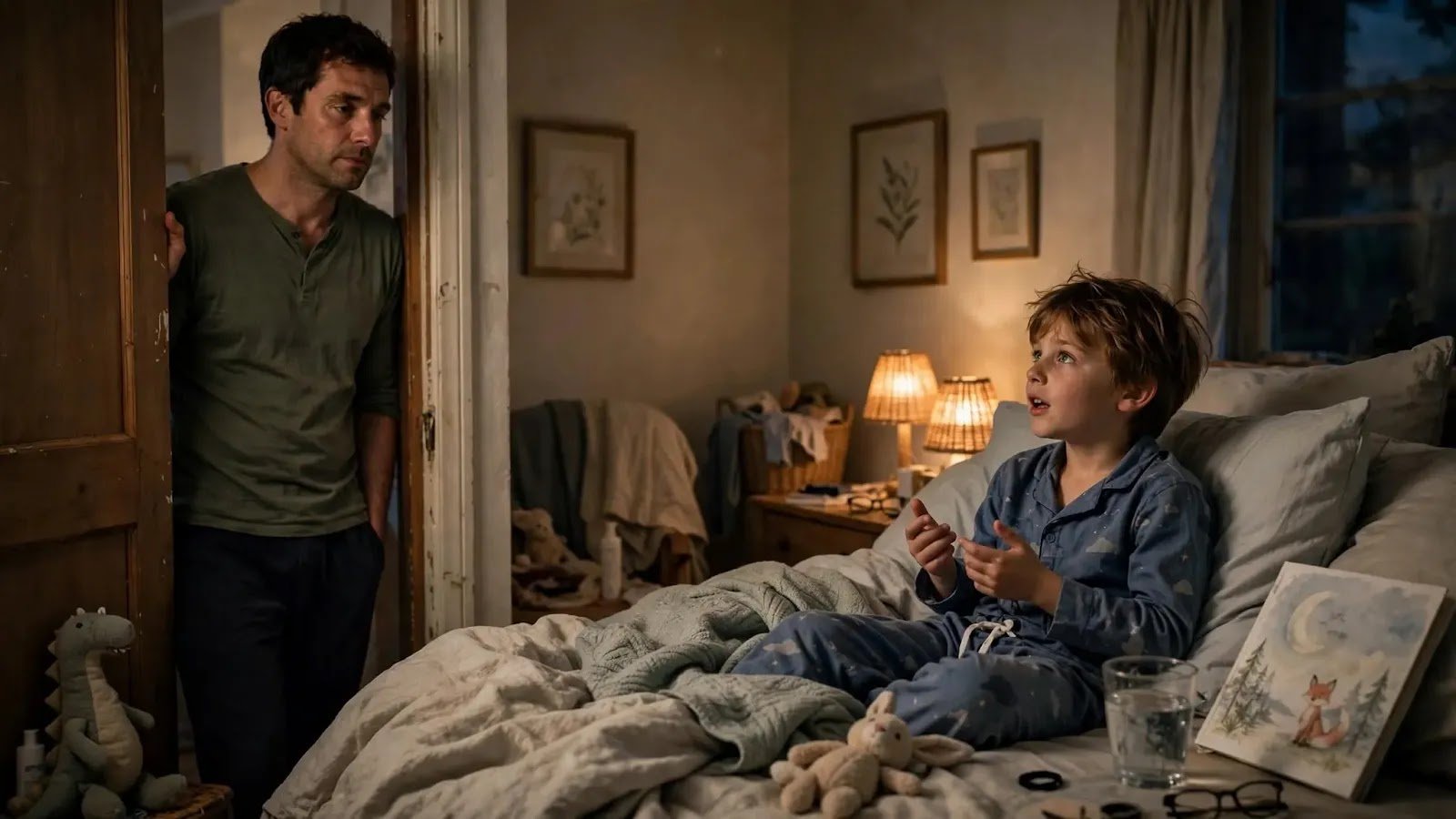
The teeth are brushed. The story is over. You’ve done the hug, fixed the blanket, turned on the night-light, and said goodnight.
Then comes the water request.
Two minutes later: “I have to tell you something.”
Then another bathroom trip. Then a foot appears in the hallway.
When bedtime keeps reopening after it should be finished, making the routine longer usually does not help. The more useful approach is to handle predictable needs before lights out, make the endpoint unmistakable, and respond to ordinary delays in the same calm, uninteresting way each time.
First, Make Sure the Routine Is Actually Finished
Bedtime stalling and a poorly structured bedtime routine are related, but they are not the same problem.
If evenings have no predictable order, screens continue until lights out, or bedtime changes dramatically from night to night, fix the routine first. Our guide to creating a bedtime routine kids can actually follow covers that part.
This article starts one step later: pajamas are on, teeth are brushed, the usual connection has happened—and your child is still finding reasons for bedtime not to end.
Take Care of the Requests You Can Predict
Some bedtime delays happen with such consistency that they should simply become part of the routine.
If your child asks for water every night, handle water before goodnight. If they regularly need the bathroom five minutes after lights out, make a final bathroom trip one of the last steps. Settle the night-light, door position, favorite stuffed animal, and other ordinary comfort needs before announcing that bedtime is finished.
HealthyChildren.org’s guidance on bedtime trouble similarly recommends taking care of predictable comfort needs before bed.
A quick final check can be enough:
- Bathroom?
- Water?
- Comfort item?
- Night-light or door settled?
- Final hug?
Then close the routine clearly:
“Everything is ready. Goodnight. It’s time to stay in bed.”

Give Bedtime a Finish Line
Some routines have plenty of steps but no real ending.
One book becomes two. A question becomes a conversation. One hug becomes another trip back to the room. The child never knows which “goodnight” is actually the final one.
Decide beforehand what belongs in the routine:
Bathroom → teeth → one book → hug → lights out.
The American Academy of Pediatrics’ guidance for school-age children recommends keeping bedtime routines manageable, limiting choices, and generally keeping the routine to about 30 minutes rather than allowing it to expand indefinitely.
If you decided on one story, another story does not become part of tonight’s routine because it was requested persuasively.
“Not tonight. We’ll read that one tomorrow.”
Then stop explaining. A five-minute explanation about why bedtime is over is still five more minutes of bedtime entertainment.
After Goodnight, Make Ordinary Stalling Boring
Your child calls out:
“Mom?”
“Why do dogs dream?”
At 3 p.m., that could be a wonderful conversation. At 9 p.m., it can wait.
Try:
“Good question. We’ll talk about it tomorrow. Goodnight.”
The same principle applies to ordinary requests that have already been handled. You do not need to prove the request is unreasonable or catch your child “stalling.” Just avoid turning it into a new event.
This is where firmness can be quiet. If holding the line tends to turn into long arguments, setting firm limits without being harsh may help with the broader skill.
If Your Child Comes Out, Return Them Without Starting Over
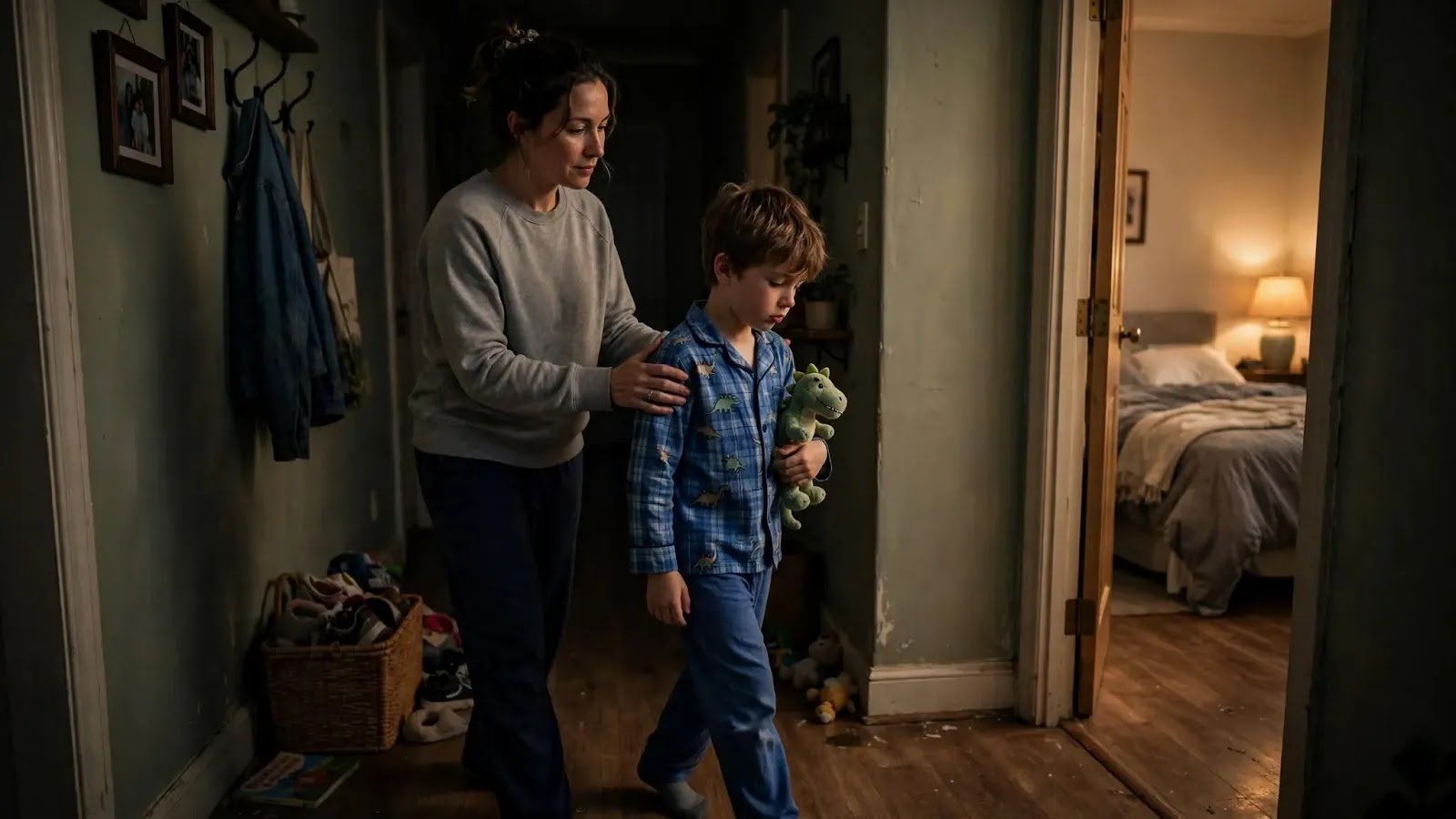
Leaving the bedroom can become surprisingly rewarding when it produces a hallway debate, another cuddle session, a snack negotiation, or ten minutes beside the parent on the couch.
For an ordinary non-urgent exit, keep the response short:
“It’s bedtime.”
Guide your child back calmly.
If they appear again:
“Bedtime.”
Back again.
HealthyChildren.org advises keeping repeated returns to bed calm, quiet, brief, and low-key rather than making getting out of bed more interesting through extra attention.
The fifth return does not need a five-times-louder response.
Expect Your New Boundary to Be Tested
If repeated requests have regularly produced extra attention or extra time awake, changing your response tonight may not produce a peaceful bedtime tonight.
Your child may try a more convincing request:
“But this is really important.”
“My pillow feels weird.”
“I can’t sleep.”
That does not automatically mean the new approach is failing. Your child is learning whether bedtime now has a reliable endpoint.
Consistency here does not mean ignoring illness, pain, fear, bathroom needs, or genuine distress. It means ordinary stalling does not repeatedly reopen the evening.
“I’m Not Tired” Is Worth Checking
If your child stays calmly in bed but routinely remains awake for a long time, do not assume every delay is behavioral.
Look at the schedule:
- What time do they wake?
- Are they still napping?
- Does bedtime shift dramatically on weekends?
- Are screens or stimulating activities ending immediately before bed?
- Is the planned bedtime much earlier than when they usually become sleepy?
The AAP’s current healthy sleep guidance recommends regular sleep and wake routines and turning screens off at least one hour before bedtime.
If the schedule is unrealistic for your child’s sleep needs, repeatedly enforcing an overly early lights-out may create a nightly fight without solving the underlying mismatch.
Look at several nights rather than moving bedtime dramatically because of one difficult evening.
Fear Is Different From Negotiation
A child who suddenly says, “I’m scared,” deserves more curiosity than a child requesting a fourth book.
Check whether something real has changed. Are they sick? Did they have a nightmare? Is there a new fear, separation difficulty, stressful event, or something about the room that is genuinely upsetting them?
You can reassure without restarting the entire evening:
“You’re safe. I’m nearby. It’s still bedtime.”
If your child needs brief comfort, give it. The goal is not to become emotionally unavailable; it is to avoid accidentally turning reassurance into another hour of activity.
Skip the Punishment Ladder
After several hallway appearances, tired adults can start inventing consequences in real time:
“No TV tomorrow.”
Then:
“No dessert either.”
Then:
“And forget the weekend activity.”
Now one bedtime problem has spread into half the child’s life.
Keep the immediate expectation simple: the routine is over and it is time to stay in bed.
If your family uses a consequence for repeatedly breaking a bedtime rule, make it reasonable and predictable—and discuss it during the day rather than building an escalating punishment list while everyone is exhausted.
Notice When Bedtime Goes Right
When your child finally stays in bed, the temptation is to quietly escape and hope nobody notices you leaving.
But successful nights are worth noticing too.
In the morning, you might simply say:
“You stayed in bed after goodnight last night. That made bedtime much smoother.”
You do not need an elaborate reward system for every family. The point is that successful bedtime behavior should not be completely invisible while stalling receives all the attention.
When Bedtime Stalling Deserves a Closer Look
Occasional bedtime resistance is common. Talk with your child’s pediatrician when the pattern looks less like ordinary delay and more like an ongoing sleep problem—especially if you notice:
- Persistent difficulty falling asleep despite a reasonable routine and schedule.
- Regular loud snoring or unusual breathing during sleep.
- Frequent night waking that significantly disrupts sleep.
- Marked daytime sleepiness or falling asleep at school.
- Significant or worsening anxiety around sleep.
- A sudden major change in sleep behavior.
Those signs do not automatically indicate a specific sleep disorder. They are reasons to get more context instead of treating every nighttime problem as stalling.
Try This Reset for One Week
For the next seven nights, change only what happens at the end:
- Keep your existing basic bedtime routine.
- Handle water, bathroom, comfort items, and other predictable needs before goodnight.
- Give the routine one clear endpoint.
- Do not add ordinary books, songs, snacks, or conversations after that point.
- If your child comes out for a non-urgent reason, return them calmly with very little talking.
- Respond similarly each time instead of becoming louder or more elaborate.
- Notice successful nights the next day.
Do not judge the experiment only by night one.
Maybe eight hallway trips become four. Maybe the extra book disappears before the extra water request does. Maybe the whole process ends fifteen minutes earlier.
That is progress.
Your child may still ask for one more thing tomorrow night. You do not have to convince them that they should not want it.
You only need to make the end of bedtime easier to recognize: the needs are handled, the connection happened, the routine is finished, and the day is done.