
What to Do When Siblings Fight Over Everything
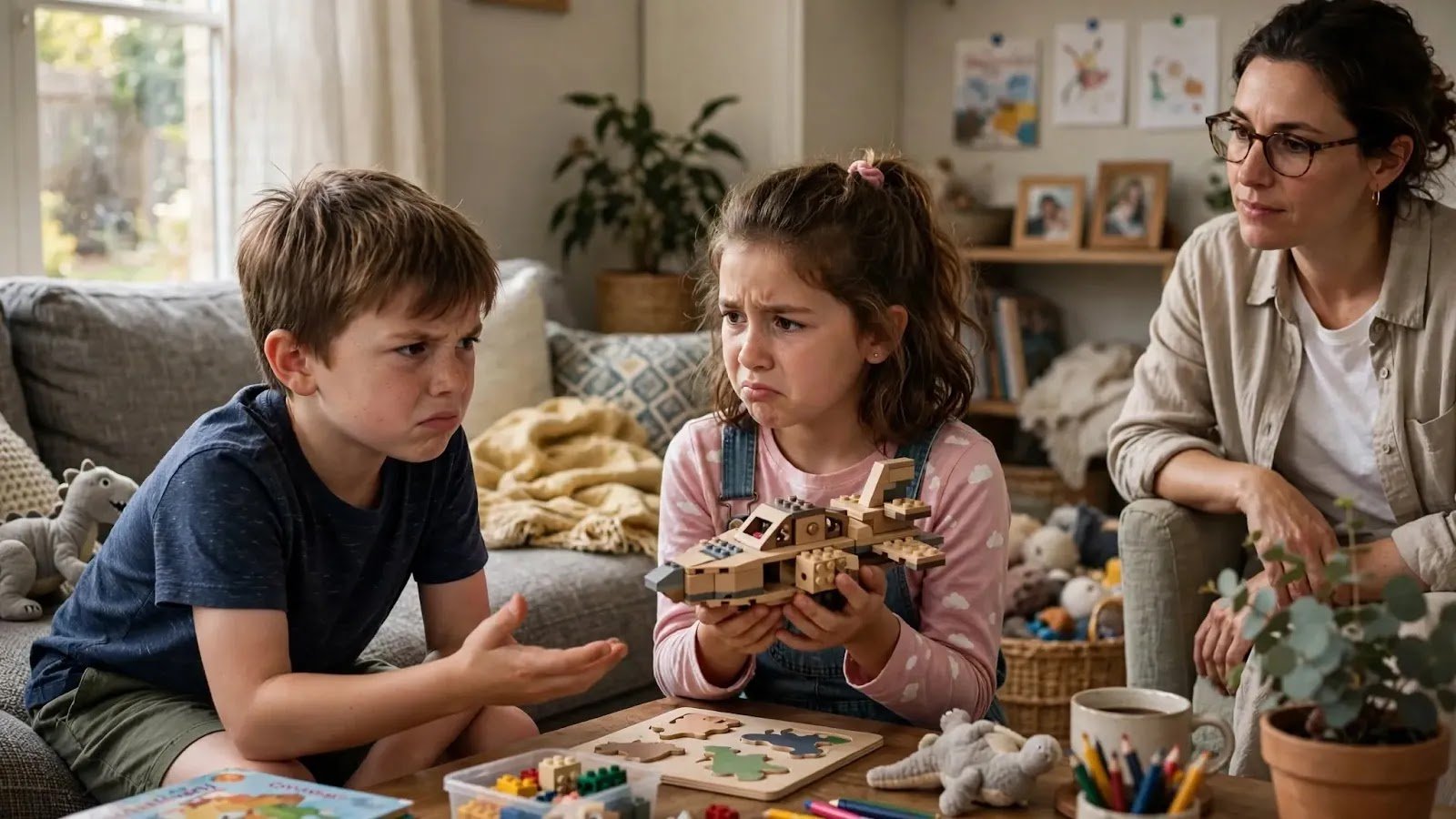
There are six couch cushions.
Both children want the same one.
There are twelve cups in the cabinet.
Apparently only the blue cup will do.
One child walks past the other.
“She touched me.”
Someone looks out the window.
“He’s copying me.”
By dinner, you feel less like a parent and more like the full-time judge of a court where every case is somehow urgent.
When siblings seem to fight over everything, the answer usually is not becoming better at deciding who is right in every argument.
Instead, learn to identify which role the moment actually needs:
Referee → Coach → Step Back.
Some conflicts need immediate intervention. Some need help finding a solution. Others need enough space for children to practice solving a manageable disagreement themselves.
Use the Referee → Coach → Step Back Test
Before investigating who touched whom first, ask:
Is anyone unsafe?
If yes, be the referee.
If no, ask:
Are they safe but genuinely stuck?
If yes, coach.
If they are safe and capable of continuing without you:
Step back.
HealthyChildren.org’s current guidance on sibling relationships notes that sibling disagreements are expected and can help children develop communication and coping skills, while parents should still step in when children cannot resolve the situation or someone’s well-being is at risk.
Be the Referee When Safety Is Involved
Some situations are not problem-solving practice.
Step in immediately for:
- Hitting, kicking, biting, choking, or other physical attacks.
- Threats or intimidation.
- Dangerous use of an object.
- Deliberate destruction of another child’s belongings.
- Persistent humiliation or bullying.
- A child who appears frightened of the sibling.
- A serious power imbalance that makes the conflict one-sided.
Your first job is not finding the perfect verdict.
It is stopping the harm.
Say:
“Stop. I won’t let you hit each other. Separate for now.”
Or:
“That object isn’t being used safely. I’m taking it while everyone calms down.”
You can investigate what led to the conflict later.
Do Not Dismiss Aggression as “Just Sibling Rivalry”
Ordinary sibling conflict may involve arguing, teasing, competition, frustration, and disagreements about space or belongings.
Repeated aggression, serious threats, intimidation, purposeful destruction, or a pattern in which one child is consistently afraid or harmed is different.
The University of New Hampshire’s Sibling Aggression and Abuse Research and Advocacy Initiative warns that harmful sibling aggression is sometimes minimized as normal rivalry and recommends stopping aggressive behavior rather than expecting the children to simply work it out.
Safety comes before conflict-resolution practice.
Be the Coach When They Are Safe but Stuck
Now imagine two children who both want the same toy.
Nobody is afraid.
Nobody is getting hurt.
They just cannot get past:
“Mine!”
“No, mine!”
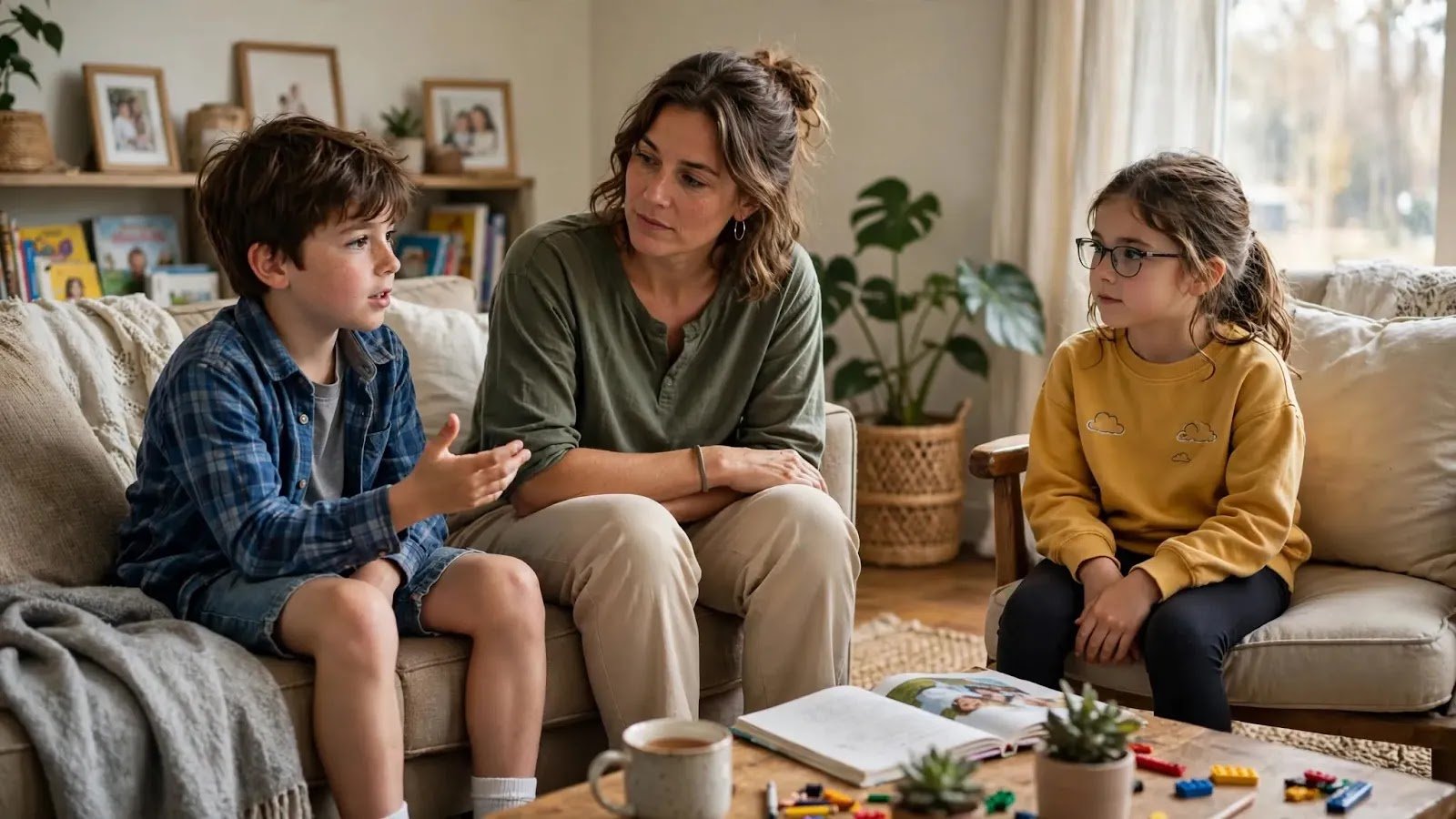
Instead of announcing the winner immediately, coach the process.
Try:
“You both want the same thing. What’s the problem we need to solve?”
Let each child explain briefly.
Then ask:
“What are two ways this could work?”
Possibilities might include:
- Taking turns.
- Using a timer.
- Playing together.
- Trading for another item.
- Taking a break from the item.
If they cannot generate a workable solution, give two options:
“You can use a timer for turns, or the toy can rest until later. Which should we try?”
The goal is not making both children delighted.
It is helping them move from conflict toward a workable plan.
Step Back From Manageable Disagreements
You hear:
“Move.”
“You move.”
“I was here first.”
Nobody is hitting.
Nobody is afraid.
Nothing is being destroyed.
You may not need to hold a hearing.
Try:
“Sounds like you two have a disagreement. See if you can work it out.”
Then wait.
If parents solve every minor dispute, children get a lot of practice bringing problems to adults and less practice resolving them with each other.
If your children frequently run to you with reports about one another and you’re unsure when to intervene, how to stop sibling tattling without ignoring real problems focuses specifically on that distinction.
Stop Making “Who Started It?” the First Question
You arrive and both children begin:
“SHE—”
“HE—”
“BUT—”
“FIRST—”
Sometimes who initiated something genuinely matters—especially with aggression, threats, deliberate damage, or a repeated pattern.
But many ordinary sibling fights have no clean beginning:
“She grabbed my marker because I moved her paper because she called me annoying because I sat in her chair…”
Start with what needs to stop or change now:
“Right now you’re both pulling the controller. Let go. We need a plan for whose turn it is.”
You can hear important context without spending fifteen minutes reconstructing every small provocation.
Do Not Automatically Make the Same Child Give In
Quiet family patterns can develop.
The older child is told:
“You’re older. You should know better.”
The child who cries more loudly receives the item.
The calmer child is expected to surrender because they are “more mature.”
HealthyChildren.org warns that repeatedly catering to the younger or less mature sibling because the other child can “understand” may create resentment.
Age can affect expectations.
It should not automatically mean one child’s needs matter less.
Fair Does Not Always Mean Identical
“That’s not fair!” is practically a sibling-conflict soundtrack.
Sometimes something truly is unfair.
Other times “fair” means:
“I didn’t get exactly what they got.”
A 6-year-old and a 12-year-old may have different bedtimes, responsibilities, or freedoms.
You can say:
“Fair doesn’t always mean identical. I’m considering what each of you needs and what each of you can handle.”
But keep checking your own pattern too.
Different needs should not become a permanent excuse for favoritism.
If They Fight Over Everything, Look for the Bottleneck
After the tenth argument, stop treating every fight as a completely new mystery.
For several days, notice when conflict clusters.
Do most fights happen:
- Immediately after school?
- Before dinner?
- Around one shared screen?
- In a shared bedroom?
- When both children are tired?
- When one enters the other’s space?
- During long stretches together?
- When one child is receiving most of the parent’s attention?
“They fight over everything” may turn out to mean:
“They fight between 4:30 and 5:30 when both are hungry and trying to use the same console.”
That is much easier to solve.
Fix Predictable Fights Before the Next Argument
If the same question starts the same fight every day, stop improvising the answer during the fight.
Create a predictable rule while everyone is calm.
For example:
“You each get thirty minutes on the console. You alternate who goes first.”
Or:
“That art set belongs to Maya. Ask before using it.”
Or:
“You use the bathroom until 7:15. Then your brother gets it.”
If several recurring sibling rules need discussion, a short family meeting can be a better place to create them than the middle of the argument.
Make Ownership and Privacy Clear
Many sibling fights are actually arguments about ownership.
Is the tablet shared?
Is the birthday gift personal?
Can siblings borrow each other’s clothes?
Can someone enter a bedroom without asking?
Use clear categories:
Shared: anyone may use it according to the family rule.
Personal: ask the owner first.
Limited shared item: turns or time limits apply.
Children do not need to share every possession simply because they are siblings.
As children get older, privacy may also need clearer boundaries:
- Knock before entering a closed room.
- Do not read another person’s messages.
- Ask before borrowing clothes or belongings.
- Respect a reasonable request for time alone.
Sometimes the Solution Is More Space
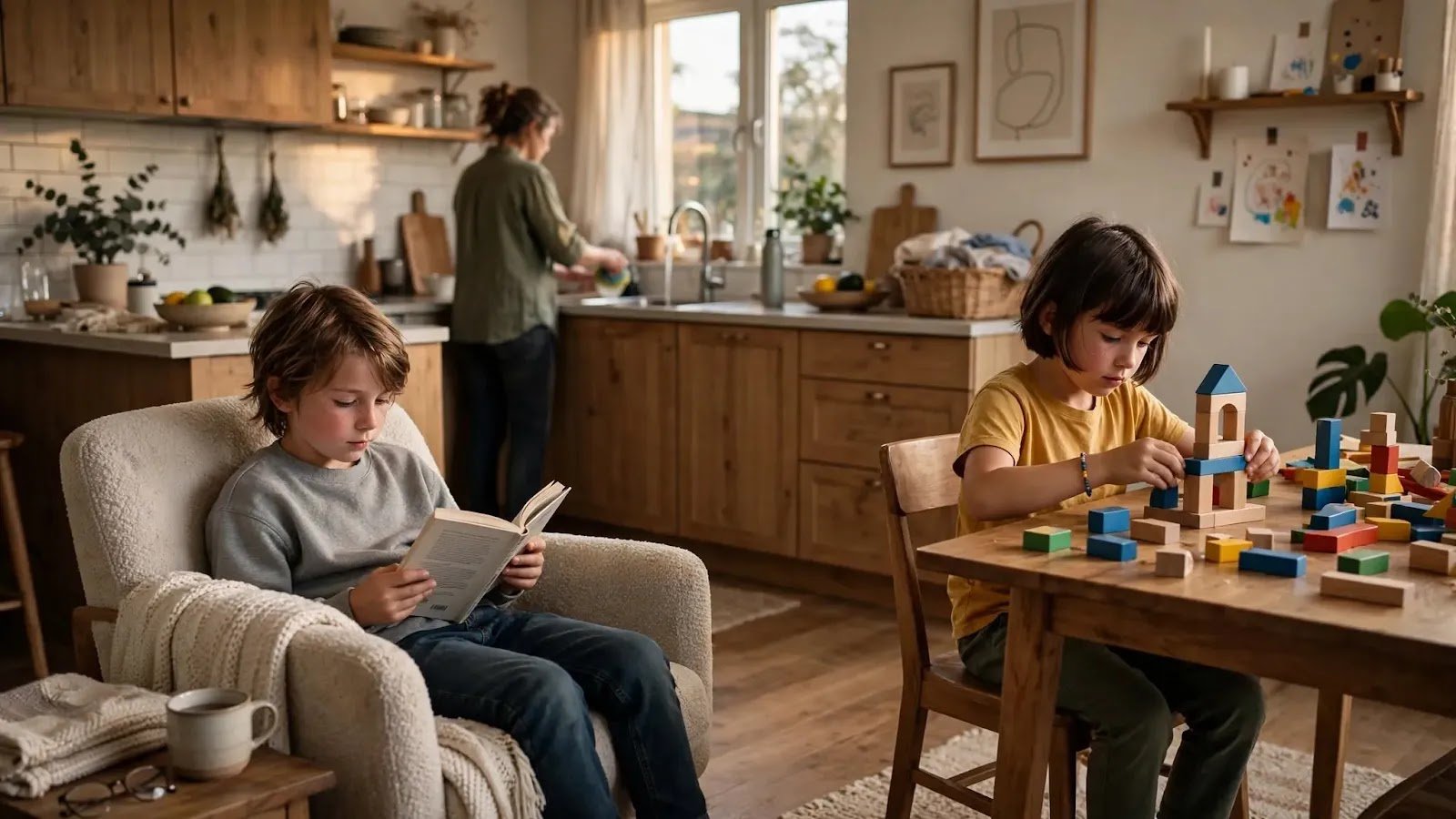
Siblings can love each other and still need breaks from each other.
Two children who went to school together, rode home together, share a room, and spent the afternoon together may not need another bonding activity that evening.
They may need separate corners of the house.
HealthyChildren.org recommends both shared family experiences and one-on-one time with individual children.
Space does not automatically weaken the sibling relationship.
Sometimes it protects it.
Give Each Child Some Attention That Is Not About the Sibling
Individual connection does not need to mean elaborate weekly outings.
It might be:
- A bedtime conversation.
- Cooking together.
- Walking the dog.
- A short drive alone.
- Ten uninterrupted minutes together.
HealthyChildren.org recommends making space for one-on-one time so each child sometimes receives a parent’s full attention without sibling competition.
Do Not Compare Siblings While Correcting Them
Avoid:
“Why can’t you share like your sister?”
“Your brother never acts like this.”
“Look how nicely she handles losing.”
Now the argument has become a competition between identities.
Correct the behavior in front of you:
“You took the toy from him. Give it back and ask for a turn.”
The sibling does not need to become the measuring stick for every mistake.
Teach Conflict Phrases Before Kids Need Them
“Work it out” is difficult if your child has no useful language available.
Practice simple phrases during calm moments:
- “I’m using that. You can have it when I’m finished.”
- “Can we take turns?”
- “Please don’t come into my room without asking.”
- “I don’t like that. Stop.”
- “I need a break.”
- “Can we trade?”
- “We need help solving this.”
Conflict skills are easier to use when children have practiced the words before emotions are high.
Repair Comes After Everyone Is Calm
A forced:
“SORRY!”
followed by:
“Say it nicely.”
may satisfy the adult faster than it repairs the relationship.
Once everyone has settled, ask what needs fixing.
Repair might mean:
- Returning something.
- Helping rebuild what was knocked down.
- Repairing or replacing damaged property.
- Acknowledging a hurtful comment.
- Giving the other child space.
- Offering a meaningful apology.
If repairing mistakes is a recurring difficulty, how to teach kids to take responsibility for mistakes goes deeper into that process.
Keep Consequences Connected to What Happened
If siblings cannot use a shared toy safely, temporarily removing the toy may make sense.
If one child deliberately damages another’s property, helping repair or replace it may be more relevant.
Avoid turning your frustration into unrelated punishment:
“You argued about the controller, so nobody is going anywhere this weekend.”
If a consequence is appropriate, keep the connection clear and the explanation short.
How to explain consequences without lecturing covers that next step.
Do Not Make “Never Fight” the Goal
Siblings are going to disagree.
A more useful family goal is:
- We disagree without hurting each other.
- We respect personal space and belongings.
- We can ask for help when we are stuck.
- We repair harm we cause.
- We can take space instead of escalating.
Those skills matter far beyond the sibling relationship.
Match Your Involvement to Their Age
Toddlers and preschoolers: Expect more direct intervention. Keep rules concrete: “No hitting.” “Ask for a turn.” Help structure sharing and provide the words.
Elementary-age kids: Shift gradually toward coaching. Ask, “What’s the problem?” and “What could you try?” before solving it for them.
Tweens and teens: Ordinary disputes may increasingly involve privacy, belongings, teasing, noise, screens, or shared spaces. Expect more independent problem-solving—but never use age as a reason to ignore aggression, intimidation, or fear.
Try This When Both Kids Come Running to You
Ask:
“Is anyone hurt, afraid, or unsafe?”
If yes:
Step in.
If no:
“What have you tried?”
If they have tried nothing:
“Try one solution yourselves. Come back if you’re still stuck.”
If they tried and cannot solve it:
Coach.
If a clear family boundary was broken:
Enforce the boundary.
That keeps you from becoming the automatic final court of appeal for every disputed cushion.
When Constant Fighting Needs More Than Conflict Coaching
Frequency alone does not tell the whole story.
Look at intensity, fear, power, repetition, and impact.
Seek help from your child’s pediatrician or another appropriate qualified professional if sibling behavior is persistently severe, causes injuries, includes serious threats or intimidation, damages a child’s emotional well-being, makes one child afraid to be alone with another, or creates a home environment that feels unsafe.
SAARA’s guidance on when sibling conflict crosses the line emphasizes that impact and power matter, and that aggression should be stopped rather than dismissed because it happens between siblings.
The Goal Is Not to Become a Better Referee
If your children seem to fight over everything, you could spend the day deciding:
Who had it first.
Who sat there first.
Who touched whom.
Who technically started talking first.
Some of those questions occasionally matter.
They do not all need to become your permanent job.
Be the referee when safety requires it.
Be the coach when children are safe but stuck.
Step back when the disagreement is manageable.
Then look beyond today’s argument and fix the patterns that keep recreating tomorrow’s.
Sometimes the solution is a timer.
Sometimes it is a clearer ownership rule.
Sometimes it is food or rest.
Sometimes it is a closed bedroom door.
And sometimes progress sounds like two children arguing in the next room—and solving it without needing you to decide who won.