
How to Create Family Traditions Your Kids Will Remember
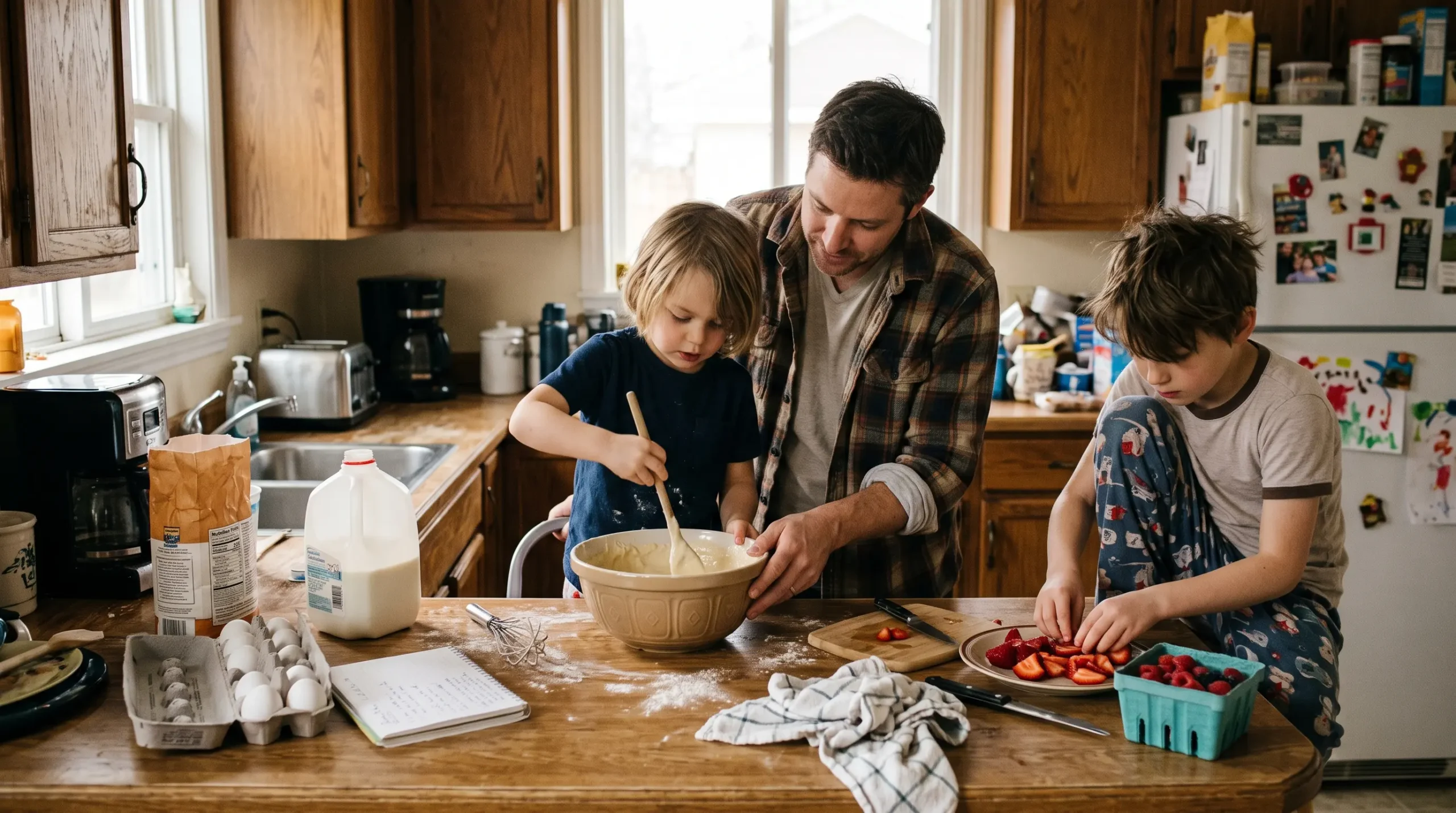
Every Saturday, the same little question comes up: “Are we making pancakes today?” Nobody planned to create a family tradition. The children simply started looking forward to choosing the first topping and hearing the same silly breakfast song.
Family traditions don’t need to be expensive or elaborate to feel meaningful. Start with something your family already enjoys, give it one recognizable detail, and decide how you’ll keep a smaller version going when life gets busy. You can’t guarantee which moments your children will remember years from now, but you can create shared experiences they have a chance to enjoy and revisit.
Here’s a practical way to begin with one tradition rather than filling your calendar with more commitments.
Choose a Moment Your Family Already Likes
Think back over the past few weeks. When did someone ask, “Can we do that again?” Maybe it was a library visit, a funny bedtime saying, breakfast together, or a walk where you always stop to look for birds.
Use three questions to narrow your choice:
- Enjoyment: Does at least part of the family genuinely look forward to this, or is it mainly an adult’s idea of what a special day should look like?
- Effort: Can you repeat it with your usual time, energy, and budget—not just when everything goes perfectly?
- Room to grow: Could the details change as your children’s interests and abilities change?
For example, if your family already takes short neighborhood walks, don’t turn them into a complicated seasonal outing. You might simply make the first available walk each month the one where a family member chooses a different route.
The Raising Children Network describes family traditions and rituals as meaningful activities that can be planned or emerge naturally. Their value often comes from shared identity and familiarity, not from how unusual the activity is.
Give It One Detail That Says “This Is Ours”
A normal activity becomes easier to recognize as a tradition when it has a small, repeated cue. It might be a phrase, a particular song, a choice someone gets to make, or the way you end the activity.
Consider these simple examples—not a checklist you need to complete:
- Weekend pancakes: The youngest person who wants to participate chooses the music while an adult handles the stove.
- Birthday morning: Each willing family member shares one favorite memory of the birthday person.
- Monthly walk: Everyone looks for one small change since the last visit, such as a new flower or a different cloud shape.
- First day of a school break: You make a familiar simple snack and each person names something they’re hoping to enjoy.
Choose one signature detail. If your pancake breakfast requires decorations, matching clothes, a playlist, and a perfect photograph every time, the preparation may start to outweigh the enjoyment.
Your family’s signature might also come from a treasured recipe, a cultural or religious celebration, or a story passed down by relatives. New traditions and inherited ones can exist side by side. The American Academy of Pediatrics’ guidance on family rituals includes reading, recreation, cultural activities, and holiday practices among the ways families spend meaningful time together.
Let Children Shape the Tradition Without Making It a Contest
Children are more likely to have a genuine role when they can influence something that matters. But that doesn’t mean everyone must vote on the entire event every time.
Offer a decision that fits the child’s abilities:
- Young child: “Should we use the blue plate or the yellow one for our special breakfast?”
- School-age child: “Would you like to choose our walking route or the song we play on the way home?”
- Tween or teen: “Is there a part you’d like to change—or would you prefer to join for only the meal?”
If siblings disagree, separate the tradition’s core from its optional details. The core might be “we spend a relaxed morning making something together.” The topping, music, or activity can rotate between children. Nobody has to like the same topping or play the same role.
For instance, one child may enjoy cooking while another would rather set the table and join for breakfast. Both can belong without being pushed to perform the same task. If an activity is overwhelming because of noise, mobility needs, or sensory preferences, change the participation options rather than insisting on a single version.
Plan a Full Version and a Small Version
This is one of the most useful decisions to make before a tradition becomes a source of pressure. Think of two versions that preserve its meaning.
- Full version: What you’d enjoy doing when the family has enough time and energy.
- Small version: What still feels recognizable when someone is tired, money is tight, or the original plan can’t happen.
For a monthly nature walk, the full version might be a half-hour outing with a favorite stop. The small version might be five minutes watching birds through a window and sharing the same “What changed?” question.
For birthday breakfast, the full version might include cooking a favorite meal together. The small version might be toast, a candle-free table decoration, and the same memory-sharing moment. The food changes; the shared detail remains.
The key question is: “What part would we miss if everything else changed?” That’s usually the part worth protecting, rather than the exact time, place, or cost.
A tradition doesn’t have to occur on the same date to count. If Saturday is lost to work, try Sunday; if a weekly plan becomes exhausting, consider monthly. For families who want a larger scheduled event, How to Start a Weekly Family Night Everyone Looks Forward To explores that separate commitment.
Protect the Meaning When Real Life Changes
Even a well-loved tradition sometimes needs an exception. The most helpful response depends on what changed.
- Shift work or an unexpected appointment: Move the tradition to the next practical opening. Tell children what changed instead of making a promise you may not keep.
- Illness or low energy: Use the small version or skip it. Rest and caregiving take priority over maintaining a streak.
- Separate households: A shared phrase, recipe, or story may travel between homes if the arrangements allow. Each home can also have its own traditions without making a child choose which is more important.
- Loss or a difficult family change: A tradition may bring comfort, sadness, or both. Ask whether family members want to keep it, adapt it, or take a break; don’t assume it will feel cheerful to everyone.
If a child is disappointed that the regular outing can’t happen, acknowledging that feeling is often more useful than insisting the replacement is “just as good.” You might say, “I know you were looking forward to our walk. We can’t go out today. Would you like the little window version, or shall we try next weekend?”
If weekends are already overbooked, How to Create a Weekend Routine Without Overscheduling the Family can help with the broader scheduling problem. A tradition should fit into family life rather than crowd out rest.
Make Space for a Shared Family Story, Not Perfect Documentation
Repeating an activity gives your family opportunities to talk about earlier times together. You can help those moments become part of your family story without turning each occasion into a photo session.
Try one natural follow-up:
- “Remember when our pancakes came out in that funny shape?”
- “What was different on today’s walk?”
- “Should we keep our silly goodbye phrase next time?”
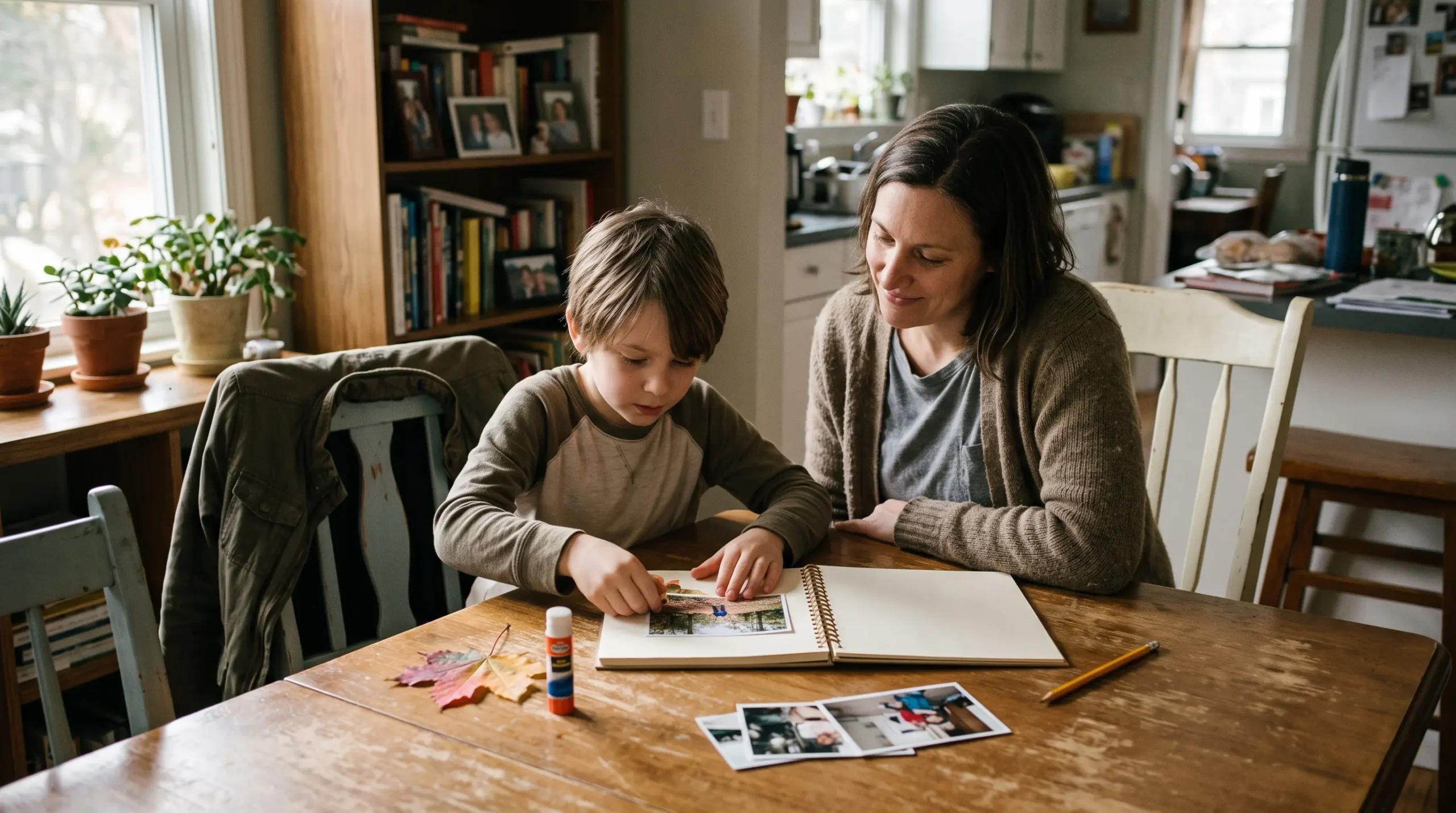
If your child enjoys it, save one photograph or a short note. A little scrapbook or shared album might become a tradition in itself. Ask before sharing photographs publicly, especially as children get older.
You can’t promise that a child will remember a particular ritual as an adult. What you can offer is a repeated, enjoyable opportunity for familiarity, participation, and shared meaning in the present.
Let Traditions Grow Up With Your Children
A tradition that delighted a five-year-old can feel awkward at fifteen. That may call for a change, not a campaign to convince your teenager that they should still enjoy it.
Ask which part they want to keep. An old bedtime story might become trading favorite book recommendations. An elaborate craft afternoon might become a brief walk and a familiar snack. A teenager may prefer joining for ten minutes rather than the entire activity.
The Raising Children Network recommends adapting traditions as family circumstances and children’s interests change, and not forcing a ritual that is no longer working. You can respect both the history and the person your child is becoming.
Sometimes the best decision is to retire a tradition with affection: “We had fun doing that when you were younger. Shall we think of something different for this year?” You haven’t lost the earlier experiences just because you stop repeating them.
A Complete Example: Turn an Ordinary Walk Into a Tradition
Suppose your family already enjoys an occasional neighborhood walk. Here’s how to turn it into something recognizable without adding a major expense or commitment:
- Choose the moment: The first available weekend each month, not a fixed date that often conflicts with work.
- Choose the shared detail: Each person who wants to participate notices one interesting thing along the way. At the end, you ask, “What did we almost miss?”
- Share one decision: A different child can suggest the route, or everyone can vote between two safe, accessible options.
- Prepare the small version: On a rainy or exhausting day, spend a few minutes looking outside and answer the same question together.
- Revisit it after a few tries: Ask, “Which part should we keep?” If the walk feels like an obligation, shorten it, change it, or let it go.
Notice what this plan doesn’t require: a special destination, purchases, a perfect photograph, or all family members feeling equally enthusiastic every time. The familiar question and shared attention give it its character.
Try One Tradition This Month
Don’t begin by choosing a dozen activities. Pick one thing your family already likes, attach a single recognizable detail, and agree on a low-effort version for busy days.
If you’re unsure which activity your children would enjoy, the Free Screen-Free Activity Picker for Families can provide inspiration. But the tradition itself should be something your family chooses to return to, not another activity you feel obliged to schedule.
Try it, listen to what your children liked, and adapt it as needed. A family tradition earns its place by being meaningful and workable for the people involved—not by being elaborate enough to impress anyone else.