
How to Help Siblings Solve Small Conflicts on Their Own
“I had those blocks first!”
“But you’ve been using them forever!”
Before deciding who gets the blocks, check whether this is a disagreement the children can safely work through. Helping siblings solve small conflicts on their own means giving them a simple way to talk, listen, and agree on a next step—not leaving them to fight until one gives in.
For an ordinary dispute over a shared toy, a game choice, or whose turn is next, try three prompts: “What happened?” “What does each of you need?” “What could work for both of you?” Stay available, and step in if either child feels unsafe or unable to say no.
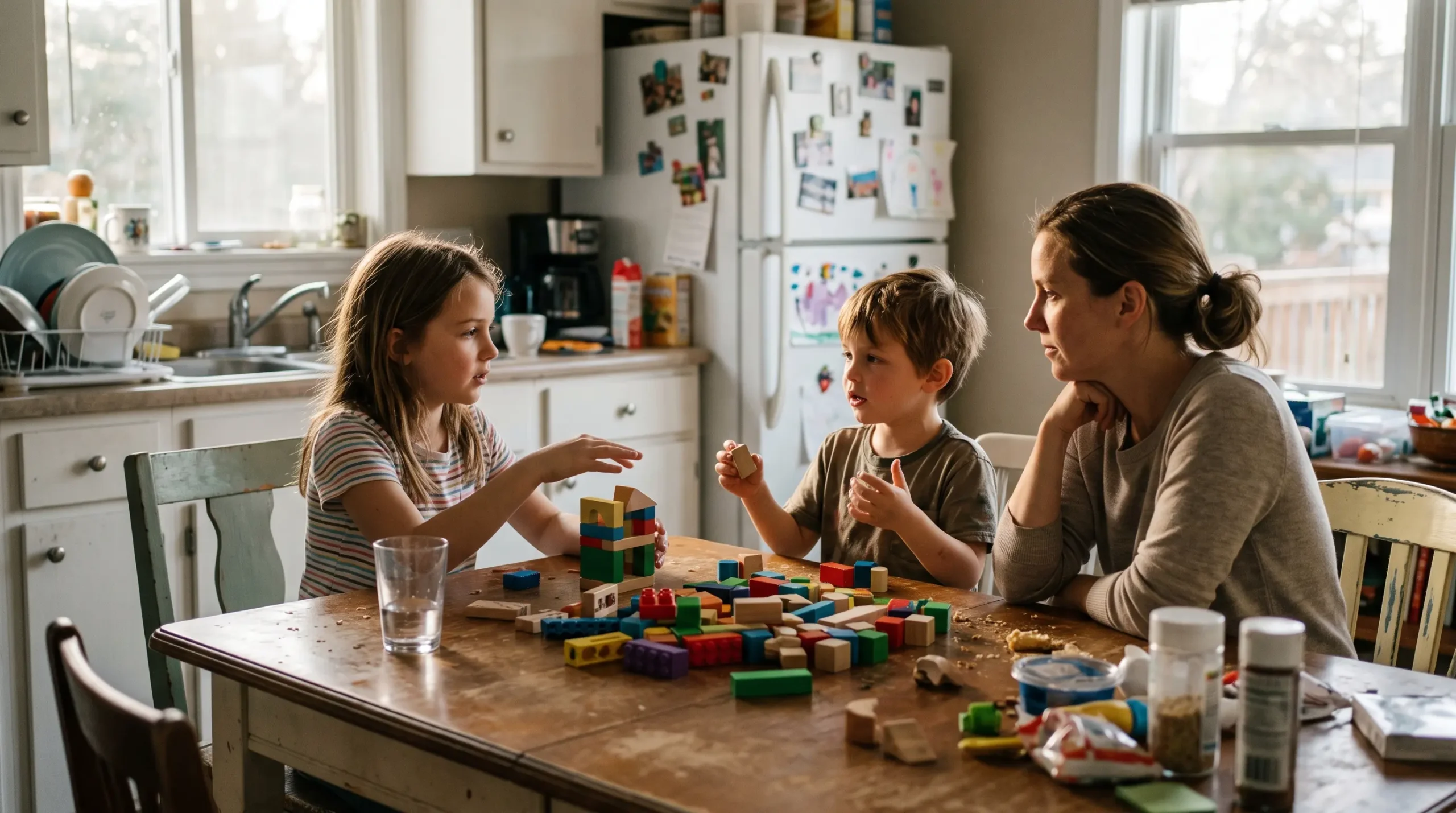
First Decide: Step Back, Coach, or Stop?
Not every raised voice requires a parent to decide the outcome. But “work it out yourselves” isn’t appropriate in every situation either. Use the children’s behavior, not just the size of the argument, to choose your role.
- Step back: They disagree about a minor preference, both are speaking without threats or hurtful behavior, and each can freely accept or reject a suggestion. Stay close enough to notice if that changes.
- Coach: They are stuck, talking over one another, or asking for help, but can pause and listen with support. Offer a short question rather than an immediate verdict.
- Stop and protect: There is hitting, grabbing, intimidation, threats, cruel name-calling, fear, or a repeated pattern in which one child controls the other. Separate or redirect the children safely; don’t require them to negotiate in that moment.
Important: A child asking an adult for help is not a failure to be independent. If one sibling reports feeling scared, hurt, or pressured, take that seriously even when the disagreement appears minor from a distance.
The American Academy of Pediatrics encourages giving siblings opportunities to resolve disagreements, while stepping in when they cannot reach a safe resolution or a child’s physical or emotional well-being is at risk. Raising Children Network similarly distinguishes manageable verbal disagreements from fights involving threats, hurtful language, or physical aggression.
Use Three Short Prompts Instead of a Long Lecture
When both children are calm enough to participate, keep the process short. You can teach it ahead of time during a peaceful moment, then remind them of it when a small dispute happens.
Ask each child to describe the problem
Start with “Tell me what happened from where you were.” One child might say, “I was still building.” The other might say, “I thought the blocks weren’t being used.” They don’t have to settle every detail or agree on whose memory is perfect before moving forward.
If accusations take over, offer a more specific sentence: “I was using that piece and I wasn’t finished” instead of “You always steal everything.” Avoid demanding that a child use a rehearsed script word for word.
Ask what each child needs now
Try “What are you hoping to do with the blocks?” One child wants to complete a tower; the other wants materials for a bridge. That gives them more to work with than a simple battle over who is right.
If a child is upset or overwhelmed, pause the negotiation. Calm, supported problem-solving is more useful than insisting on an agreement while someone is crying or unable to listen. Child Mind Institute recommends helping children regulate strong feelings before asking them to brainstorm solutions.
Let them choose one safe, workable next step
Ask “What is one plan you could both accept?” Depending on the situation, children might split shared materials, finish a current turn before swapping, choose another game, or play separately.
Then check: “Can both of you say yes to that without feeling pushed?” A plan isn’t fair simply because the argument goes quiet. One child might be giving in because they’re worried about their sibling’s reaction.
What the Three-Step Conversation Looks Like With Shared Blocks
Here’s an example of coaching two school-age siblings without choosing a winner:
Parent: “Let’s pause for a moment. What happened?”
Older child: “I was making a tower, and she took the long blocks.”
Younger child: “I needed them to build my bridge.”
Parent: “So you want to finish the tower, and you want to start a bridge. What could work?”
Older child: “I need two more long blocks. She can use the rest.”
Younger child: “Okay, but I want the long ones when you’re done.”
Parent: “Does that work for you both? Let’s put the two tower pieces here and the bridge pieces over there.”
The children still disagree about what they wanted at first, but they’ve found a plan. You supplied structure without assigning blame or forcing either child to apologize before play could continue.
If the blocks are a shared set and one child has had exclusive use for a long time, you may need to help set a reasonable boundary about turns. Being first does not always mean having unlimited use. But if the disputed item is someone’s personal possession, the answer may be different.
Check Whether the Solution Respects Both Children’s Boundaries
Not every conflict calls for “just share.” Before encouraging a compromise, notice what kind of disagreement you’re dealing with.
- A genuinely shared item: Taking turns, dividing available materials, or agreeing on a finish point may be reasonable.
- A personal or treasured belonging: The owner may choose not to lend it. Help the other child handle that boundary instead of treating refusal as unfairness.
- Personal space or privacy: “I need you to knock” or “I don’t want you touching my project” is a boundary to respect, not a demand that must be negotiated away.
- A repeated one-sided agreement: If the same child always gives up a turn, the apparent peace may be hiding a power imbalance. An adult should examine the pattern rather than praising every surrender as compromise.
For example, “Take turns with the family game” may be a fair solution. “Give your sibling your birthday present so they’ll stop yelling” is not. A child can learn negotiation without being taught that someone else’s anger overrides their consent or belongings.
Let Them Try the Agreement—and Check Only What Matters
Once both children have agreed to a safe plan, give them room to use it. You don’t need to hover or correct every imperfect exchange. Stay available, particularly when they’re young or the disagreement is still fragile.
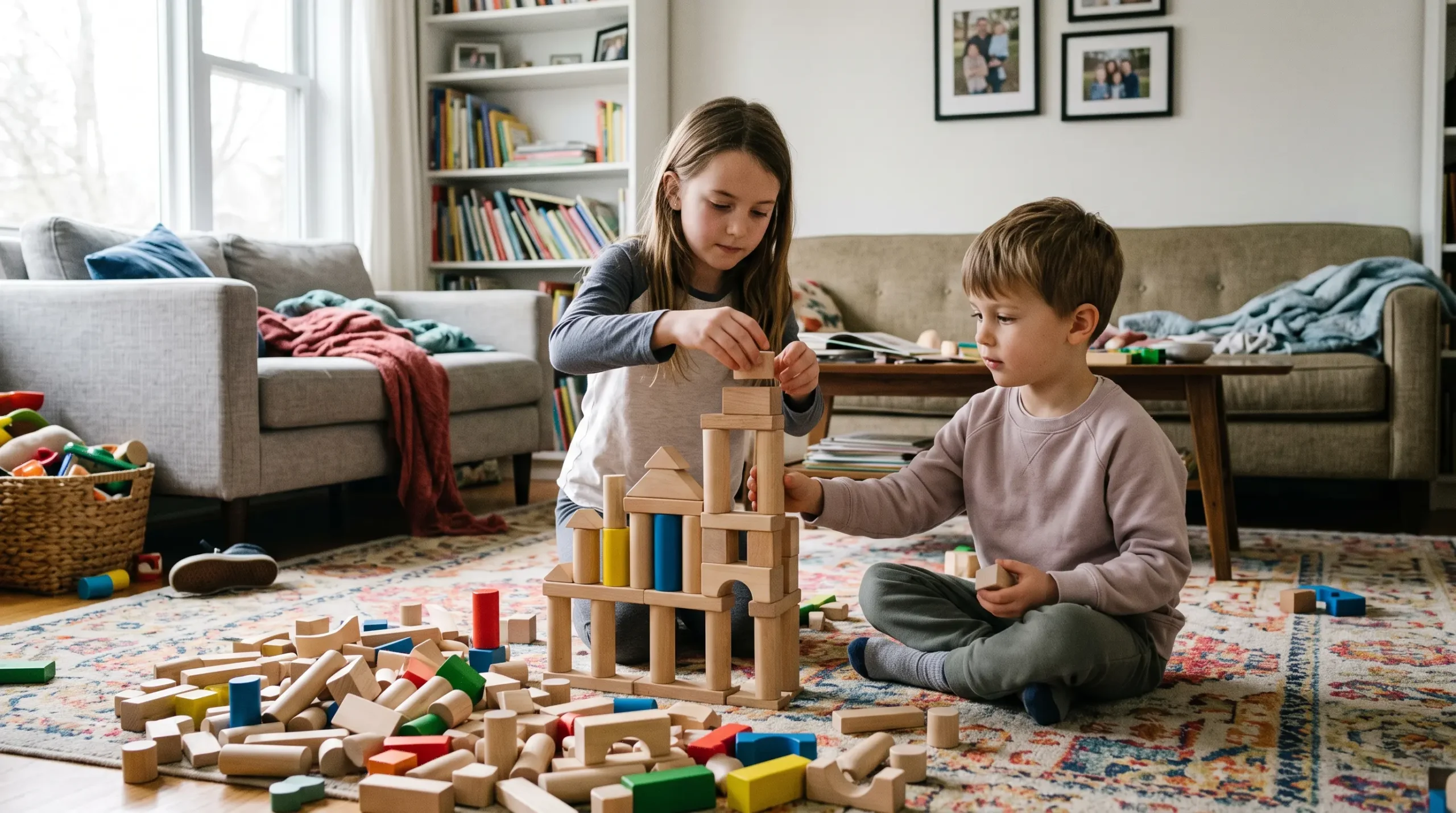
Look for the important outcomes: both can continue safely, the agreed boundary is respected, and neither child has to threaten or plead to be heard. You can notice the skill specifically: “You found a way to keep building without taking pieces from each other’s projects.”
If the plan breaks down, don’t assume the children were being dishonest when they agreed. Ask what didn’t work:
- The turn had no clear ending: Agree on a natural finish point, such as completing the current puzzle or one round of the game.
- They understood the deal differently: Restate the plan in one sentence and check that each child understands it.
- One child felt pressured: Stop the agreement and help protect that child’s choice or boundary.
- Both are getting too upset: Pause the shared activity and return to problem-solving later, after everyone is calm.
A reasonable plan that needs revision is still useful practice. The goal isn’t to make the children solve every disagreement perfectly on their first attempt.
What If Neither Child Will Agree?
Sometimes both children can explain their needs, but neither can accept the other’s suggestion. You don’t have to force a compromise to prove they can solve things independently.
Try: “I can see that neither plan works for both of you. We’ll pause the shared game for now. You can choose separate activities, and we can try talking again later.”
If a shared item needs an adult rule, make it clear and practical: “This game belongs to everyone. We’ll use a turn-taking plan when you’re both ready.” Don’t frame a temporary pause as proof that one child is the bad sibling.
Likewise, avoid insisting on an immediate hug or apology as the price of ending the disagreement. Respectful repair may happen later, but neither child should be pressured into physical affection or a forced declaration of forgiveness.
Change Your Coaching Based on Their Skills, Not Just Their Ages
Preschoolers: Stay nearby and offer two concrete choices: “Would you like to use the red blocks while your brother finishes, or build something else with me?” Keep language short. They may need the adult to structure turns rather than negotiate independently.
Elementary-age children: Ask them to name what happened and suggest at least one plan. If both can consider an option calmly, step back. If they cannot, help them compare two realistic alternatives.
Older children and tweens: Give more space to discuss noise, shared rooms, games, and belongings privately when safe. An agreed boundary or decision to do separate things may be a better outcome than a shared activity.
Some children need more time to process spoken questions, use gestures or visual choices, or benefit from having the conversation after a break. Adjust your support for communication, sensory, developmental, and disability-related needs without treating independence as something every child must achieve on the same schedule.
Watch for the Sibling Who Always Gives In
Quietly agreeing is not always the same as freely agreeing. Notice whether one child regularly loses access to shared activities, gives up personal belongings, or changes their answer after an angry look from the other.
Talk privately if necessary: “When you said yes to your brother’s plan, did it feel okay to you? Would you feel safe saying no next time?” Don’t coach the child to be more assertive while leaving repeated intimidation unaddressed.
If there is persistent humiliation, coercion, physical harm, or fear, stop asking the children to solve it alone. Protect the affected child, set and enforce adult boundaries, and consider guidance from a pediatrician or qualified child mental health professional when the pattern continues or causes distress.
That situation is different from the ordinary minor disagreements this article addresses.
Practice the Skill Before the Next Disagreement
Children may find it easier to remember the steps when they’re not already upset. During a calm moment, describe a harmless pretend disagreement: “We both want to choose the game. What could we do?” Let them invent a fair option, then swap roles and try again.
When the next small conflict happens, you can simply ask, “What happened? What does each person need? What’s one plan that works for both?” If they start using even one of those questions themselves, that’s progress.
If your household is dealing with intense or constant sibling fights rather than occasional manageable disagreements, see What to Do When Siblings Fight Over Everything. If the recurring issue is telling an adult about sibling behavior, How to Stop Sibling Tattling Without Ignoring Real Problems addresses the difference between seeking help and reporting minor annoyances.
Start with one safe, low-stakes disagreement. Give the children room to think, help them find a solution neither feels forced to accept, and step in whenever safety or basic boundaries require it. Independence grows through supported practice—not by leaving siblings to manage harm on their own.