How to Use Visual Routines With Young Kids
You’ve said, “Shoes away, wash your hands, then snack,” but your preschooler is still standing by the door. They may know how to do each part and still have trouble keeping the whole sequence in mind.
A visual routine turns those spoken steps into something your child can look at. To start, choose one familiar transition, use two to four pictures your child actually understands, and practice with them. You don’t need to schedule the whole day or buy a special board.
Start here: For a child who needs to know what happens immediately next, try two pictures: First: wash hands. Then: snack. If your child can comfortably follow a longer sequence, try a short strip showing shoes away, handwashing, and snack time.
Start With One Routine That Happens Often
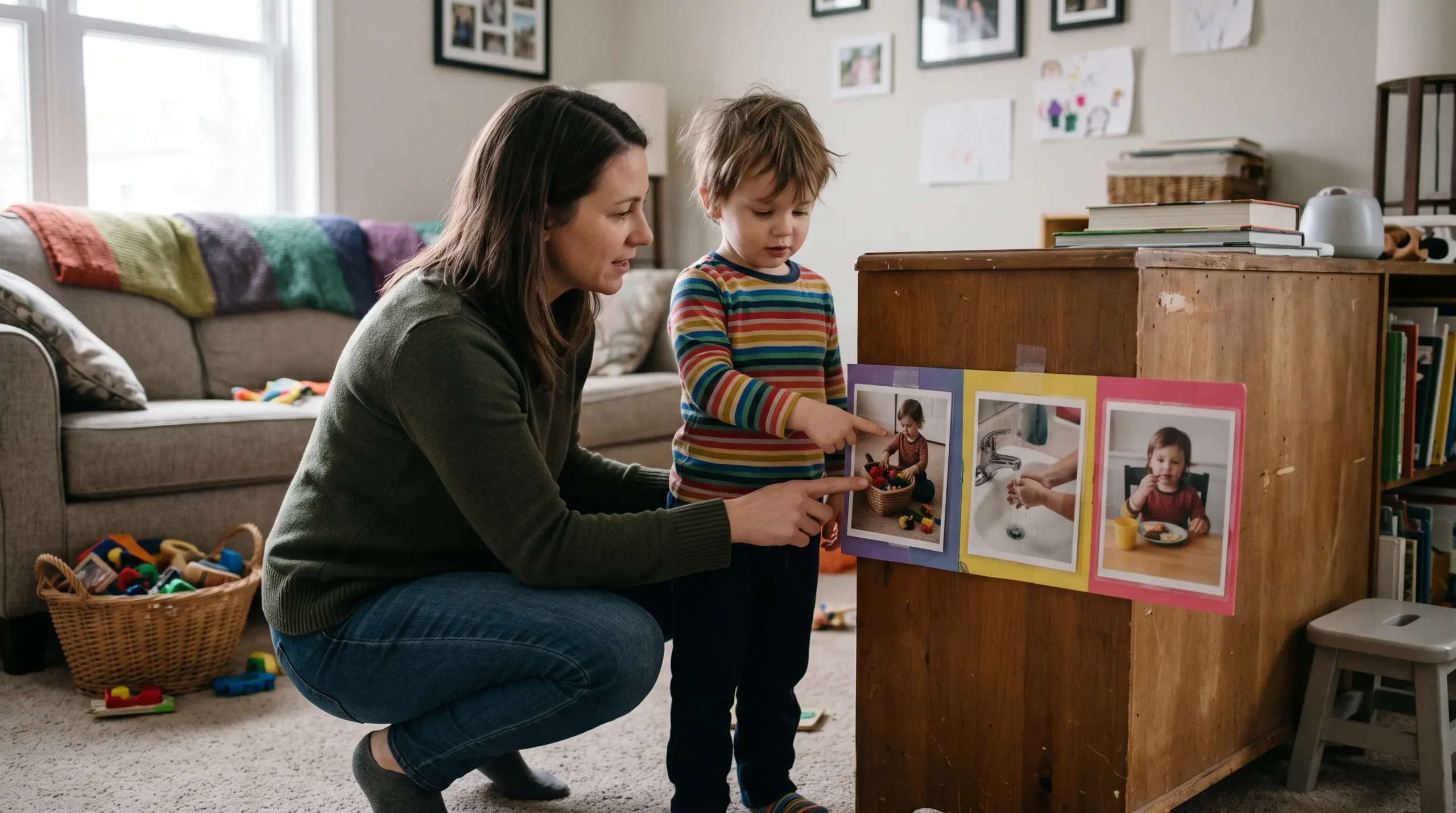
Choose a small part of the day when your child already knows the activities but sometimes loses track of their order. Coming home, getting ready for a snack, and putting play materials away are possible starting points.
For example, after coming inside, you could show:
- Shoes away. Put shoes in their usual spot, with help if needed.
- Wash hands. Go to the sink and wash with adult guidance.
- Snack. Sit at the table when the food is ready.
Notice that each picture represents something your child can recognize and something that really happens. If snack isn’t always ready immediately, don’t promise it as the next step every day; change the final picture or use the shorter sequence that fits.
It’s fine if an adult still helps with every part. The pictures are there to communicate the order, not to prove that your child can manage the routine independently.
The CDC’s guidance on routines for toddlers and preschoolers emphasizes predictable, manageable sequences and explaining changes calmly. A picture strip is one way to make those expectations visible.
Check Whether Your Child Understands Each Picture
This is the step worth doing before you hang a finished chart on the wall. A picture that seems obvious to an adult can mean something else to a young child.
Suppose you have a picture of a sink. You intend it to mean “wash hands,” but your child may think it means “go to the bathroom” or simply “water.” That’s not a failure on their part; the picture needs a clearer connection to the action.
- Show the picture beside the real activity. Hold up the handwashing photo while you’re at the sink and say, “This picture means wash hands.”
- Invite your child to show what it means. Later, offer the picture and see whether they point toward the sink, make a washing motion, look at the right place, or respond in another familiar way. They don’t have to say the words aloud.
- Change the image if the meaning isn’t clear. A photo of their own hands being washed may work better than a generic bathroom symbol. Show and practice it again.
Don’t turn this into a quiz or demand repeated correct answers. You’re checking whether your visual aid communicates, not measuring your child’s intelligence or obedience.
Try three simple image types, starting with what your child recognizes: a photo of their own shoes or sink; a clear, uncluttered drawing of the action; or a printed picture card. One image per step is usually easier to interpret than a busy scene. A short written label can help adults use the same wording.
Head Start’s visual supports guidance for infants and toddlers notes that children need to understand what a picture or symbol represents for it to be helpful, and that the format should match their developmental level.
Choose a First–Then Board or a Short Picture Strip
You don’t need to use the same format with every child or for every activity. Choose the simplest arrangement that answers the question your child is having.
Use two pictures when “what comes next?” is the problem
A First–Then board shows the current step and the following step. For example:
- First: Wash hands.
- Then: Sit down for snack.
Point to both pictures, then return to the first. This can be easier to follow than a full morning schedule, especially for a child who finds several pictures distracting. “Then” should describe what will really happen; don’t use a desirable activity as a promise you can’t keep.
Use three or four pictures when the order itself is the problem
A short strip is more useful when your child understands the individual steps but often skips or forgets one. Arrange the pictures in the sequence they’ll actually happen, such as shoes, hands, snack.
If your child struggles, go back to two pictures rather than making the strip longer. You can always add another step after the simpler version becomes familiar.
Put the Pictures Where Your Child Needs Them
A lovely board on the refrigerator won’t help much if your child needs the reminder by the front door. Put the strip where you can point to it at the start of the routine, or carry a small version between locations.
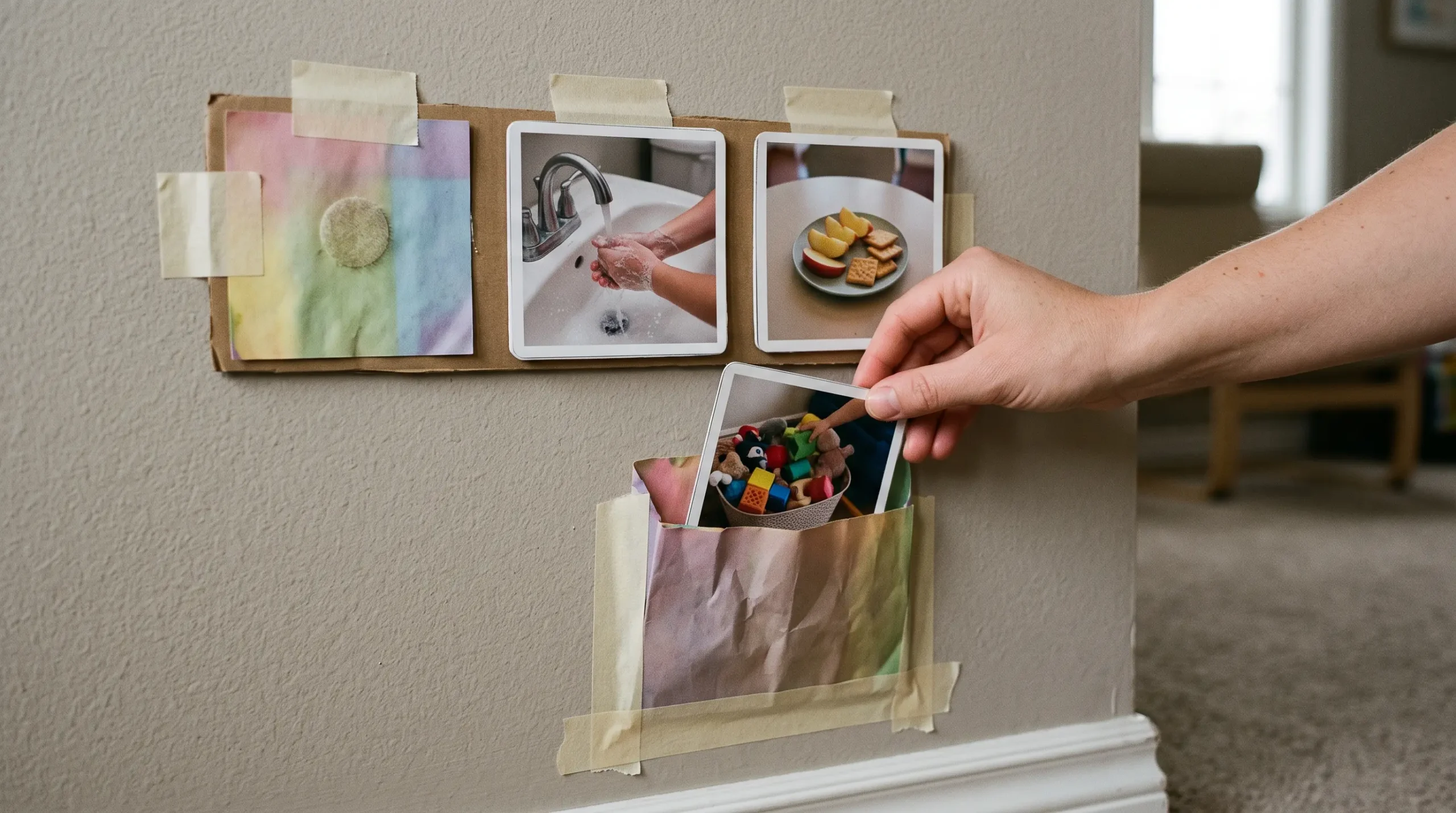
A simple homemade version can be made with sturdy paper or cardboard:
- Attach two to four large, clear pictures in a consistent reading direction.
- Show the sequence before the first step begins.
- Point to the current picture while you help your child do that action.
- Afterward, cover it, mark it done, or move it into a paper “Finished” pocket if that makes sense to your child.
Moving cards is optional. Some children prefer to leave the whole sequence visible and simply point to the next picture. Others may find removing each completed image helpful.
Use securely attached, age-appropriate materials. Avoid sharp pins, loose small magnets, and detachable pieces that could be swallowed. Keep the board within a comfortable viewing range without requiring children to climb or reach near hazards.
Walk Through the Routine Together: A Real Example
Imagine your child comes in from outdoor play. You have a three-picture strip showing shoes away, handwashing, and snack. Here’s how using it could sound in real life:
- Before starting: Show the strip near the door. Say, “We’re home. First, shoes away.” Point to the shoe picture.
- During the first step: Help your child put the shoes where they belong. If they need physical assistance, provide it without making completion of the card a test.
- At the transition: Say, “Shoes are away. Let’s see what’s next.” Point to the handwashing picture. Walk together to the sink and help as needed.
- After handwashing: Point to the snack picture and say, “Now it’s snack time.” Follow through with the activity shown.
On the first few attempts, you may be the one pointing at every picture. Over time, your child might begin to look toward the board or point to the next step. Either way, use the pictures during the actual routine, not as a separate worksheet to complete.
What if your child points to the snack card first? You can acknowledge the interest—”You see snack!”—and gently indicate the current step: “Hands first, then snack.” The strip provides information; it isn’t a reason to argue or withhold comfort.
Head Start’s collection of visual supports includes materials for routines and transitions, along with guidance on modeling and practicing how to use them.
Show Changes Honestly When the Routine Is Different
A visual routine should describe the day you’re actually having. Imagine your normal sequence is outdoor play, handwashing, then snack—but heavy rain means you’re staying indoors.
Rather than keeping the outdoor card in place, swap in an indoor-play picture and explain, “The plan changed. Today we’re playing inside.” If your child is disappointed, acknowledge it. The picture makes the change visible; it doesn’t remove the feeling.
If your schedule changes frequently, keep a small selection of alternative cards. Replace just the affected step rather than rebuilding every part of the board. When possible, show the change before the transition, while your child is calm enough to take in the information.
If snack will be delayed or an activity is canceled, don’t use an outdated “Then” picture to encourage cooperation. Let the child see what comes next instead.
Adapt the Routine for Different Abilities and Communication Needs
For toddlers: A single photo at the moment of an activity, or a two-picture sequence, may be more meaningful than several symbols. An adult will usually guide the steps. Watching and gradually recognizing a picture can be useful participation.
For preschoolers: Start with a short, familiar sequence. Invite your child to point to the next card or move a completed one if they enjoy that action; don’t require it.
For children who use communication supports: Match the pictures to methods already familiar at home or preschool where practical. Some children benefit from larger photos, real objects, gestures, fewer visual distractions, or more processing time. Children with limited vision may need tactile or spoken alternatives rather than pictures alone.
For children who find transitions upsetting: Give a calm preview before the activity ends, allow a little transition time where possible, and offer support when feelings run high. A picture is not a substitute for responsive caregiving.
You don’t need a diagnosis to try a simple picture sequence, and the response to a visual chart cannot diagnose a developmental condition. If communication or daily-routine difficulties persist and affect your child’s well-being, discuss them with a pediatrician or qualified early childhood professional.
What If Your Child Doesn’t Look at the Cards?
Before concluding that visual routines don’t work for your child, check where the breakdown is happening:
- They look but choose the wrong activity: The picture may not be clear. Pair it with the real object or use a photograph of your child’s own routine.
- They recognize the cards but skip a step: Use fewer pictures, point to the current step, and provide the practical help needed to complete it.
- They never notice the board: Move it closer to the transition, or let the adult carry a small strip. Don’t expect a child to remember to check a chart in another room.
- They know what’s next but don’t want to do it: The difficulty may be the activity, discomfort, tiredness, or the transition itself. A clearer picture won’t solve every disagreement.
- They become more upset when the board appears: Pause. Check whether the pictures have become associated with pressure or an unwanted change. Offer reassurance and try a simpler, more supportive approach later.
Don’t keep adding cards or rewards in response to confusion. First ask whether the existing cards mean what you intend, whether the routine is realistic, and whether your child has the support to participate.
Clear spoken directions may help alongside pictures. If the bigger challenge is how instructions are phrased, How to Give Clear Instructions Kids Can Actually Follow addresses that separately.
Try the Same Small Routine for a Few Days
Choose one familiar transition and use the same two or three clear pictures for several opportunities. Each time, notice just three things:
- Recognition: Does your child seem to connect the picture with the real action, using words, gestures, looks, or another familiar response?
- Placement: Can you show the picture at the moment it is useful, without searching for the board?
- Support: Which parts still need adult help, and would changing a picture or reducing a step make the sequence clearer?
Keep what helps and change what doesn’t. There is no target number of days, successful checkmarks, or independent steps that every child needs to achieve.
If you eventually want a ready-made morning-specific resource, see the Free Printable Morning Routine Chart for Kids. For organizing the timing of routines across the whole household rather than teaching one young child a picture sequence, try the Free Family Routine Builder.
Start with one picture your child understands and one next step you can show together. A useful visual routine doesn’t have to be elaborate. It needs to match real life, be understandable to your child, and give you both a clearer way to see what happens next.