
30 Easy Chores Kids Can Do by Age
What can a seven-year-old realistically do around the house? And what counts as a helpful job for a toddler who still needs you beside them?
These 30 easy chores kids can do by age start with tiny contributions—like carrying a napkin—and build toward practical skills such as laundry and preparing a meal. Each idea tells you what the job looks like and where an adult should step in. The age bands are starting points, not milestones children must meet.
Quick way to choose: Look at the age group closest to your child’s abilities, then pick one task they can try safely. If the full job is too much, use the smaller version suggested below. A younger child might be ready for a job listed in an older group with help; an older child may need a simpler starting point.
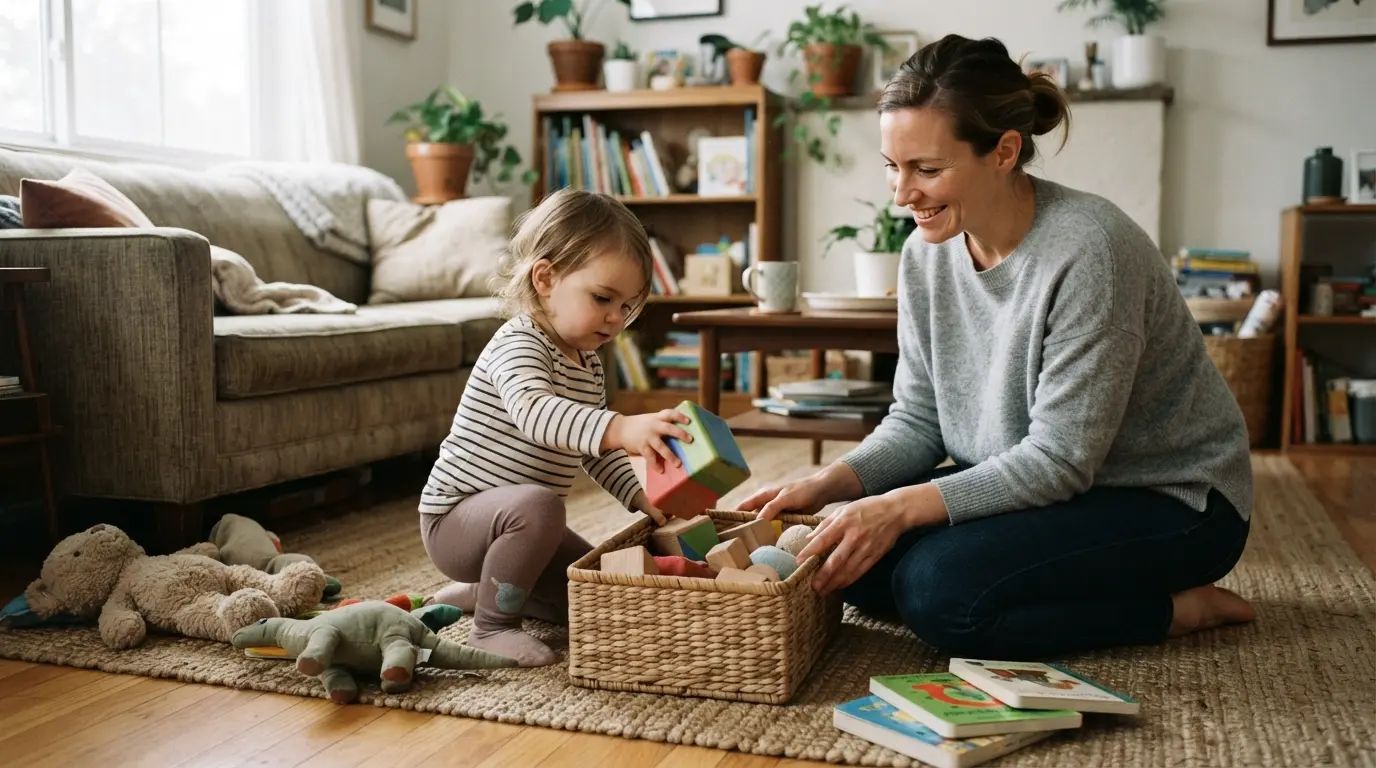
First Little Chores for Ages 2–3
At this age, helping usually means doing a small piece of a job with an adult. Choose big, lightweight objects and keep the work within reach. A few seconds of participation is enough to begin.
- Put large toys into a basket. Set a low basket beside two or three oversized toys and put one away yourself. Invite your toddler to copy you. Make it easier: Hold the basket close instead of asking them to cross the room.
- Carry one piece of clothing to the hamper. Hand over a T-shirt or small towel and show where it goes. Make it easier: Start with the hamper right beside them; an adult handles any heavy laundry basket.
- Return board books to a low shelf. Let your child slide a sturdy book into a basket or onto a reachable shelf. Make it easier: Use a floor-level book bin, with no climbing or unstable furniture.
- Put a small cushion back on the sofa. Choose a light cushion the child can carry comfortably. Make it easier: Let them hand it to you instead of lifting it onto furniture.
- Carry cloth napkins to the table. Give your child one napkin at a time and point to the place it belongs. Keep hot dishes, breakable glasses, and sharp utensils with the adult.
- Wipe a small water spot with a cloth. On a safe, low surface, show how to dab up a little spilled water. Stop here: An adult handles slippery floors, chemical spills, or broken items.
Don’t turn these into independent assignments. You are teaching what helping looks like, not expecting a toddler to remember and manage a job.
Simple Helping Jobs for Ages 4–5
Preschoolers may enjoy jobs with an obvious finish line. Tell them what the completed task looks like instead of saying, “Go help clean up.” Keep supplies simple and stay available.
- Match clean socks. Put out four or six socks with easy-to-see colors or patterns. The job is done when each pair is together—not when an entire laundry load is sorted.
- Fold small washcloths. Demonstrate one fold, then invite your child to try. Uneven edges are fine. Make it easier: Stack the cloths if folding is frustrating.
- Set out placemats and spoons. Point out each seat and let your child place one safe, lightweight item there. An adult handles knives, fragile dishes, and hot food.
- Straighten a pillow and light blanket. Ask your child to place the pillow at the top of the bed and pull up a lightweight blanket. No need for tucked corners or a perfectly made bed.
- Water one suitable houseplant. If a non-toxic plant actually needs water, premeasure a small amount and let your child pour with help. This is not an everyday task unless the plant needs it; adults keep fertilizers and unsuitable plants out of reach.
- Put away lightweight pantry items. Let your child place an unbreakable box or sealed package on a low shelf. Adults handle heavy containers, glass jars, and perishable groceries that must be refrigerated promptly.
For a child who gets overwhelmed by several directions, try a one-step request: “Can you put these two placemats on the table?” The American Academy of Child and Adolescent Psychiatry recommends clear, realistic expectations and allowing children time to learn household tasks.
Easy Chores for Ages 6–8
Many school-age children can handle a short, familiar task after a demonstration. The key is making the job specific enough to finish and keeping unsafe materials out of it.
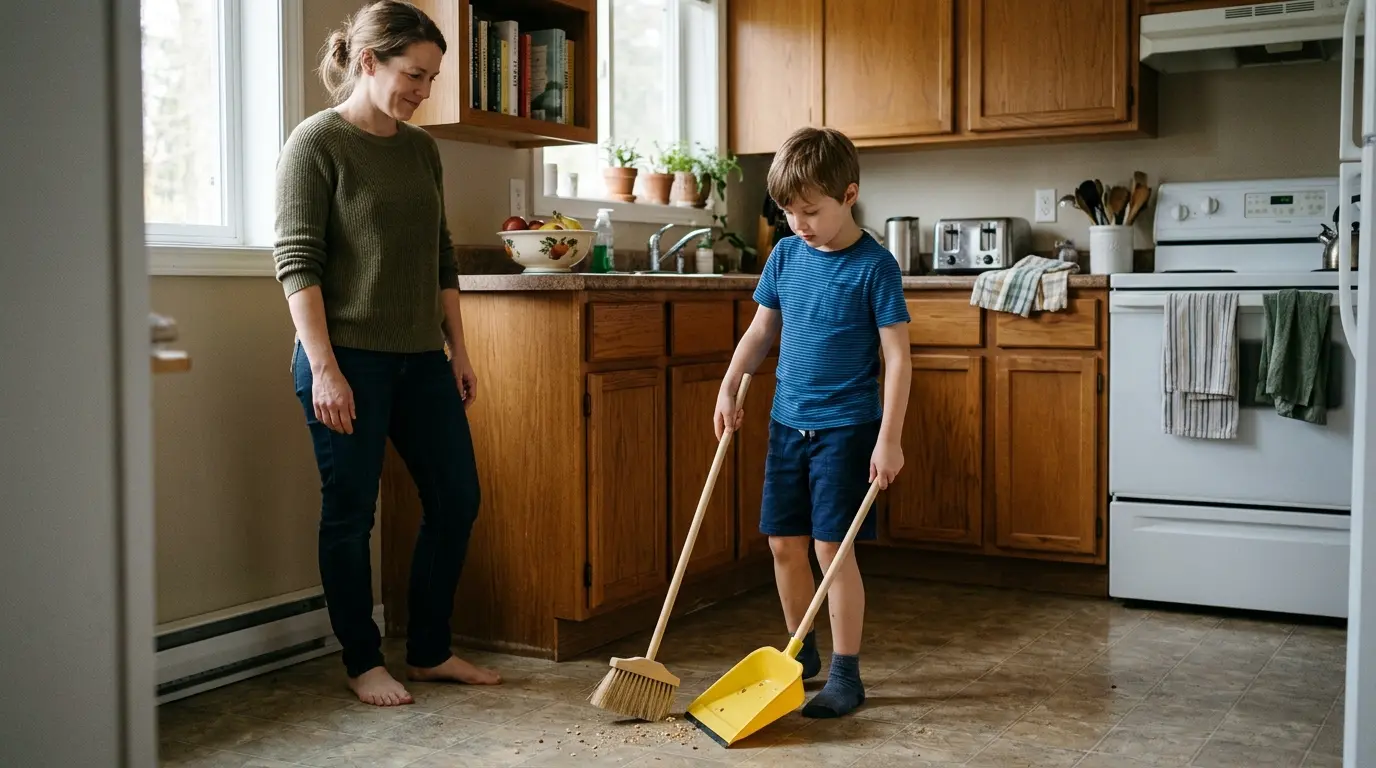
- Sweep dry crumbs from one small area. Show how to move crumbs toward a dustpan with a lightweight broom. Finish line: The visible crumbs are collected. An adult handles sharp debris, broken glass, or hazardous spills.
- Dust one reachable shelf. Remove breakable objects first, then offer a plain damp cloth. Make it easier: Choose one short shelf rather than an entire room. Skip spray cleaners.
- Clear their place after a meal. Start with a cool, unbreakable plate or cup carried to a designated counter. An adult handles hot cookware, knives, and fragile glass.
- Refresh a pet’s water bowl with adult supervision. An adult first moves or keeps the pet safely away, then helps the child replace the water and return the bowl. Do not ask a child to approach an animal while it eats or drinks; wash hands afterward.
- Check their backpack against a short list. Ask your child to look for two or three familiar items, such as a folder, water bottle, and lunch container. Adults still manage important notices, medication, and essential school arrangements.
- Sort clean paper for recycling. Set aside a few harmless sheets and cardboard pieces, then show the correct bin for your area. Adults handle sharp packaging, broken glass, confidential papers, and heavy bins.
The American Academy of Pediatrics’ age-appropriate chores guide includes tasks such as sweeping, putting belongings away, and setting or clearing the table. Its age examples are guidance, not a guarantee of readiness for every child.
More Independent Chores for Ages 9–12
Preteens may be ready for several steps in a row, especially when they have practiced the job with an adult. Independence depends on familiarity with the equipment and the child’s needs, not just their birthday.
- Vacuum a clear, dry area. Demonstrate the controls and cord handling on an accessible floor. Start with a small space; keep children away from stairs, water, and damaged electrical equipment.
- Change a pillowcase. Show how to remove the old cover and slide on a clean one. Finish line: The pillow is covered and the used case is in the hamper. No mattress lifting required.
- Fold and put away their clean clothes. Start with shirts or pajamas and show which drawer to use. Make it easier: Begin with three items, not a full basket; keep furniture securely anchored.
- Wash a reusable lunch container. Demonstrate soap, safe water temperature, rinsing, and drying. Check the container’s care instructions; adults handle sharp tools and potentially unsafe items.
- Assemble a no-cook snack. Try a simple sandwich or yogurt with ready-to-eat fruit. Practice handwashing, account for allergies, and let adults handle any cutting that needs a sharp knife.
- Reset the entryway. Place shoes in their usual spot and coats on accessible hooks. Finish line: The walking path is clear without moving heavy furniture or climbing.
If an older child can complete the physical steps but forgets when to start, that’s a different issue from not knowing how. Keep the task itself manageable first; the Free Kids Chore Planner by Age can help families choose responsibilities without expanding this idea list into a full scheduling system.
Practical Chores for Teens Ages 13–17
Teen chores can build skills they’ll use later, but “old enough” doesn’t mean “trained.” Demonstrate equipment, food-safety steps, and the expected result before asking for independent follow-through. Leave time for school, sleep, and other commitments.

- Run a basic laundry load. Show how to check care labels, sort suitable fabrics, choose a cycle, and move clothes when finished. Start with one ordinary load. Adults control and securely store hazardous detergents, especially concentrated laundry packets.
- Change bedsheets. Demonstrate removing used bedding and fitting clean sheets. Make it easier: Start with the pillowcases and fitted sheet; avoid moving heavy furniture or lifting a mattress alone.
- Prepare one simple family meal. Choose a familiar recipe and teach the safe sequence: wash hands, prepare ingredients, cook under appropriate supervision, and clean the work area. Give direct guidance around knives, heat, and food handling until the teen is competent.
- Reset the kitchen after a meal. Put away food safely, load suitable dishes, and wipe designated surfaces using appropriate materials. Adults manage hazardous cleaning products and equipment the teen has not learned to use.
- Check household basics for a grocery list. Look through accessible cupboards and write down items running low. Finish line: A short list with quantities where useful. Adults remain responsible for the family budget and purchases.
- Help wash a parked car. With suitable supervision, use a soft sponge and safe materials on reachable exterior surfaces. Keep the vehicle secured; stay away from traffic, moving vehicles, harsh chemicals, and slippery areas.
For teen-specific examples, see the American Academy of Pediatrics’ household chores for teens. Teens’ abilities vary, and a difficult task may still require an adult.
How to Tell Whether a Chore Is the Right Fit
Here is a quick way to check readiness before deciding a child “should” do a particular job:
- Show: Demonstrate one safe, specific version of the task. “Place four napkins on the table” is clearer than “help with dinner.”
- Try together: Let your child do part of it while you remain available. Notice whether the difficulty is physical, confusing, or simply unfamiliar.
- Choose the level of help: Decide whether this is a do-together job, a nearby-adult job, or a task the child can lead after practice. Reassess if circumstances change.
Example: A nine-year-old might fold and put away three shirts independently but need help moving a full laundry basket. That is still a useful household contribution. You don’t have to choose between assigning the entire chore and doing everything yourself.
For children with motor, sensory, communication, or other support needs, change the tools, task size, or instructions. Sitting while sorting socks or using picture cues can make a contribution more accessible. The goal is a meaningful, safe role—not passing an age-based test.
When to Save a Chore for Later
Some jobs are worth postponing even when a child wants to help. Use an easier part of the same activity instead.
- Too heavy? Carry one lightweight towel instead of a full laundry basket.
- Too many steps? Put away three clean shirts instead of managing all the laundry.
- Sharp, hot, or chemical hazard? Let the child set out safe materials while an adult handles knives, heat, cleaners, and detergents.
- Pet unpredictable or guarding resources? Skip the pet-care job and choose something that doesn’t require approaching the animal.
- Too rushed today? Practice on a calmer day rather than forcing a new skill into a busy departure.
The U.S. Consumer Product Safety Commission advises keeping household cleaners and medicines locked away, and says children should not handle concentrated laundry detergent packets. Safety boundaries apply regardless of the age label on a list.
Pick One Chore to Try Today
Don’t assign all 30 ideas. Choose one job your child can practice safely, describe what finished looks like, and show the first step. If it goes well, you can try another idea later.
If you want to record the task on paper, the Free Printable Age-Appropriate Chore Chart for Kids has a weekly tracker and a blank page. If your question is how to divide jobs among multiple family members, read How to Divide Household Chores Fairly as a Family; that is a separate decision from choosing age-appropriate ideas.
A useful first chore is not the hardest job a child could possibly do. It’s one they can understand, take part in safely, and gradually become more comfortable doing.