
How to Create a Weekend Routine Without Overscheduling the Family
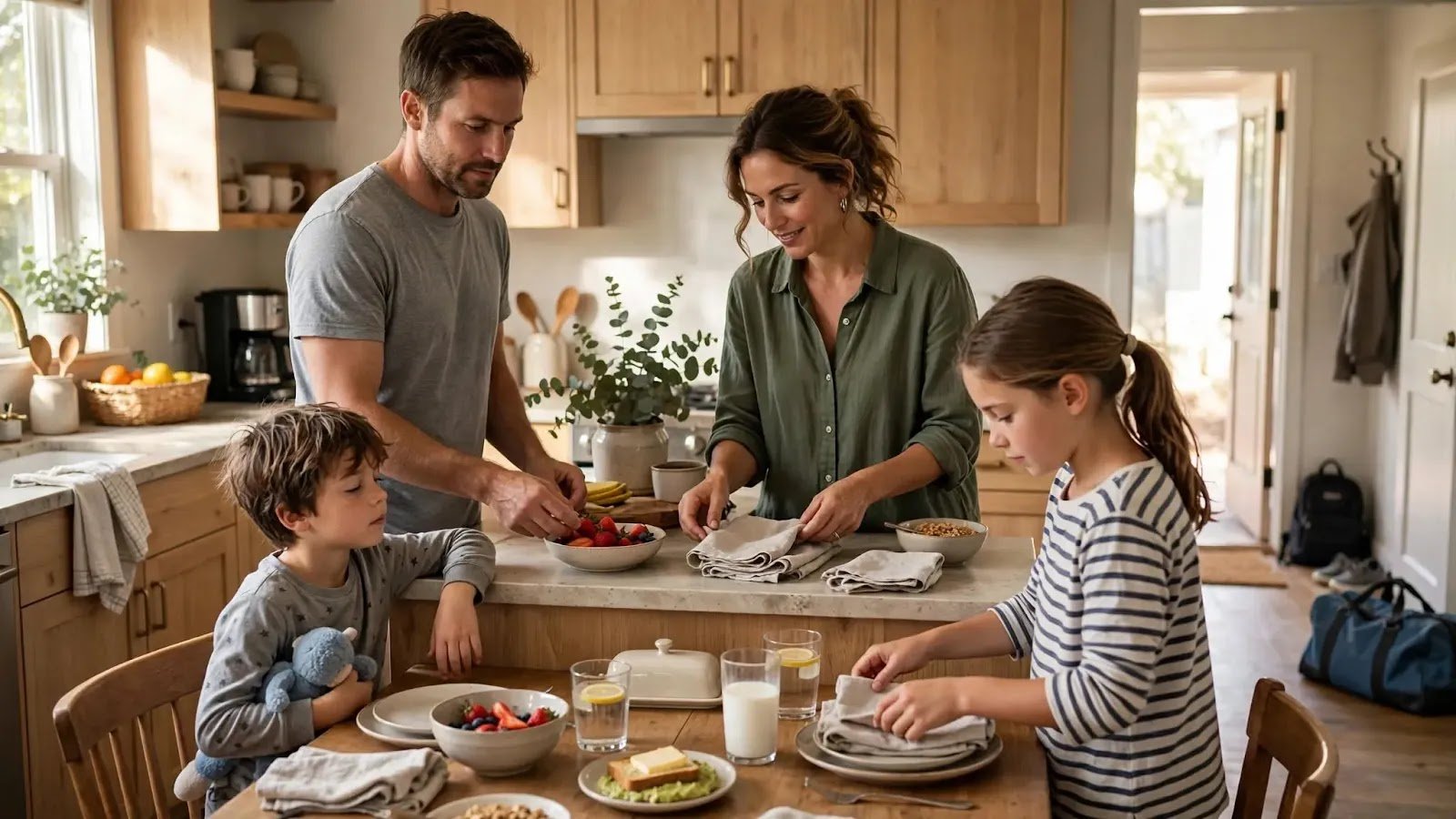
Saturday looked great on the calendar.
Soccer at 9:00. Birthday party at noon. Groceries afterward. Dinner with relatives at 6:00.
Every plan made sense on its own.
By late afternoon, one child was asleep in the car, another was arguing about everything, the groceries were still in the trunk, and nobody wanted to go anywhere else.
That is the weekend trap: you can fill the day with perfectly good things and still leave the whole family needing a weekend after the weekend.
A useful weekend routine needs less structure than a weekday, not zero structure. Give the day a few dependable anchors, choose what matters most, and deliberately leave some time unclaimed.
Start With Three Weekend Anchors
You do not need an itinerary for every hour.
Start with three points the family can count on:
- Morning start: breakfast, basic getting-ready tasks, and knowing what the morning holds.
- Main block: the activity, outing, visit, household project, or home time the day is mainly built around.
- Evening landing: dinner and a calmer transition toward the end of the day.
The American Academy of Pediatrics notes in its guidance on family routines that predictable routines can help children feel grounded while family schedules still need flexibility. Weekends can also be valuable opportunities for family togetherness.
A simple shape might be:
Morning anchor → main plan → open time → evening landing.
If your family benefits from seeing the sequence written out, the Free Family Routine Builder can help you organize the few anchors that actually matter without creating a minute-by-minute schedule.
Choose the One Big Thing First
Before adding several plans, ask:
“What is the main thing this day already contains?”
If Saturday includes a soccer tournament from morning through early afternoon, the day already has a major commitment.
You might still get groceries or have a simple dinner with friends.
But adding a museum, major shopping trip, playdate, and household project because there are technically empty spaces on the calendar can turn one good plan into five rushed ones.
The “one big thing” idea is not a strict rule. It is a reality check.
Before adding something else, ask:
“Do we have room for this—or just clock time for it?”
Budget Energy, Not Just Hours
Four empty hours on a calendar do not necessarily equal four usable hours of family energy.
A quiet library visit may take little out of one family.
A crowded party, tournament across town, or hosting relatives may take much more.
Children differ too. One child may come home energized from a social activity while another needs quiet time afterward.
So before adding a plan, ask two questions:
- Do we have time for it?
- Will we still have enough energy for what comes after?
If the answer is yes only to the first question, the calendar may be fuller than the family can comfortably manage.
Count the Edges of Every Activity
A birthday party from 1:00 to 3:00 does not really take only two hours.
There is getting dressed, finding the gift, using the bathroom, driving there, leaving, driving home, eating, and recovering before the next thing begins.
Build some transition room around major commitments.
You do not need to schedule a precise 37-minute buffer.
You simply stop planning as if one activity ends and the whole family instantly appears at the next one calm, fed, and ready.
Whenever possible, avoid:
Activity ends at 11:00 → next activity begins at 11:15.
A little time at home, an unhurried meal, or even a car ride without rushing can change the feel of the entire day.
Protect One Blank Block on Purpose
When two empty hours appear on Saturday, the automatic question is often:
“What should we do with them?”
Sometimes the answer should be:
Nothing scheduled.
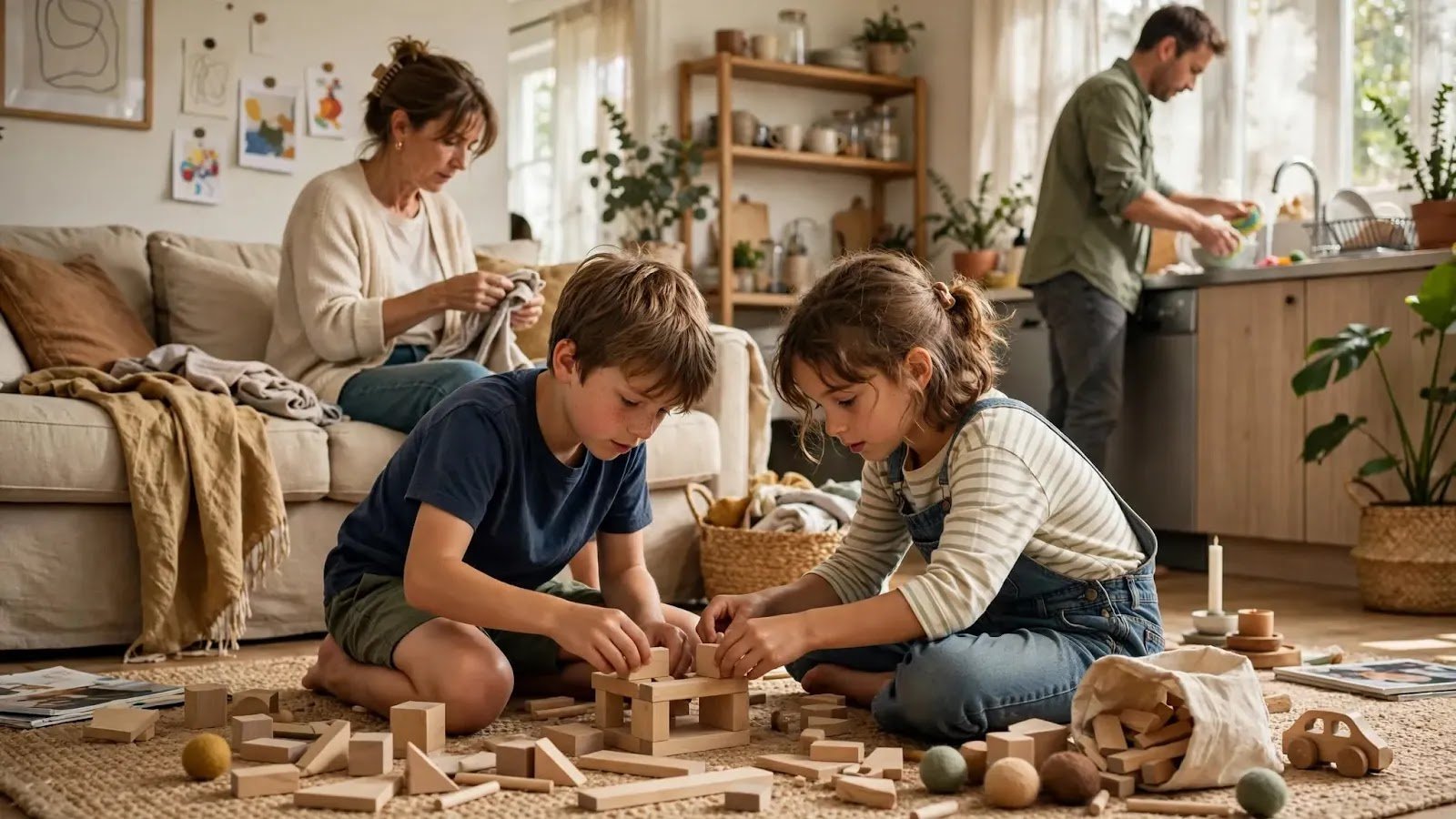
Children may build, read, draw, play outside, talk to friends, help cook, invent something—or complain that they are bored before eventually deciding what to do.
HealthyChildren.org’s guidance on play recommends giving children opportunities for unstructured play and notes that some boredom can leave room for creativity.
Open time is not a failure to plan.
It can be one of the things your weekend routine is designed to protect.
Let Open Time Actually Belong to the Family
There is a difference between:
“We don’t have anything scheduled this afternoon.”
and:
“Now I need to entertain everyone for three hours.”
For children old enough to choose activities, open time can include genuine self-direction within your family’s normal boundaries.
If the first response is “I’m bored,” you do not necessarily need to produce a parent-designed activity.
You can say:
“You’ve got some free time. See what you’d like to do.”
If everyone genuinely wants an idea, the Free Screen-Free Activity Picker for Families can provide one without turning the entire afternoon into another scheduled program.
Family Time Does Not Need to Be a Major Event
Overscheduling sometimes happens because parents are trying to create connection:
A hike for family time.
Then the farmers market.
Then game night.
By game night, everyone wants separate rooms.
Connection can also happen while making pancakes, walking the dog, playing cards for twenty minutes, doing an errand together, sharing dinner, or watching a movie.
You do not need to manufacture a major family memory every weekend.
A calm ordinary hour together still counts.
Do Not Save the Entire Household for Saturday
A weekend can become exhausting without a single extracurricular activity if Saturday turns into:
laundry + groceries + yardwork + bedroom cleaning + errands + organizing projects.
Choose what actually needs to happen.
Give children reasonable age-appropriate responsibilities where appropriate.
Then leave some household work unfinished if it is not urgent.
A family does not need to reach maximum efficiency every weekend.
If chores repeatedly accumulate into one huge weekend list, the Free Kids Chore Planner by Age can help spread appropriate recurring responsibilities across the week.
Keep Sleep and Basic Rhythms From Drifting Too Far
A looser weekend does not need to look like a school day.
But children still need meals, sleep, hygiene, movement, and some recognizable rhythm.
The AAP’s healthy sleep guidance recommends regular daily routines and consistent wake times on weekdays and weekends.
That does not mean one late movie ruins everything.
It means noticing when weekend sleep repeatedly shifts enough that Sunday night and Monday morning become difficult.
If the end of the weekend is where your family regularly struggles, how to make Sunday night easier for the whole family focuses on that transition specifically.
Give Everyone Some Input Without Building Four Separate Weekends
One child wants a playdate.
Another wants to stay home.
You need groceries.
Your partner wants to visit relatives.
There may be no plan that gives everyone their first choice.
Ask instead:
“What is one thing you’d really like to happen this weekend?”
Then look at the answers alongside the commitments that are already fixed.
Not every request makes the schedule every week. But some participation can reduce the feeling that the weekend is something happening to everyone.
If bigger family scheduling decisions repeatedly turn into separate negotiations, a short family meeting can be a better place to sort them out.
Watch for Signs the Weekend Is Too Full
There is no universal number of activities that counts as “overscheduled.”
Instead, look at the effect of the schedule.
You may need more breathing room if:
- Small delays create major stress because there is no buffer.
- Meals repeatedly happen in the car because nothing fits between plans.
- Children have almost no self-directed time.
- Everyone dreads activities that were supposed to be enjoyable.
- Parents spend most of the weekend transporting family members.
- Bedtime repeatedly shifts enough to make the next day harder.
- The family consistently reaches Sunday evening more depleted than Friday.
One difficult Saturday does not prove anything.
A repeated pattern is more useful information.
Use Different Weekend Shapes Instead of One Perfect Schedule
Not every Saturday needs to look alike.
Three simple shapes may cover most weekends:
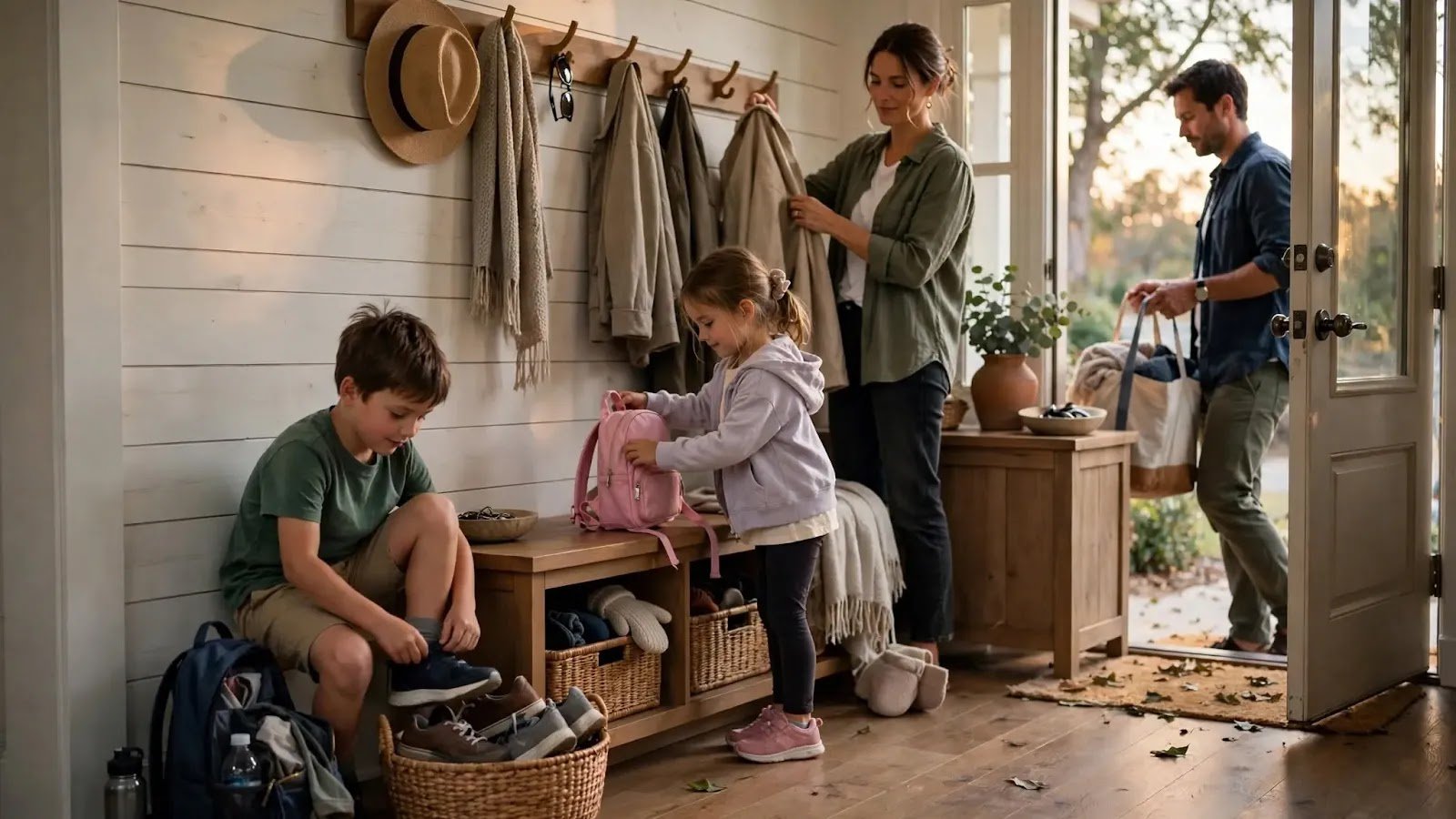
Activity day: morning anchor → main activity → home reset → simple evening.
Home day: morning anchor → one household block → large open-time block → evening landing.
Social day: slower morning → visit or playdate → transition home → calmer evening.
The details change while the anchors remain recognizable.
That is enough structure to create predictability without pretending family life repeats perfectly every Saturday.
Do a Ten-Minute Weekend Preview
On Friday evening or Saturday morning, answer five questions:
- What is already fixed?
- What is the main plan?
- What household task genuinely needs to happen?
- Where is the open time?
- When does the family need to begin landing for the evening?
Then stop planning.
The goal is not to optimize the weekend until every empty hour has a purpose.
It is to make the important things visible while protecting enough room for the family to live between them.
Before You Add One More Plan
Imagine the plans already on the calendar have happened.
Everyone completed the game, visit, outing, errand, or party.
Now ask:
“Would this next activity make the weekend better—or simply fuller?”
Those are different outcomes.
A useful weekend routine gives your family a few things they can count on and enough open space that a traffic jam, tired child, spontaneous game, or quiet afternoon does not feel like the schedule failed.
Structure the anchors. Protect the gaps.
Sometimes the part of the weekend nobody planned is exactly the part the family needed.