
How to Get Kids to Talk About Their Day Without “How Was School?”
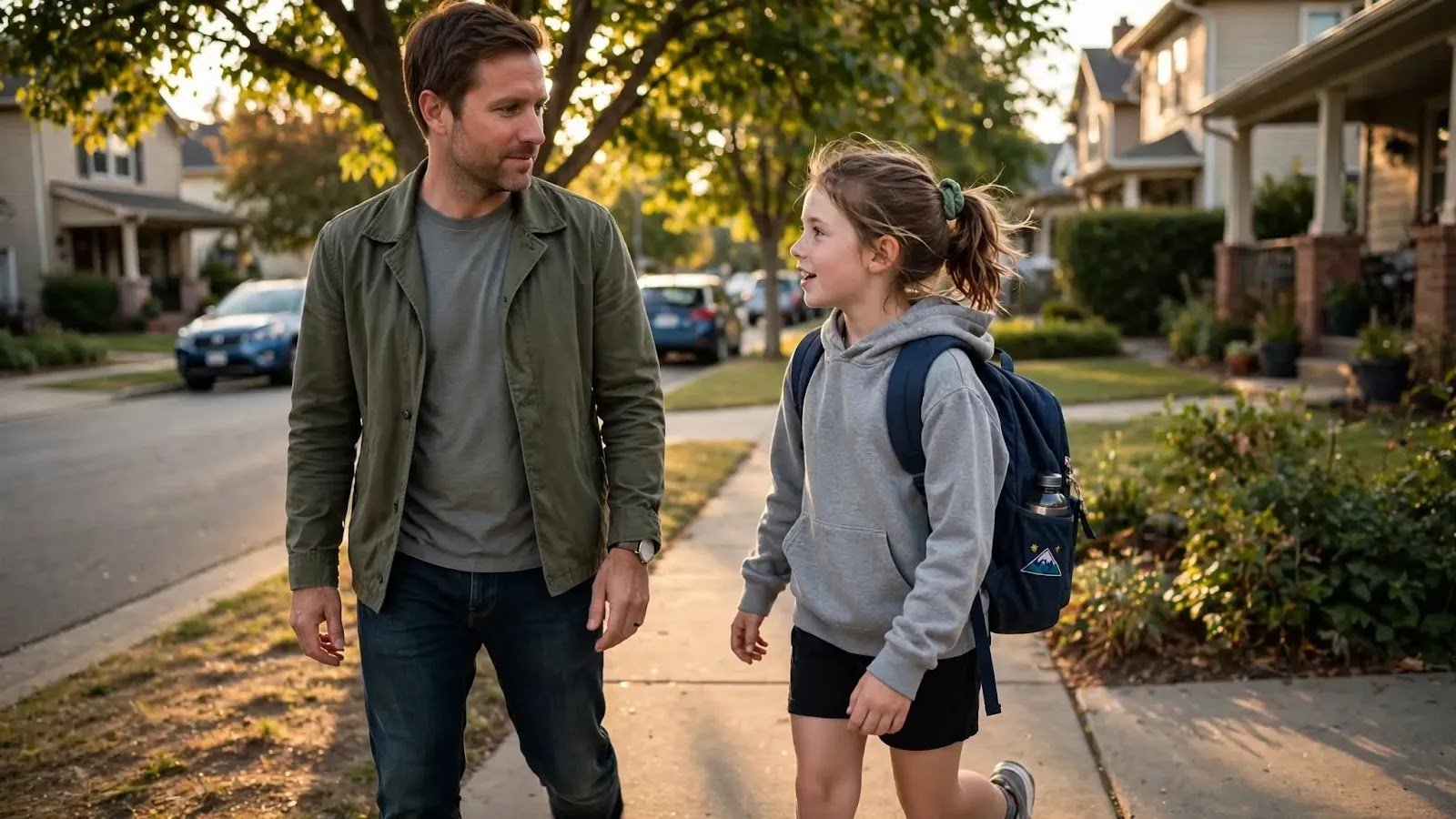
“How was school?”
“Fine.”
“What did you do?”
“Nothing.”
Your child just spent hours around classmates, teachers, lessons, lunch, recess, jokes, frustrations, and dozens of tiny moments. Somehow all of it became one word.
That does not necessarily mean your child does not want to talk.
“How was school?” is simply a very large question. A better starting point is often one small moment, one person, one feeling, or one detail that gives your child somewhere specific to begin.
Ask for a Moment, Not a Summary
Imagine someone asking you at the end of a long day:
“How was everything?”
You might answer “fine” too—not because nothing happened, but because deciding which part of eight hours to explain takes effort.
Instead of asking your child to summarize school, ask about something they can picture:
- “What made you laugh today?”
- “Who did you sit near at lunch?”
- “What was the weirdest thing that happened?”
- “Which part of the day went fastest?”
- “What was harder than you expected?”
- “Did anything happen that you’re still thinking about?”
The CDC’s Connecting Conversations guidance encourages parents to create regular opportunities to talk and offers prompts such as asking about the best and worst parts of a child’s day.
Use Four Doors Into the Day
If you never know what to ask, keep four categories in mind:
Moment
Ask about something that happened.
“What surprised you today?”
“Was there a moment you’d like to replay?”
Person
Ask about someone they interacted with.
“Who made you laugh?”
“Who did you spend the most time with?”
Feeling
Ask about an emotional moment without assuming something went wrong.
“Was there anything you felt proud of?”
“What was the most annoying part of today?”
Detail
Ask for something concrete.
“What happened at recess?”
“What was lunch like today?”
“What were you working on right before school ended?”
You do not need to ask all four.
Pick one door and follow where it leads.
Follow the Answer Instead of Asking the Next Question
Your child says:
“Ethan brought the weirdest sandwich today.”
You were planning to ask about math next.
Don’t.
Follow the sandwich.
“What was weird about it?”
Your child laughs and tells you the story. Maybe that naturally leads into who they sat with, what happened at lunch, or something a friend said.
Conversation feels more natural when the answer shapes the next question.
The CDC recommends active listening that lets children finish sharing without interruption and then reflecting back what you heard before moving on.
A useful rule is:
One good question, then listen.
Five excellent questions in a row can still feel like an interview.
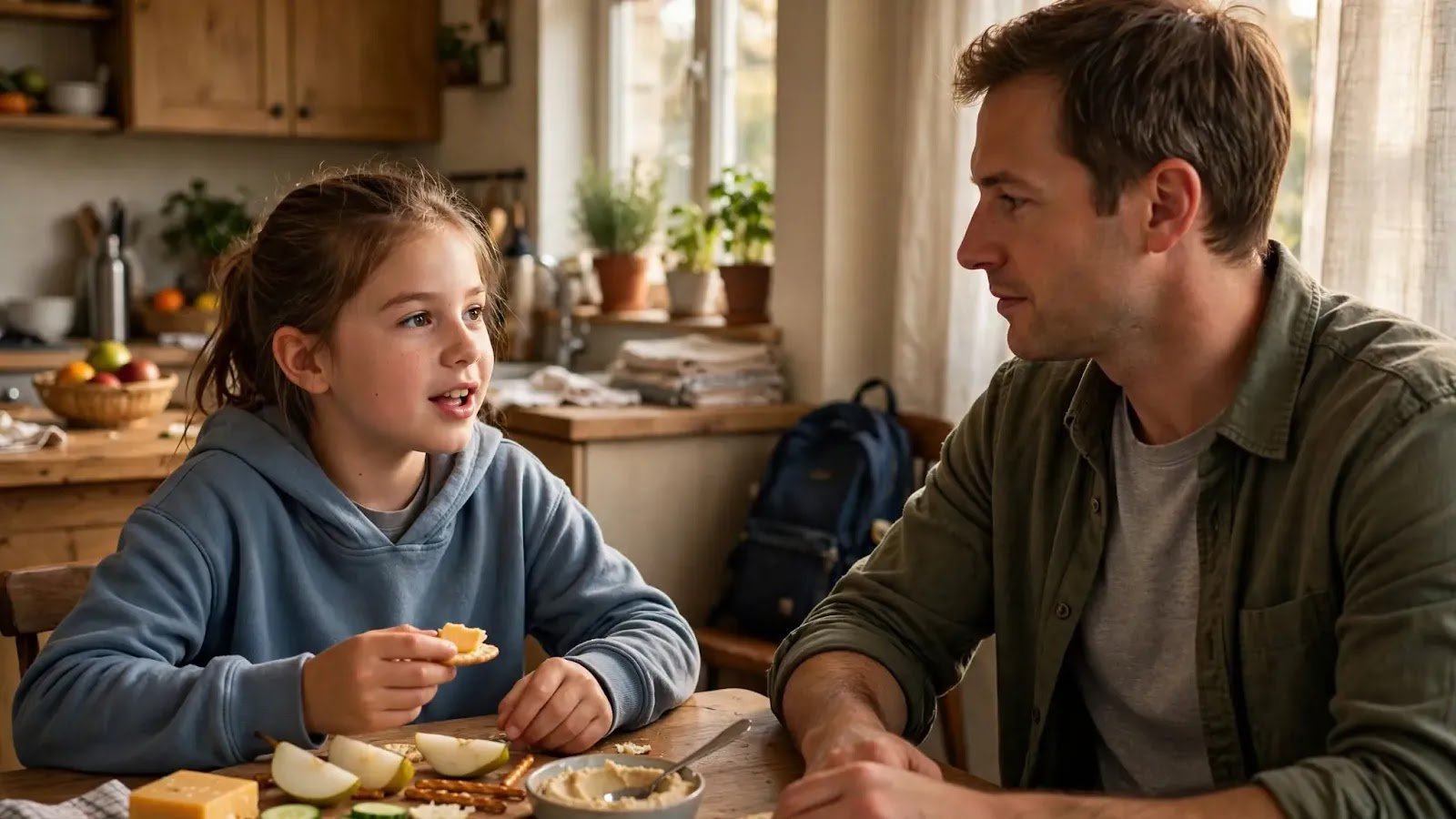
Change the Timing Before You Blame the Question
Sometimes the question is fine and the timing is terrible.
Your child gets into the car and immediately hears:
“How was your test?”
“Who did you play with?”
“Did you remember your library book?”
“What homework do you have?”
They may have just spent most of the day listening, answering questions, switching tasks, and following directions.
Some kids want to talk immediately. Others need food, movement, music, silence, or simply a few minutes at home first.
Try moving the conversation to:
- An after-school snack.
- A walk.
- The drive to an activity.
- While making dinner.
- Dinner itself.
- A quieter moment later in the evening.
If your child routinely arrives home unusually irritable or overwhelmed, see why kids sometimes act worse after school and what helps. In that situation, the transition may need attention before the conversation does.
Side-by-Side Conversation Can Feel Easier
Not every meaningful conversation needs intense face-to-face attention.
Many children talk more naturally while doing something else:
- Walking.
- Driving.
- Drawing.
- Cooking.
- Building something.
- Doing a simple household task together.
The shared activity can lower the pressure. Your child can pause, think, or look somewhere else without feeling watched for the “correct” answer.
This can become especially useful as children get older.

Share Something Before You Ask Something
If the child is always the person being questioned, the exchange can start feeling like a daily report.
Make it more mutual.
Instead of:
“Tell me something funny that happened today.”
try:
“I walked into the wrong meeting today and it was incredibly awkward. Did anything weird happen to you?”
Or:
“The hardest part of my day was getting through a task I’d been avoiding. What was yours?”
HealthyChildren.org encourages parents to talk regularly with children, ask about friendships and activities, and share the best and harder parts of their own day as well.
The dynamic shifts from:
Parent interviews child.
to:
Two people share something about their day.
Ask Questions That Fit Your Child’s Age
Younger elementary-age children often respond best to concrete things they can picture:
- “What game did you play?”
- “Who sat near you?”
- “What made your teacher laugh?”
- “Was recess fun or annoying today?”
Older elementary-age kids can handle more opinion and reflection:
- “Which class felt easiest today?”
- “Did anything make you proud?”
- “Who did you spend the most time with?”
- “Was there anything you wish had gone differently?”
With tweens and teens, questions can leave more room for independence:
- “What took the most energy today?”
- “Who made the day better?”
- “Did anything happen that you’re still thinking about?”
- “Was today mostly good, mostly annoying, or somewhere in the middle?”
An older child may also prefer telling you something hours later rather than during the ride home.
When They Start Talking, Do Not Immediately Turn It Into a Lesson
You finally get a real answer:
“We were talking during class and the teacher moved us.”
If your immediate response is:
“Well, that’s what happens when you don’t pay attention. I’ve told you—”
your child is no longer describing their day. They are defending themselves.
This does not mean you never address behavior.
It means every disclosure does not need to become a lesson in the first three seconds.
Try:
“Oh. What happened after she moved you?”
Listen first. Decide afterward whether something actually needs follow-up.
If your instinct is to immediately solve or correct every story, how to listen to your child without fixing every problem covers that pattern more deeply.
Make It Safe to Tell You the Uncomfortable Parts Too
Sometimes the casual school story becomes important:
“Some kids were making fun of someone today.”
Or:
“My friend got in trouble for something we both did.”
Your first response can influence whether you hear the rest.
The CDC encourages parents to make sharing feel safe and, when children say something surprising or uncomfortable, to try to understand what they mean before jumping to anger, punishment, or conclusions.
Try:
“Tell me what happened.”
You can still respond appropriately once you understand the situation.
If the Answer Is Still “Nothing,” Let the Pressure Drop
Do not turn one short answer into a cross-examination:
“Nothing?”
“Really?”
“You were there all day and nothing happened?”
Try:
“Okay. If you remember something worth telling me later, I’m interested.”
Then move on.
Sometimes the story appears twenty minutes later because the pressure disappeared.
If your child tells you that you ask too many questions, take the feedback seriously:
“You’re right. I got carried away. You don’t need to give me a full report.”
If conversations repeatedly end with your child feeling interrogated or unheard, what to say when your child says “You never listen to me” can help reset that broader pattern.
Ask About More Than Performance
If every school conversation is about homework, grades, missing assignments, behavior, and teacher messages, “Tell me about school” can start sounding like a performance review.
Ask about the parts of school that are simply part of your child’s life:
- Friends.
- Funny moments.
- Lunch.
- Games.
- Art or music.
- What surprised them.
- What bored them.
HealthyChildren.org encourages parents of school-age children to stay interested not only in schoolwork but also friendships and everyday experiences.
Use Conversation Prompts Lightly
If everyone is tired of the same questions, the Free Conversation Starter Generator for Families & Couples can give you occasional low-pressure prompts for the car, dinner, or quiet family time.
The useful part is not completing a list.
Ask one question.
Answer it yourself too.
Let the conversation wander somewhere unexpected.
Try a One-Question Experiment
For the next week, replace the automatic “How was school?” with one specific question each day.
For example:
- Moment: “What made you laugh today?”
- Person: “Who did you talk to the most?”
- Feeling: “Was there anything you felt proud of?”
- Detail: “What happened right before lunch?”
- Opinion: “Which part of school would you skip if you could?”
- Share first: Tell one story from your own day, then invite theirs.
- Ask nothing: Spend time together and see whether conversation starts on its own.
The goal is not collecting more information about school.
It is learning which conditions make your child more likely to talk naturally.
Some Days, Not Talking About School Is Fine
Your child does not owe you a complete daily transcript.
Some days really are ordinary. Some children need time before talking. Some afternoons they may simply want a snack and a break.
The goal is to keep communication available—not to extract a report.
A sudden, significant change is different. If your child becomes much more withdrawn than usual, seems persistently distressed about school, begins avoiding school, or you notice another meaningful change in mood or behavior, look beyond the quality of your conversation starters and consider checking in with school staff or your child’s pediatrician as appropriate.
So when “How was school?” keeps getting you “fine,” make the question smaller.
Ask for one moment.
One person.
One feeling.
One detail.
Then listen long enough for that small answer to become a real conversation.