
How to Stop Repeating Yourself to Your Kids All Day

“Shoes on, please.”
No movement.
“Shoes.”
Still nothing.
A few minutes later, you hear yourself shouting across the house:
“HOW MANY TIMES DO I HAVE TO TELL YOU?”
When this happens all day, giving more reminders can become part of the problem. A child may gradually learn that the first request is background noise, the second is still optional, and the instruction only becomes serious when your voice changes.
The way out is not yelling sooner. It is making the first direction clearer—and replacing endless reminders with calm follow-through.
Break the Repeat-Repeat-Yell Loop
A common pattern looks like this:
- You give a direction while your child is busy.
- Nothing happens.
- You repeat it from across the room.
- You repeat it again with more irritation.
- Eventually you raise your voice.
- Your child finally acts.
Now both of you have learned the wrong lesson.
You think, “They only listen when I yell.”
Your child may learn, “I don’t need to move until the voice gets serious.”
The CDC’s current guidance on giving directions specifically recommends avoiding repeated directions and escalating volume. Instead, get the child’s attention, give a clear direction, check whether it was followed, and then follow through.
Get Attention Before Giving the Direction
A request shouted from another room may feel clear to the adult who said it and barely register for the child who is building, reading, gaming, drawing, or watching something.
Before an important direction:
- Move close enough to know your child can hear you.
- Say their name.
- Pause the competing activity when appropriate.
- For a younger child, get near their level.
- Then give the instruction.
This does not mean demanding intense eye contact for every request. The goal is simply to know the message actually landed before counting it as the first reminder.
Give One Action, Not a Paragraph
“Go upstairs, find your shoes, get your folder, put it in your backpack, use the bathroom, and get ready because we’re leaving.”
For a young child, that may be less of a direction and more of a memory test.
Try:
“Please put your shoes on.”
Then move to the next step.
The CDC recommends one direction at a time for toddlers and preschoolers. Older children can manage longer sequences, but even they do better when it is obvious where to begin.
Also make the action specific.
Instead of:
“Clean this up.”
try:
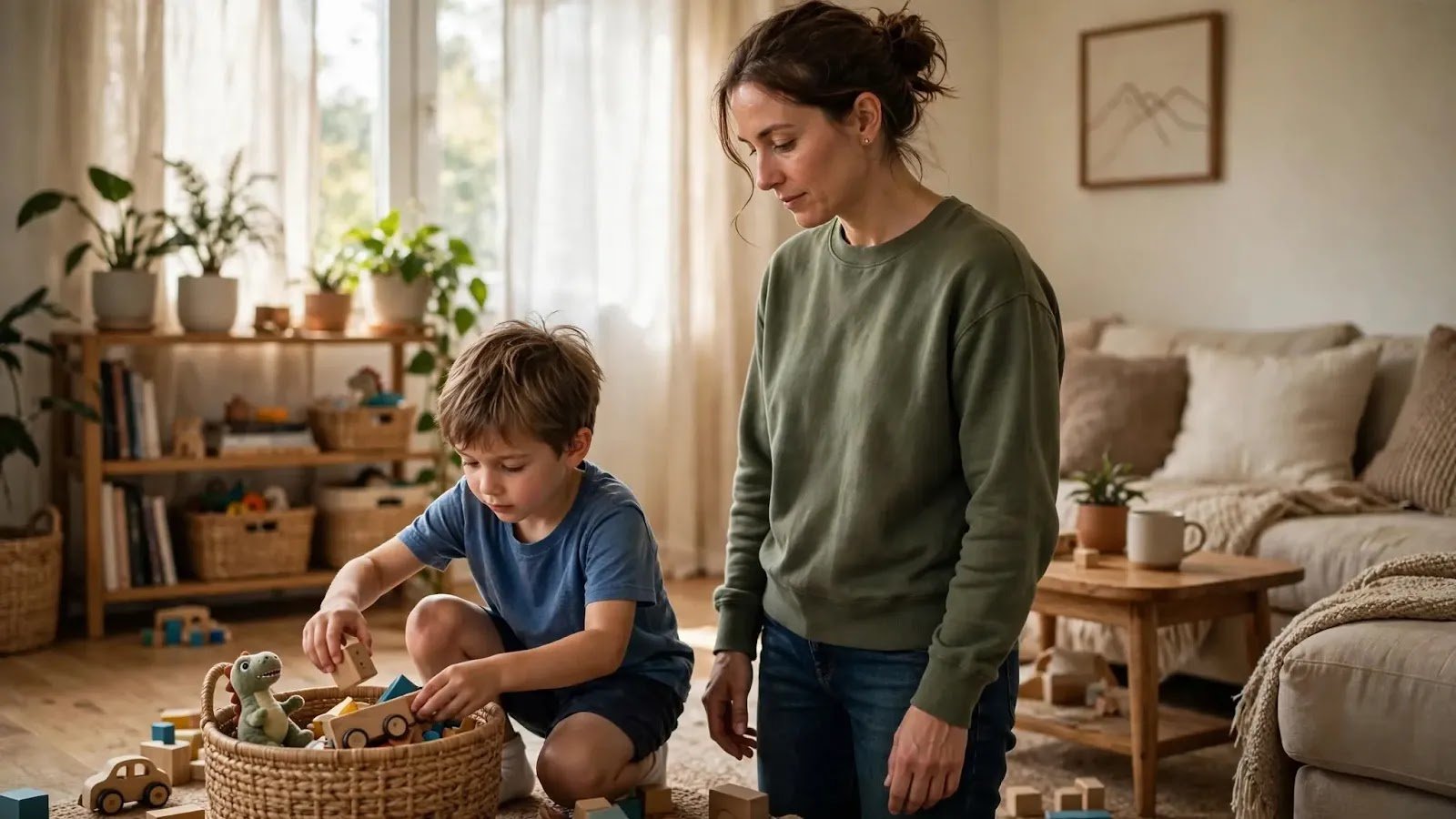
“Put the Lego pieces in the bin.”
Instead of:
“Get ready.”
try:
“Put your shoes on and bring your backpack to the door.”
If making directions clear is the weak point in your current routine, how to give clear instructions kids can actually follow goes deeper into wording and age-appropriate directions.
Check Whether the Child Can Actually Do What You Asked
A child can look noncompliant when the real problem is that the task is too large or unclear.
“Put your cup on the table” is concrete.
“Clean your room before dinner” may require sorting clothes, toys, books, trash, and belongings without knowing where to start.
The CDC makes an important distinction: inability is not the same as disobedience.
If you keep repeating the same large request, shrink it:
“Start with the clothes. Put them in the hamper.”
Once your child learns the sequence, you can gradually hand more of it over.
Do Not Ask When the Task Is Not Optional
“Can you brush your teeth?”
“No.”
If “no” was never an acceptable answer, the question created an unnecessary negotiation.
Try:
“It’s time to brush your teeth.”
You can still offer real choice inside the expectation:
“Do you want to brush before pajamas or after?”
The task stays clear while your child gets appropriate control over part of it.
Give Them a Moment to Respond
Repeating too slowly can become nagging. Repeating too quickly can create a different problem.
“Put your shoes on.”
One second later:
“Shoes, please.”
Then:
“Did you hear me?”
Unless safety requires immediate action, allow a reasonable pause.
Your child may be shifting attention, putting down what they are holding, or processing the instruction.
A pause is not unlimited waiting. It simply gives the first direction a chance to work.
Repeat Once When You Need to Clarify—Then Follow Through
Sometimes repeating is completely reasonable.
Your child genuinely did not hear.
The direction was unclear.
You need to confirm understanding.
But once you know the instruction was heard and understood, another five reminders usually replace the thing that needs to happen next.
A useful sequence is:
- Get attention.
- Give one clear direction.
- Pause.
- Repeat once if needed and state the next step or consequence.
- Follow through.
For example:
“Please put the truck in the toy box.”
If your child does not:
“The truck needs to go away now. If you choose not to put it in the box, I’m putting it away for the rest of today.”
Then, if necessary, do what you said.
The American Academy of Pediatrics recommends clear limits and calm, consistent consequences that adults are prepared to follow through on.
Make Follow-Through Smaller Than the Argument
Follow-through does not need to become a dramatic punishment.
If a toy keeps being thrown unsafely after a clear direction, the toy can be put away for now.
If an agreed screen session ends and your child refuses to turn the device off, you can end access rather than offering fifteen more verbal warnings.
If a younger child needs shoes on before leaving, you may need to move from reminding to helping them complete the transition.
The response should fit the child’s age and the situation.
If the direction-reminder cycle regularly escalates into shouting, how to get kids to listen without yelling covers that larger escalation pattern.
Do Not Let Your Voice Become the Family Reminder System
Some things you repeat are not really discipline problems at all.
“Lunchbox!”
“Don’t forget your backpack.”
“Shoes by the door.”
“Did you put your folder away?”
If the same instruction appears every day, build it into the environment.
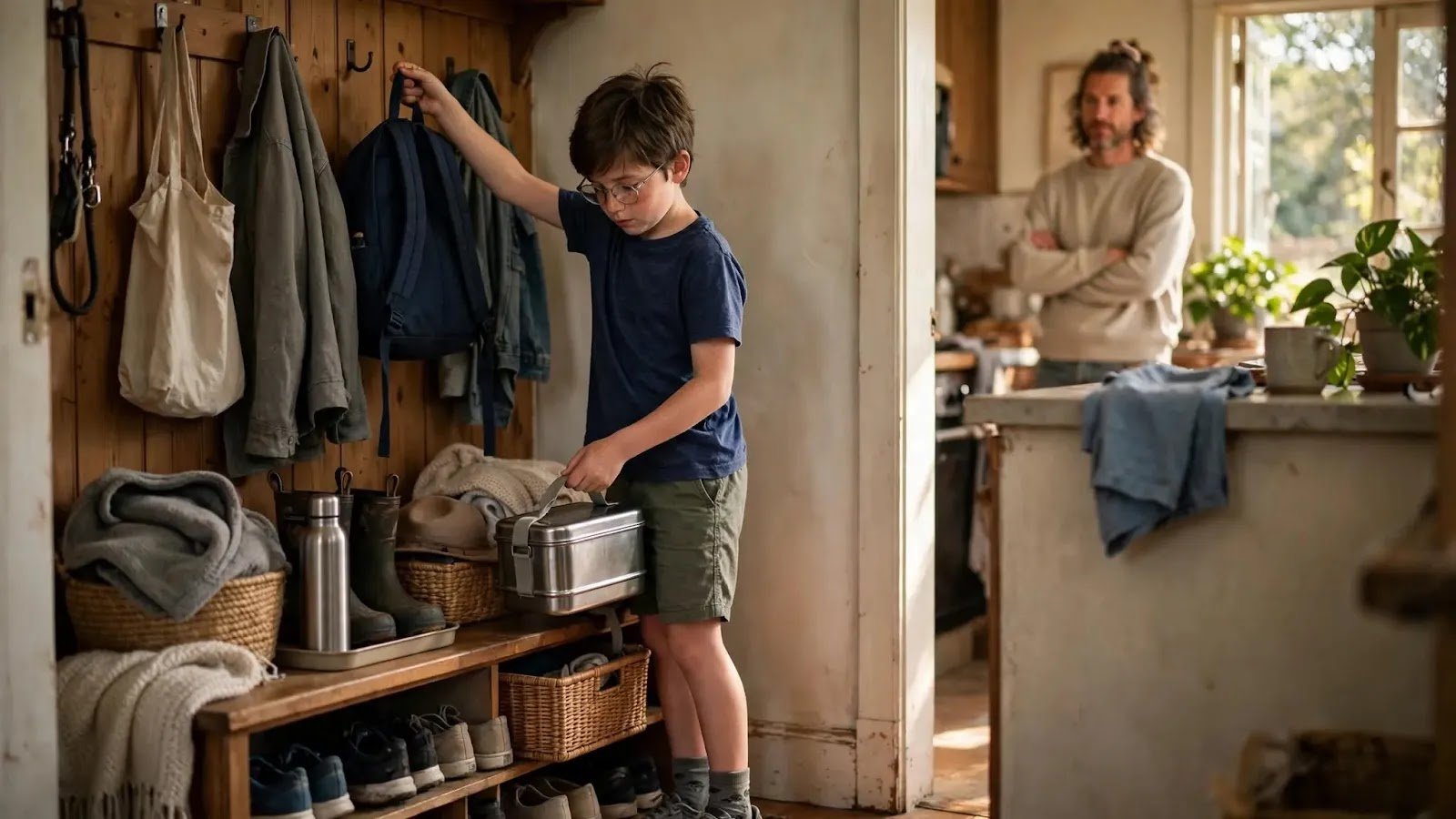
Give the backpack one home. Keep the lunchbox near the place it needs to go. Put sports equipment in a predictable launch spot. Use a small visual routine for a younger child or a short checklist for an older one.
A routine such as:
- Backpack away.
- Lunchbox to the kitchen.
- Shoes in their place.
- Check what happens next.
can eventually replace four daily reminders.
The CDC’s current routines and rules guidance emphasizes consistency, predictability, and follow-through so children can learn what happens next.
If you want to move a recurring sequence out of your head and into a routine your child can see, the Free Family Routine Builder can help organize those steps.
Notice When Your Child Responds Before Reminder Number Five
The behavior you want is easy to miss because it causes no problem.
“Please put your plate in the sink.”
Your child does it.
The day continues.
Meanwhile, ignoring the instruction may produce several minutes of intense parental attention.
Occasionally name successful cooperation:
“Thanks for putting that away when I asked.”
Or:
“You stopped playing and got ready right away. That helped us leave on time.”
Both CDC and AAP guidance recommend specific positive attention for behavior adults want children to repeat.
If your child follows the direction while sighing or sounding annoyed, you do not always need to create a second conflict about the attitude. The task was completed. You can address genuinely disrespectful behavior separately when needed.
Reduce the Number of Directions You Give
If you feel like you spend an entire hour issuing instructions, improving every individual direction may not be enough.
Notice the tasks you remind your child about most often and ask:
- Can a routine handle this?
- Can changing the physical setup prevent the reminder?
- Can two familiar steps become one established expectation?
- Does this actually need parental direction at all?
Sometimes the fastest way to repeat yourself less is simply to stop managing details that no longer need adult narration.
Expect Independence to Grow Gradually
Toddlers and preschoolers still need more reminders, shorter instructions, visual cues, and hands-on help with transitions.
School-age children can gradually take more ownership of familiar morning, after-school, and bedtime routines. Teach the sequence first, practice it, and reduce reminders as they learn it.
Tweens and teens generally need fewer minute-by-minute commands and clearer ownership of expectations.
Instead of repeatedly saying:
“Do your homework.”
the family may need an established agreement about when responsibilities happen and what follows if they repeatedly do not.
More independence should mean greater ownership—not the same parental reminders shouted from farther away.
When Repeating May Point to Something Else
Not every child who needs repeated directions is simply ignoring a parent.
If your child frequently seems unable to hear you, regularly struggles to understand age-appropriate directions across settings, or you have broader concerns about communication, learning, development, attention, or behavior, discuss the pattern with your child’s pediatrician and, when relevant, their teacher.
You do not need to decide why it is happening yourself. The point is to notice when the difficulty seems broader than ordinary stalling or distraction.
Try One Direction for Three Days
Do not try to eliminate every reminder in your home at once.
Choose the instruction you are most tired of repeating—maybe:
“Put your shoes on.”
For three days:
- Walk over before saying it.
- Get your child’s attention.
- Give the specific direction once.
- Pause long enough for a reasonable response.
- Clarify once if needed.
- Follow through instead of repeating again.
- Notice when your child responds successfully.
You may still hear “I don’t want to.”
You may still need to remind a young child sometimes.
The goal is not instant obedience to every sentence.
The goal is a different family pattern: the first clear direction matters before frustration turns it into the sixth one.