
How to Teach Kids to Wait Without Constant Complaints

The grocery line has moved about two feet.
“Is it our turn yet?”
“Not yet.”
Ten seconds later:
“How much longer?”
Another ten seconds:
“But I don’t waaant to wait.”
When this happens everywhere—from the microwave to the playground to the moment you answer another person’s question—it can seem like your child simply has no patience.
But waiting is not one instruction children automatically know how to follow. It asks them to manage an impulse, remember what they are waiting for, tolerate frustration, and cope with not knowing exactly when something will happen.
Those are skills, and skills can be practiced.
Start With a Waiting Map
“Soon.”
“In a little while.”
“Give me a minute.”
Those phrases are clear to adults and surprisingly vague to young children.
Before a predictable wait, answer three questions:
- What are we waiting for?
- How will you know the wait is over?
- What can you do while you wait?
For example:
“I’m talking to Grandma. When I hang up, I’ll help with your puzzle. While you wait, you can keep trying it or choose another toy.”
Or:
“Noah is on the swing now. When he gets off, you’re next. You can watch or play nearby until your turn.”
This gives your child much more useful information than:
“Be patient.”
The Center on the Developing Child at Harvard University explains that executive function and self-regulation skills help people manage attention, remember goals, plan, and control impulses. Children develop these skills over time through supportive experiences and practice.
Make the End of the Wait Visible
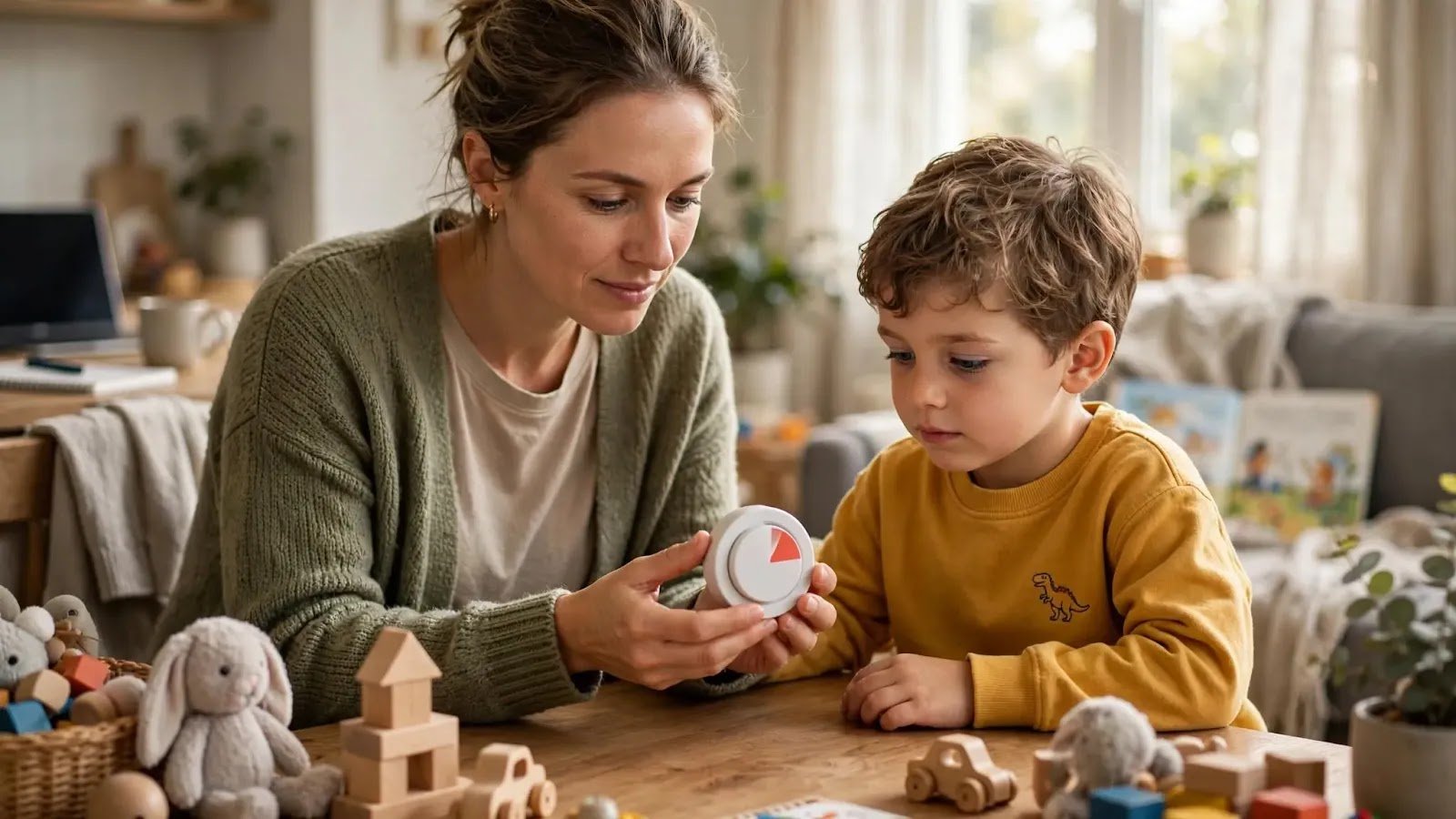
Young children often handle a delay better when the endpoint is concrete.
You might use:
- A visual or kitchen timer.
- The end of a song.
- Another person’s turn ending.
- A familiar event: “after I put these groceries away.”
- A clear sequence: “after dinner, then dessert.”
Instead of:
“I’ll play later.”
try:
“I’m finishing the dishes. When the timer ends, I’ll come play.”
Then follow through.
The timer itself is not the important part. Predictability is.
The CDC’s current routines and structure guidance emphasizes consistency, predictability, and following through on what adults say will happen.
Build Patience With a Waiting Ladder
Do not make your child’s hardest wait of the week their only patience practice.
If a preschooler struggles to wait thirty seconds while you finish a sentence, expecting quiet patience through a long restaurant delay is a very large jump.
Build gradually.
Level 1: Tiny Waits With an Obvious End
“Wait while I pour your water.”
“My turn, then your turn.”
Level 2: Short Waits With a Cue
“When this song ends, I’ll help you.”
“Wait until I finish putting these clothes in the washer.”
Level 3: Wait While Doing Something Else
“We’re leaving for the park after lunch. You can play until then.”
Level 4: Unpredictable Real-Life Waits
Checkout lines, traffic, restaurants, doctor’s offices, or waiting while a sibling needs help first.
These are harder because the endpoint is less controllable.
Practice easier waits often so the most difficult situations are not your child’s only opportunities to learn.
Teach “Ask Once, Hear the Answer, Then Wait”
Your child asks:
“Can I have dessert?”
You answer:
“After dinner.”
Thirty seconds later:
“Can I have it now?”
Then again.
And again.
If every repeated question earns a fresh explanation, waiting has turned into an ongoing negotiation.
Teach a simple pattern:
“You can ask. I’ll answer. Once I’ve answered, asking again won’t make it happen sooner.”
When the question returns:
“I already answered. After dinner.”
Or simply:
“Same answer.”
Briefness keeps you from spending the entire wait re-explaining the wait.
Acknowledge the Frustration Without Ending the Wait
Patience does not require enjoying the delay.
Your child says:
“This is taking forever!”
You can answer:
“It does feel long.”
Or:
“You’re really ready for your turn. Maya is still finishing hers.”
Or:
“You don’t have to like waiting. You still need to wait.”
You recognized the feeling without changing the sequence.
Do Not Make Cheerful Waiting the Standard
A child may sigh and say:
“I wish it were my turn.”
while still standing beside you and waiting appropriately.
That counts.
If your definition of patience requires silence, smiling, no disappointment, and a pleasant tone, you may accidentally create a second argument about emotions.
Look first at what your child actually did:
- Did they stay where they needed to stay?
- Did they keep themselves and others safe?
- Did they wait for their turn?
- Did they avoid repeatedly interrupting?
Frustrated waiting is still waiting.
Give Younger Kids Something Appropriate to Do
“Stand here and wait” can be a lot to ask from a young child.
During harder waits, give them a simple job or option.
At the grocery store:
“Can you find three red things in our cart?”
While helping a sibling:
“Choose the book we’ll read when I’m finished.”
At a restaurant:
“Want to play I Spy while we wait?”
This is scaffolding—not a promise that you will entertain your child through every quiet second.
As the skill improves, you can provide less support.
Do Not Make a Screen the Automatic Waiting Tool
A phone or tablet can be useful in some situations.
It does not have to appear every time there is a five-minute delay.
If every line, restaurant wait, car delay, and sibling activity immediately produces a device, your child has fewer ordinary chances to discover that boredom and waiting are manageable.
Choose some short, realistic waits without a screen.
Talk. Look around. Play a simple verbal game. Let your child think of something to do—or experience a little boredom.
You do not need to turn the wait into a lesson either.
Practice When Nobody Is in a Hurry
The easiest time to teach waiting is not when everyone is late.
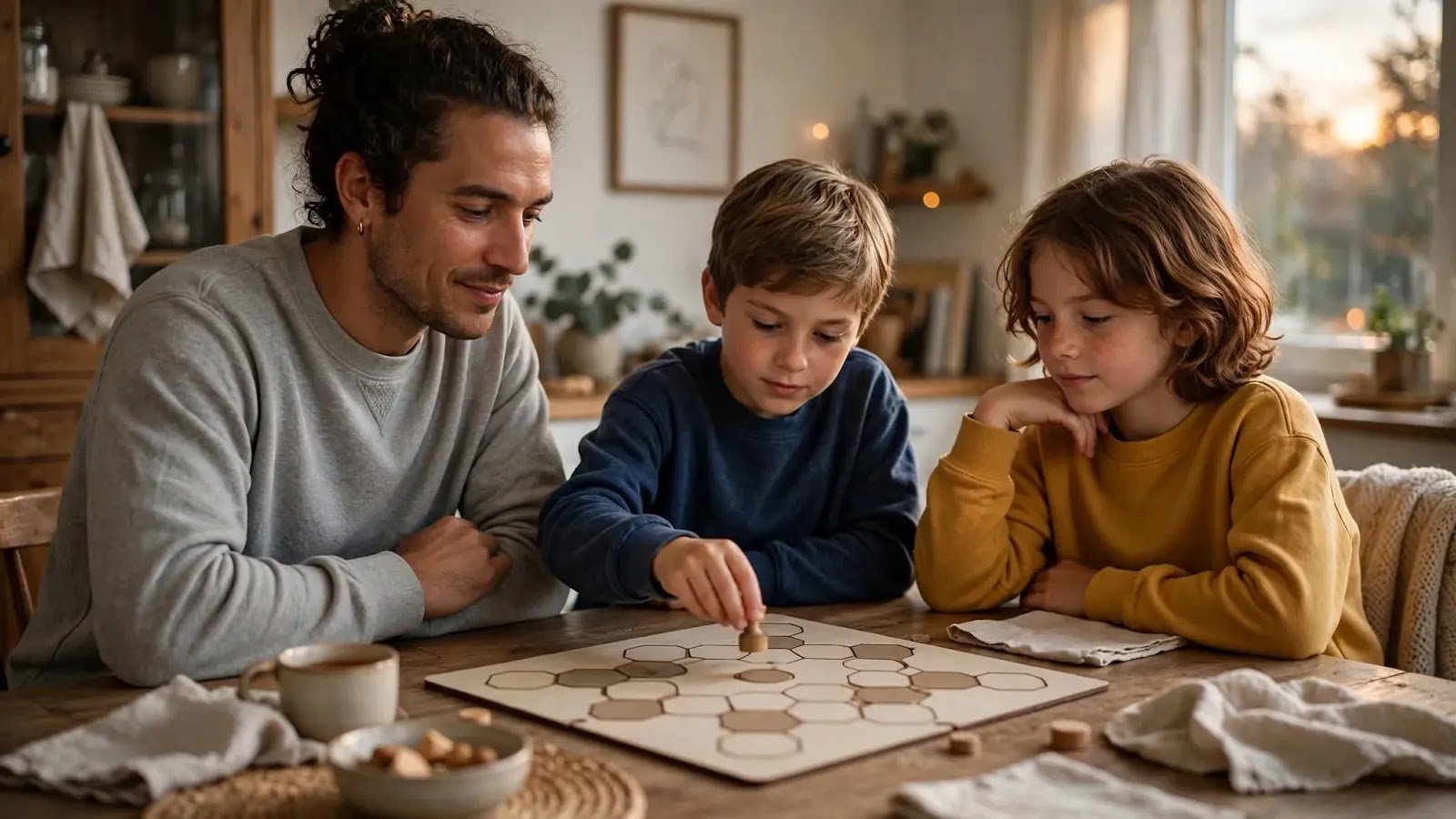
Games naturally provide low-pressure practice with turns, stopping, starting, and impulse control.
Examples include:
- Simple board or card games.
- Red Light, Green Light.
- Freeze dance.
- Taking turns building something.
- Cooking together and waiting for the next step.
Harvard’s executive-function activities guide describes age-appropriate games and activities as opportunities to practice attention, working memory, self-control, and flexible thinking.
A turn-based game teaches a useful version of waiting:
“It isn’t my turn yet—and my turn is coming.”
Notice Waiting Before Complaining Gets Your Attention
You have been in line for four minutes.
Your child has stayed beside you the entire time.
Nothing is said.
Then the complaints begin—and suddenly they have your full attention.
Try making the successful waiting visible first:
“You’ve been waiting beside me while this line moves. Thank you.”
Or:
“You wanted to interrupt, but you waited until I finished speaking.”
Or:
“Your brother needed help first, and you waited for your turn.”
The CDC’s current behavior guidance uses this exact kind of specific positive attention to reinforce behavior adults want to see more often.
Be Honest When “Wait” Really Means “No”
Sometimes adults say:
“Maybe later.”
when they already know the answer is no.
The child then waits—and keeps asking because the possibility still sounds open.
If the answer is no, make it clear:
“We’re not buying that today.”
Your child may still be disappointed, but they are no longer waiting for an outcome you never intended to provide.
If holding that no without escalating is the harder part, how to set firm limits without being harsh focuses on that skill.
Do Not Invent Delays Just to Teach Patience
Real life already provides plenty of waiting.
A sibling’s turn.
Dinner cooking.
A parent finishing a task.
A checkout line.
An appointment that has not started.
If you can reasonably respond to your child now, you do not need to manufacture an unnecessary five-minute delay as a lesson.
Patience should not mean:
“Adults can make children wait for no reason.”
Use the waits that genuinely exist.
Some Needs Should Not Become Waiting Practice
If your child urgently needs the bathroom, is injured, frightened, unsafe, or genuinely needs immediate help, respond to the need.
A child asking for help because they are in danger is not being impatient.
Waiting practice belongs where waiting is safe, reasonable, and appropriate for the child’s age and abilities.
What to Say When the Complaints Keep Coming
You do not need a new response every time.
Repeated question:
“I already answered. Your turn is after lunch.”
Frustration:
“I know you don’t like waiting.”
Needs an endpoint:
“When the timer ends, I’ll help.”
Repeated interruption:
“I see you. Let me finish this sentence.”
The answer is actually no:
“This isn’t a waiting question. The answer is no today.”
Successful waiting:
“You waited even though you really wanted your turn.”
If the complaining itself has become a broader whining pattern, how to handle whining without losing your patience covers that communication loop separately.
Adjust Waiting Practice to Age
Toddlers and young preschoolers: Keep waits very short and concrete.
“My turn, then your turn.”
“When I put this away, I’ll help.”
Expect plenty of adult support.
Older preschoolers and early elementary kids: Practice clear endpoints and the pattern:
Ask once → hear the answer → wait.
Timers, games, turns, and predictable routines can help.
Older elementary kids: Give them more responsibility for managing the wait.
“We’ll probably be here about twenty minutes. What would you like to bring to do?”
The skill gradually shifts from the adult managing the child’s waiting to the child managing more of their own boredom and frustration.
If Waiting Turns Into a Meltdown
Once a younger child is extremely overwhelmed, screaming, kicking, or unable to use the strategies you practiced, stop trying to teach perfect patience in that moment.
Prioritize safety and help the situation settle.
Practice the waiting skill again later when everyone is calmer.
If this happens frequently with your younger child, how to handle toddler tantrums without turning every meltdown into a battle focuses on what to do once ordinary frustration has escalated.
Practice One Waiting Situation This Week
Choose one situation that regularly creates repeated complaints.
Not five.
One.
Maybe it is waiting while you finish a short phone call.
Before the call:
“If you need me, stand beside me. When I finish the call, I’ll listen to you.”
Or dessert:
“Dessert comes after the table is cleared. You don’t need to keep asking. That’s how you’ll know it’s time.”
Or taking turns:
“Ava goes first. When she gets off the swing, you’re next.”
Then:
- Make the endpoint clear.
- Give reasonable support during the wait.
- Keep your answer predictable.
- Avoid reopening the same explanation repeatedly.
- Notice when your child manages the wait.
Once that situation gets easier, choose another.
When Waiting Seems Harder Than Everyday Impatience
Children vary widely in temperament, development, communication, attention, and self-regulation.
Some will need substantially more support and practice than others.
If difficulty waiting is part of a broader pattern that is significantly affecting daily functioning across home, school, or other settings—or you also have concerns involving development, communication, learning, attention, or behavior—discuss the overall pattern with your child’s pediatrician or another appropriate professional.
The point is not to turn ordinary impatience into a diagnosis.
It is to notice when your concern is much broader than “Are we there yet?”
The Skill You Are Really Teaching
The lesson is not:
“Patient children never complain.”
It is:
“I can want something now, dislike the delay, know what I’m waiting for, and handle the space in between.”
Make the wait understandable.
Start small.
Keep the endpoint and your answer predictable.
And notice the successful waiting before the next complaint becomes the loudest part of the moment.