
How to Build Confidence in a Shy Child Without Pressuring Them

Your child chats nonstop at home, then barely speaks when another family arrives. Or they watch a playground game from the edge, whisper their restaurant order to you, and need half the birthday party before they feel ready to join in.
It is tempting to help by saying, “Go on—don’t be shy,” answering for them immediately, or pushing them into the situation so they can see there is nothing to fear.
But confidence usually grows better when a child gets manageable chances to participate successfully without feeling that their personality is a problem to fix.
Start by Separating Shyness From Lack of Confidence
Some children are naturally more cautious or slow to warm up around unfamiliar people and situations. That does not automatically mean they lack confidence everywhere.
A child may speak confidently at home, perform well at school, pursue hobbies independently, and still need extra time before talking to a new adult or joining a group.
HealthyChildren.org’s guidance on temperament describes some children as slow to warm up: they may initially withdraw from unfamiliar people or surroundings and become more comfortable once they have had time to adjust.
Your goal, then, does not have to be turning a quiet child into an outgoing one. A more useful goal is helping them do things that matter to them even when they need a little time or courage first.
Avoid Making “Shy” Their Identity
Be careful about introducing your child with:
She’s the shy one.
Or explaining in front of them:
He never talks to people he doesn’t know.
Even when you are trying to remove pressure, repeated labels can make a temporary behavior sound like a fixed role.
Use more neutral descriptions when an explanation is actually needed:
She usually likes a little time to warm up.
Or simply give your child time without explaining them to everyone in the room.
Build Confidence With Small, Winnable Steps
“Go make some friends” is a very large assignment for a child who is already unsure how to enter a group.
Break the situation into something smaller.
Depending on your child’s age and comfort level, one step might be:
- waving to a neighbor instead of starting a conversation,
- saying hello to one familiar child,
- staying at an activity for 10 minutes before deciding whether to join,
- asking a store employee one simple question while you remain nearby,
- joining a game with one child rather than a large group, or
- answering one question themselves before you step in.
The American Academy of Pediatrics recommends helping hesitant children take small social steps and practicing situations ahead of time when useful. HealthyChildren.org also suggests role-playing simple interactions and building on activities that already interest the child.
The step should stretch your child a little without making success feel almost impossible.
Prepare Them Without Rehearsing Every Word
Uncertainty can make a new social situation harder. A little preview often helps.
Before a birthday party, for example, you might explain:
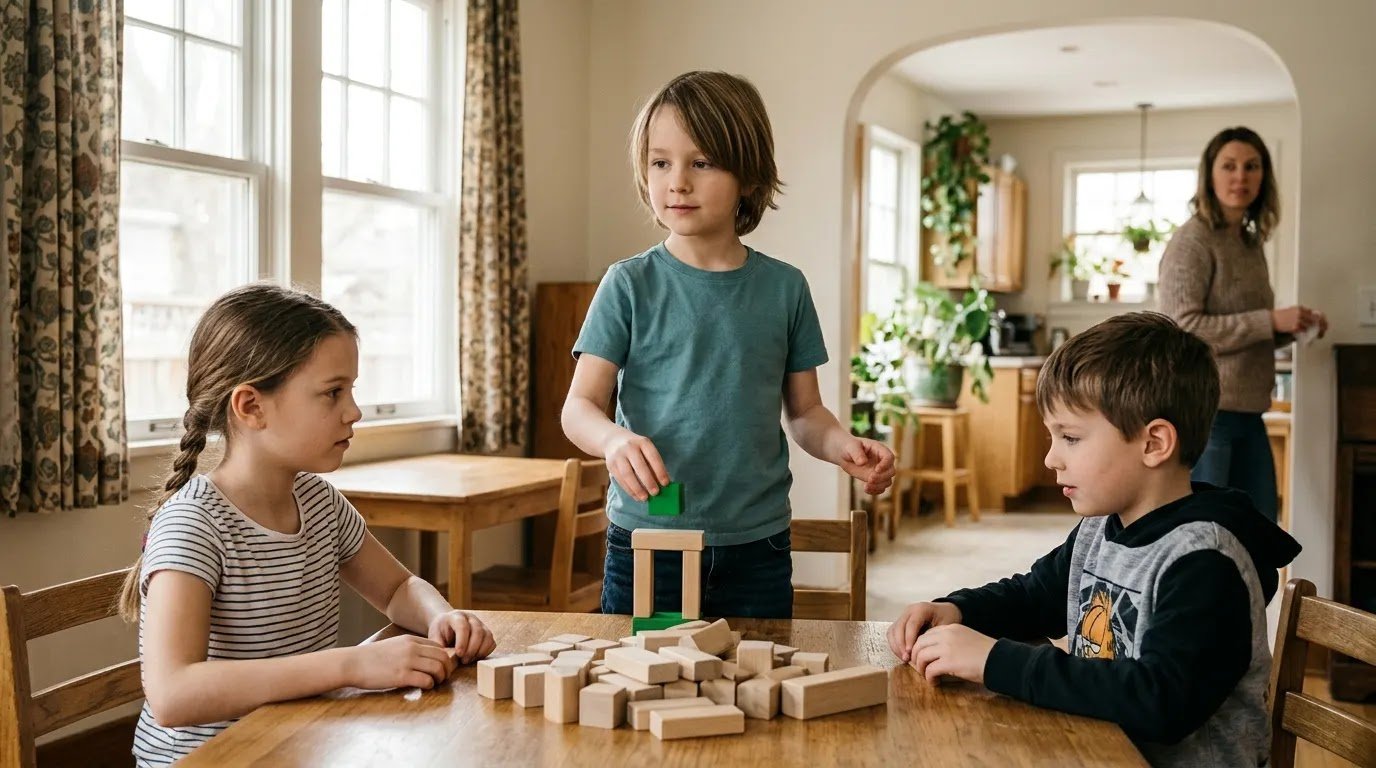
We’ll go inside together. You’ll probably see Maya and some kids from school. We can put the gift down first, and you can stay with me for a few minutes while you look around.
If your child worries about what to say, practice one or two simple openings:
- “Can I play too?”
- “What are you building?”
- “Can I sit here?”
- “Do you want to play with this?”
Then stop. The goal is to give them a starting point, not a script they have to perform perfectly.
Give Warm-Up Time Without Letting Avoidance Make Every Decision
There is a useful middle ground between forcing a child into a group immediately and automatically letting them avoid every uncomfortable interaction.
Imagine your child wants to attend a friend’s party but freezes when you arrive.
Instead of:
You’re staying right here until you go play.
or:
Okay, let’s just go home.
you might say:
We can stay together for a few minutes while you get comfortable. Then let’s choose one small thing you want to try.
This respects the child’s need to adjust while still leaving room for participation.
Try Not to Answer for Them Too Quickly
A server asks what your child wants to drink. A relative asks what grade they are in. Another child asks their name.
The pause feels uncomfortable, so you answer.
Sometimes that is completely reasonable. But if your child routinely looks to you to handle every low-stakes interaction, give them a little extra space first.
You can quietly ask:
Do you want to tell her, or would you like me to help?
Or agree beforehand that your child will try one part themselves and you will help with the rest.
The point is not to refuse help. It is to avoid removing every opportunity to practice because the first few seconds feel awkward.
Build From Places Where Your Child Already Feels Competent
Confidence often comes more naturally when the activity itself feels familiar.
A child who loves drawing may find it easier to interact in a small art class than at an unstructured party. A child who loves animals may talk more freely during a pet-related activity. A child who builds elaborate LEGO creations at home may connect more easily with another child over a shared project.
HealthyChildren.org recommends looking for activities that fit a child’s existing interests and strengths, since shared interests can make social interaction easier to begin.
You do not need to fill the calendar with activities to “socialize” your child. One comfortable setting with repeated contact can sometimes provide more useful practice than a series of large unfamiliar groups.
Praise the Brave Step, Not a New Personality
If your child finally answers a question or joins the group, avoid making the moment enormous:
See! You’re not shy anymore!
That can unintentionally turn the interaction into another performance.
Instead, notice what they actually did:
- “You looked nervous, but you asked if you could join.”
- “You took some time to watch first, then you went over.”
- “You answered for yourself even though it felt uncomfortable.”
Keep the praise proportionate. The message is not that outgoing behavior earns more approval. It is that effort, practice, and trying something difficult are worth noticing.
Let Quiet Kids Be Quiet Sometimes
Confidence is not measured by how much a child talks.
A child does not need to perform for relatives, entertain visitors, volunteer for every school presentation, or become the most social person in the room to prove that they are developing well.
Give them ordinary space to observe, listen, prefer one-on-one friendships, or enjoy time alone.
The question to watch is not simply, “Are they quiet?”
It is closer to: “Can they participate in the parts of life they want and need to participate in?”
When a Social Moment Goes Bad, Listen Before Coaching
Perhaps your child tries to join a game and is ignored. They say hello and another child does not respond. They freeze during a presentation they practiced for all week.
It is natural to immediately explain what they should do differently next time.
But first, let them tell you how the experience felt.
You might say:
That sounds like it was really uncomfortable. Do you want me to listen, or do you want to think about what might help next time?
The same approach is useful beyond shyness. If you tend to jump straight into solutions, How to Listen to Your Child Without Fixing Every Problem offers a fuller framework.
If the child is disappointed after taking a social risk, help them see one awkward experience as one experience—not proof that trying was a mistake. The strategies in How to Help Kids Handle Disappointment in Everyday Life can help with that next step.
Adjust Your Support as Your Child Gets Older
Younger children
Keep the steps concrete. Preview what will happen, stay nearby while they warm up, and offer simple choices such as whether to wave, speak, or join an activity for a few minutes.
School-age children
Involve them more in planning. Ask which situations feel easiest, which are hardest, and what small step feels realistic. Role-playing a greeting, question, or assertive response can be useful when they know a specific interaction is coming.
Preteens and teens
Give them more privacy and ownership. Avoid publicly explaining their quietness or arranging every social interaction without their input. Ask what they want help with rather than assuming that being quieter than their peers is automatically a problem.
Know When “Shy” May Need a Closer Look
Being reserved by itself is not a reason to diagnose a child or assume something is wrong.
But talk with your child’s pediatrician or another qualified professional if fear or distress is repeatedly keeping them from ordinary parts of life they want or need to do—for example, attending school, speaking when necessary, building friendships, joining activities they genuinely want to join, or separating from you.
HealthyChildren.org recommends checking with a pediatrician when a child’s distress around people or separation is significant or is not improving. That conversation can help distinguish a temperament that simply needs patient support from a difficulty that deserves more specific help.
Aim for Courage, Not Extroversion
You do not need to make your child louder, quicker to speak, or eager to enter every room.
Give them time to warm up. Help them practice one manageable step. Stay available without automatically taking over. Notice effort without turning every interaction into a test.
Over time, confidence can look like a quiet child who is still quiet—but knows they can say hello, ask for help, join in, speak up when it matters, and try again after an awkward moment.