
25 Calm-Down Activities for Kids After a Big Day
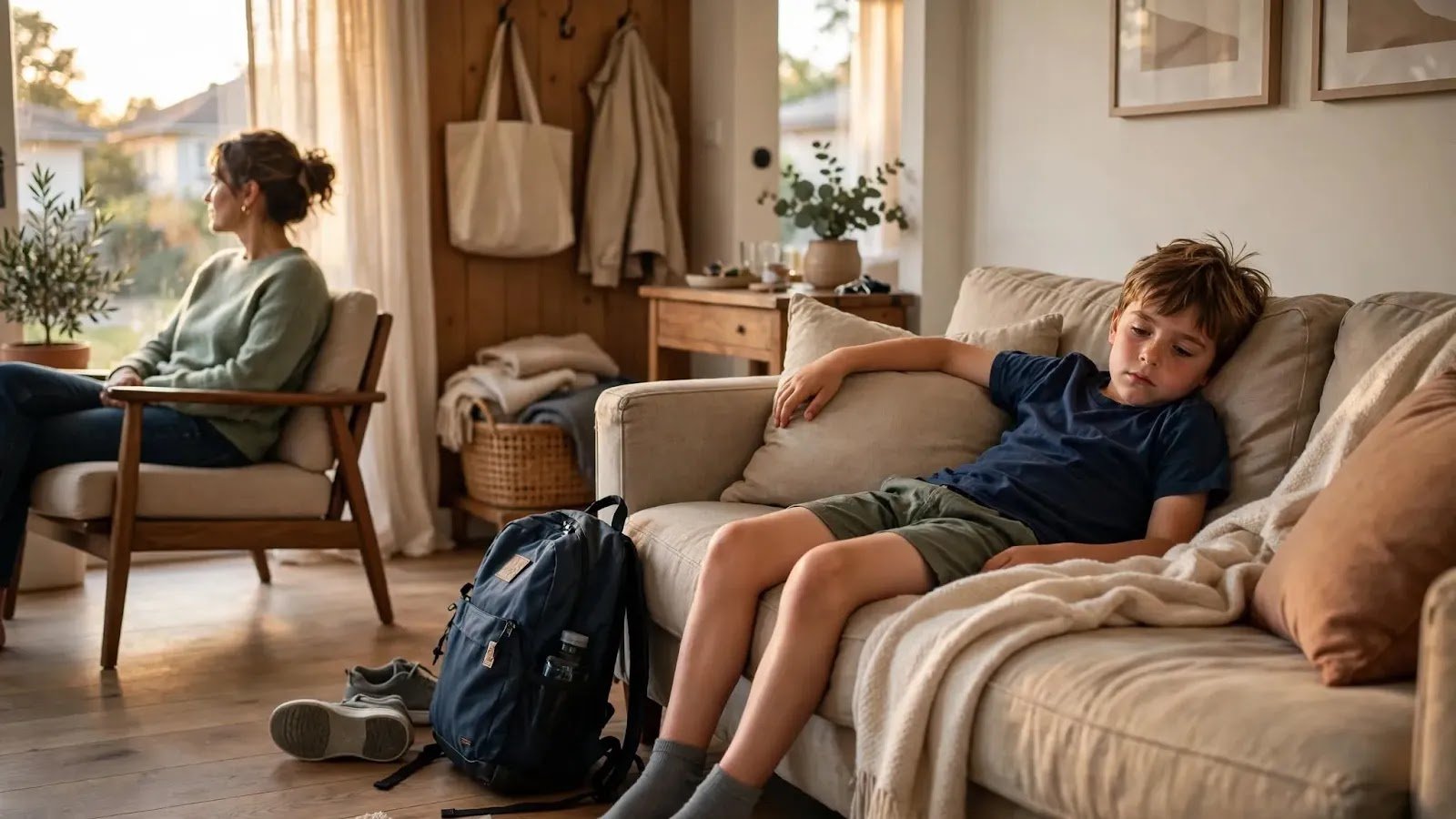
Your child comes through the door after school, a tournament, a birthday party, a long outing, or simply a day when everything seemed to happen at once.
You ask, “How was it?”
The backpack drops. One shoe lands in the hallway.
“I don’t know!”
Before reaching for another question, consequence, screen, or solution, try something simpler:
Read the child before you choose the activity.
Some kids need movement after a big day. Some need less sound and fewer questions. Some want you nearby without wanting to talk. Others have a brain full of unfinished thoughts that needs somewhere to put them.
The best calm-down activity is not the most creative one. It is the one that matches what your child needs right now.
Do the Front-Door Read First
Notice three things:
- Body: Are they restless and buzzing, or completely drained?
- Connection: Do they want company or space?
- Words: Are they ready to talk, or would another question feel like one more demand?
Also check the basics before turning the moment into emotional coaching.
A child who is hungry, thirsty, overheated, exhausted, uncomfortable, or desperate for the bathroom may need food, water, rest, or the bathroom—not a regulation exercise.
HealthyChildren.org’s guidance on helping children cope with stress emphasizes regulating first and includes movement, breathing, music, sensory activities, and side-by-side activities among possible ways to help children settle.
If Their Body Still Seems “On”
If your child is pacing, bouncing, crashing into things, or clearly carrying physical energy from the day, quiet sitting may not be the best first step.
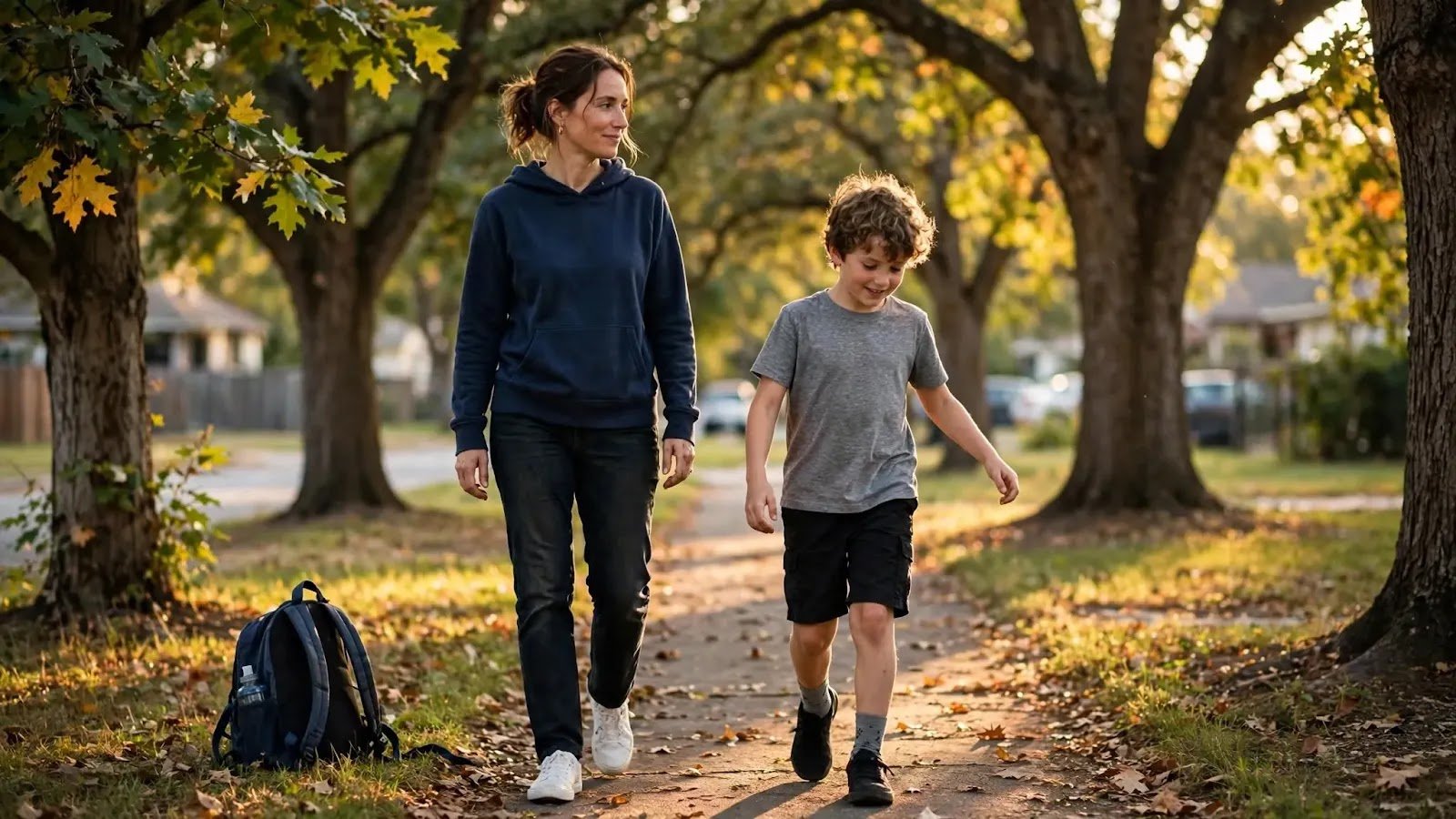
1. Take a No-Agenda Walk
Walk around the block without turning it into an interview.
If your child starts talking, listen. If not, keep walking.
2. Dance to One Song
Let your child choose one song and move however they want.
No workout. No performance. Just a short physical reset.
3. Try Wall Pushes
Hands against a sturdy wall, push firmly for several seconds, relax, and repeat if it feels good to your child.
4. Do Animal Walks
Bear walks, crab walks, frog hops, or another playful movement can work especially well for younger kids.
5. Toss or Kick a Ball
Throw a ball outside, kick it around, or shoot a few baskets without turning the activity into practice or competition.
If Everything Seems Too Loud
Some children come home looking as if one more question, sound, touch, or instruction may be too much.
Reduce input before adding more.
6. Offer a Quiet Landing Spot
A couch corner, familiar chair, floor cushion, or bedroom can simply become:
“You can hang out here for a while. I’ll be nearby.”
7. Put on Familiar Quiet Music
Let your child choose something they already find relaxing.
Music can fill the space without requiring conversation.
8. Use Play Dough or Modeling Clay
Roll, squeeze, flatten, and shape it without assigning a project.
9. Build Something Familiar
Blocks, magnetic tiles, or another familiar construction toy can give attention somewhere predictable to land.
Choose something they already know—not a new challenge after a demanding day.
10. Take a Warm Bath or Shower
For some kids, washing up after sports, travel, school, or a busy social event naturally marks the transition home.
Use age-appropriate supervision around water.
If They Want You Close but Do Not Want to Talk
Your child may follow you around while answering every question with “I don’t know.”
That can mean they want connection without conversation.
11. Have a Snack Together
Eat without requiring a report about the day.
Talk about something ordinary—or not at all.
12. Read Side by Side
You read your book. They read theirs. Or read aloud if that feels better.
13. Spend Quiet Time With the Family Pet
If your pet enjoys calm interaction, your child might sit nearby, gently pet, brush, or help feed them.
Respect the animal’s comfort and space too.
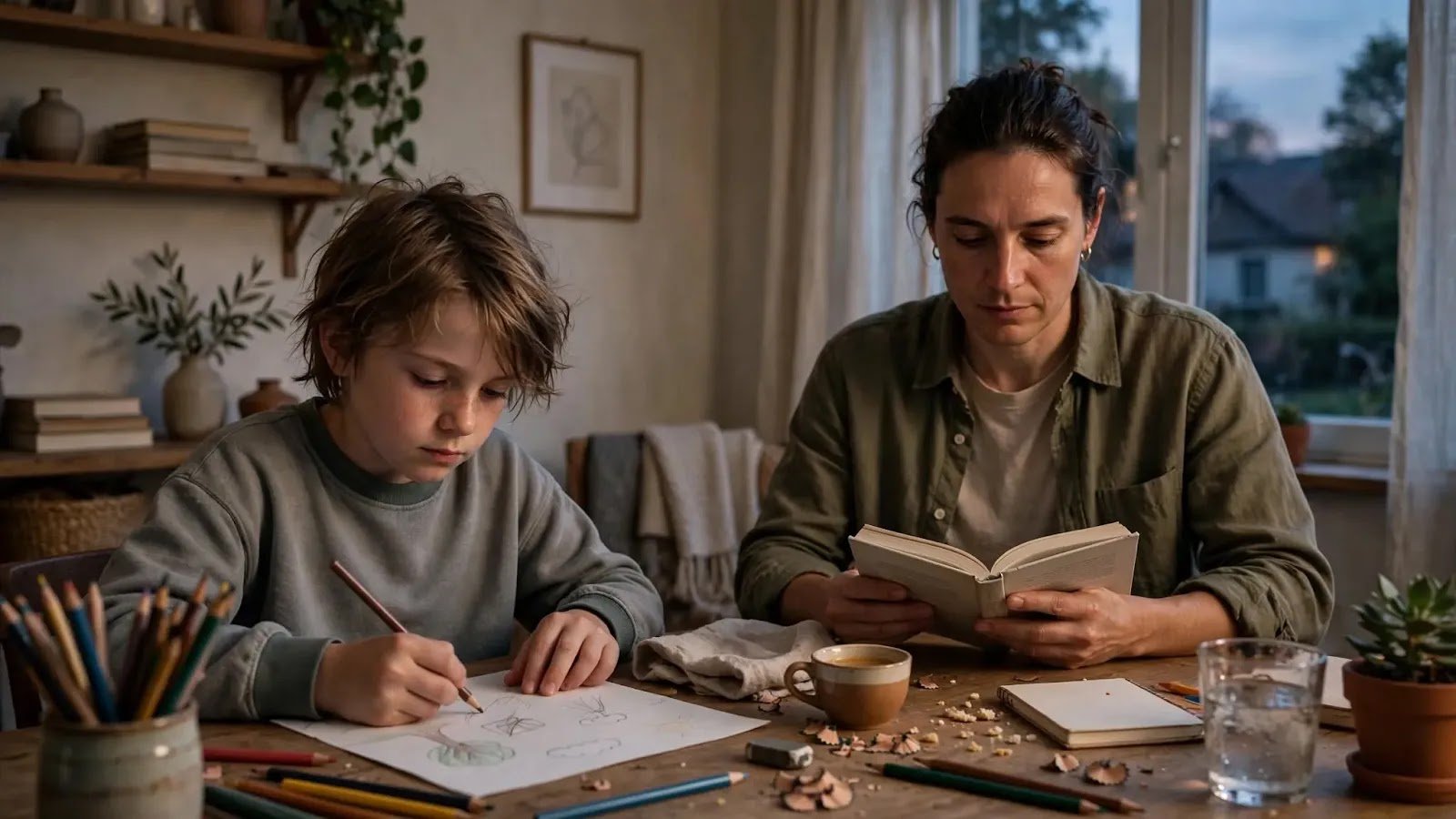
14. Do Parallel Activities
You cook while your child draws.
You fold laundry while they build on the floor.
Being together does not always require direct interaction.
15. Say One Sentence Instead of Asking Ten Questions
Try:
“You seem like you’ve had a big day. I’m here if you want to tell me anything.”
Then leave room for silence.
If the story comes later, listen before immediately trying to fix the problem.
If Their Brain Seems Full
Sometimes your child’s body looks settled while their mind is still replaying the teacher comment, friend problem, mistake, schedule, game, and tomorrow’s test.
Give those thoughts somewhere to go.
16. Draw the Day as Weather
Ask:
“If today were weather, what would it look like?”
Sunshine, fog, lightning, wind, mixed weather—there is no correct answer and no explanation required.
17. Try a One-Minute Brain Dump
For an older child:
“Write or draw anything your brain keeps carrying. Nobody has to read it.”
18. Do an Easy Puzzle
Choose a familiar puzzle, maze, or matching activity that is comfortably within your child’s ability.
Skip this one if puzzles tend to create more frustration.
19. Sort or Fold Something Simple Together
Pair socks, fold towels, or organize pencils.
A repetitive ordinary task can give hands something predictable to do while conversation happens—or does not happen.
20. Use Slow Breathing With a Concrete Cue
Younger children may find “take deep breaths” abstract.
Slowly blowing bubbles or using a pinwheel can give the exhale something visible to do.
HealthyChildren.org includes slow breathing among strategies families can practice to help children settle during stressful moments.
If the Day Needs a Gentle Ending
A big day may end close to bedtime—a tournament, long trip, family gathering, or packed Saturday.
Now the goal is less “release energy” and more “help the day land.”
21. Lower Unnecessary Stimulation
Turn off the loud television nobody is watching. Lower the general noise. Use softer lighting if practical.
You do not need to transform the house into a spa.
22. Do a Few Gentle Stretches
Reach up, roll shoulders, stretch legs, or touch toes comfortably.
Keep it easy rather than turning the reset into another exercise session.
23. Listen to a Familiar Story or Audiobook
A familiar story gives the brain somewhere predictable to go without requiring your child to produce anything.
24. Step Outside for Five Quiet Minutes
Sit outside, walk to the mailbox, or look at the sky.
It does not have to become a mindfulness lesson.
25. Offer a Tiny Menu
If both of you are tired, do not invent the perfect activity.
Try:
“Do you want to draw, build something, or listen to music?”
Or use the Free Screen-Free Activity Picker for Families when everyone wants an idea but nobody wants to brainstorm one.
Do Not Turn “Calm Down” Into Another Demand
Your child is overloaded.
You say:
“Go color so you can calm down.”
They refuse.
Suddenly the calming activity itself becomes the next fight.
Whenever safety does not require immediate action, offer rather than command:
“You seem really wound up. Want to walk with me or have some quiet time?”
Or simply make something available:
“I’m putting the play dough here if you want it.”
The CDC’s 2026 emotion-coaching guidance emphasizes staying calm, ensuring safety, connecting and listening, and helping children find solutions rather than trying to problem-solve while everyone is still overwhelmed.
Calm Does Not Always Look Quiet
A child dancing in the kitchen may be settling better than one who is forced to sit still.
A child talking rapidly about the day may be unloading it.
A child building silently may be doing the same thing in another way.
Instead of asking whether the activity looks calm, ask:
“Is my child moving from overloaded toward more settled?”
That direction matters more than whether the activity looks traditionally relaxing.
Connection Can Come Before Explanation
When a child looks upset, it is natural to ask:
“What happened?”
“Did somebody upset you?”
“What’s wrong?”
But a child who is overloaded may not have an answer yet.
You can offer food, quiet, movement, presence, or space before asking them to explain the entire day.
If they are ready to talk later, you will usually get a better conversation then.
Turn What Works Into a Familiar Reset
You do not need to choose among 25 activities every afternoon.
After a few big days, patterns usually appear.
Maybe your child’s reliable reset is:
Snack → backyard → homework.
Or:
Home → 20 minutes alone → snack with parent.
Or:
Walk the dog → shower → free time.
When something reliably helps, make it ordinary.
If you need to fit that reset into the rest of the afternoon, how to create an after-school routine for elementary-age kids covers the broader sequence.
If the Big-Day Reaction Happens Nearly Every School Day
Occasionally coming home cranky, restless, quiet, clingy, or mentally spent can happen after a demanding day.
If the pattern is specifically tied to coming home from school, why kids sometimes act worse after school and what helps looks at that situation more closely.
A calm-down activity is not the answer to every persistent problem, though.
Talk with your child’s pediatrician and, when relevant, school staff if distress is intense, worsening, interfering with sleep or school, showing up across settings, or accompanied by other meaningful changes in mood, behavior, learning, physical symptoms, or daily functioning.
Your Child Probably Does Not Need All 25
They may need three.
One for days when their body is buzzing.
One for days when they need less input.
One for days when they want you close.
That is enough.
A big day already asked a lot from your child. Coming home does not need to become another performance they have to get right.
Sometimes the best reset is movement.
Sometimes it is quiet.
Sometimes it is food and your company.
And sometimes it is simply:
“You don’t have to tell me about it yet. You’re home.”