
How to Create an After-School Routine for Elementary-Age Kids
If you asked your child, “What happens after you get home from school?” could they answer without waiting for instructions?
A useful after-school routine does not schedule every minute. It gives the afternoon a familiar order: where school things go, when your child gets a break, when responsibilities happen, and when free time begins.
The long-term goal is not tighter control. It is an afternoon your child can gradually manage with fewer reminders from you.
Build the Routine Around Five Anchors
Exact times can fall apart when the bus is late, homework is heavier, or practice starts early. A sequence is often easier to maintain:
Land → Refuel → Reset → Responsibilities → Free time.
HealthyChildren.org notes that healthy after-school routines may include snacks, exercise, relaxation, and study in whatever order works best for the child.
So treat these five anchors as building blocks, not a rule about what must happen at 3:30 p.m.
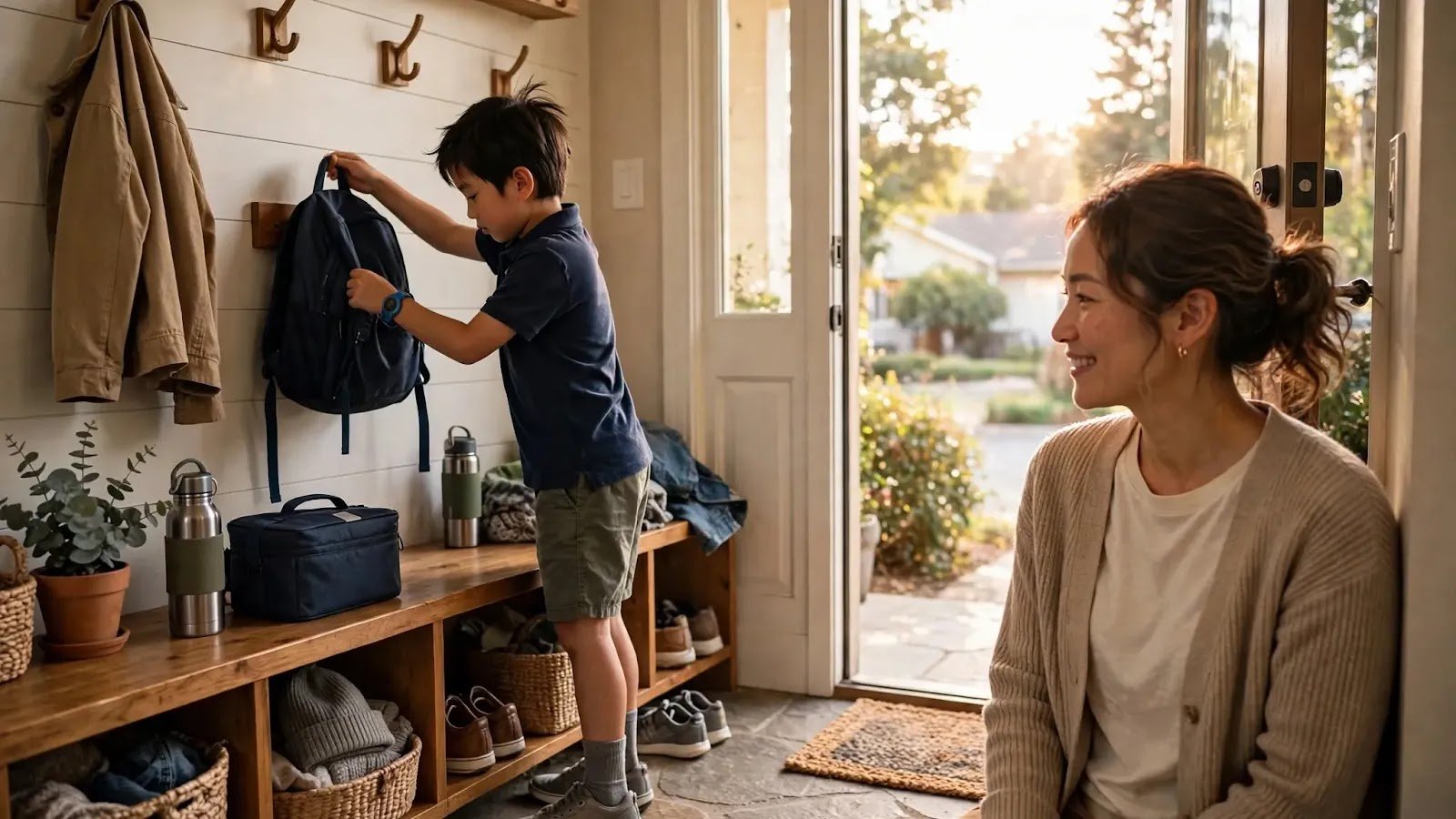
1. Land: Give School Things Obvious Homes
The routine begins the moment your child walks in.
Create simple destinations for the things that otherwise scatter through the house:
- Backpack.
- Shoes and jacket.
- Lunchbox or water bottle.
- Papers an adult needs to see.
You do not need an elaborate organization system. A hook, basket, shelf, and paper tray may be enough.
Keep the arrival sequence short:
Backpack away → lunchbox to kitchen → shoes away.
If you still have to announce each step every afternoon, practice the sequence before adding more complexity.
2. Refuel and Reset Before the Next Round of Demands
Some elementary-age kids come home ready to talk. Others want food, movement, quiet, or ten minutes without another question.
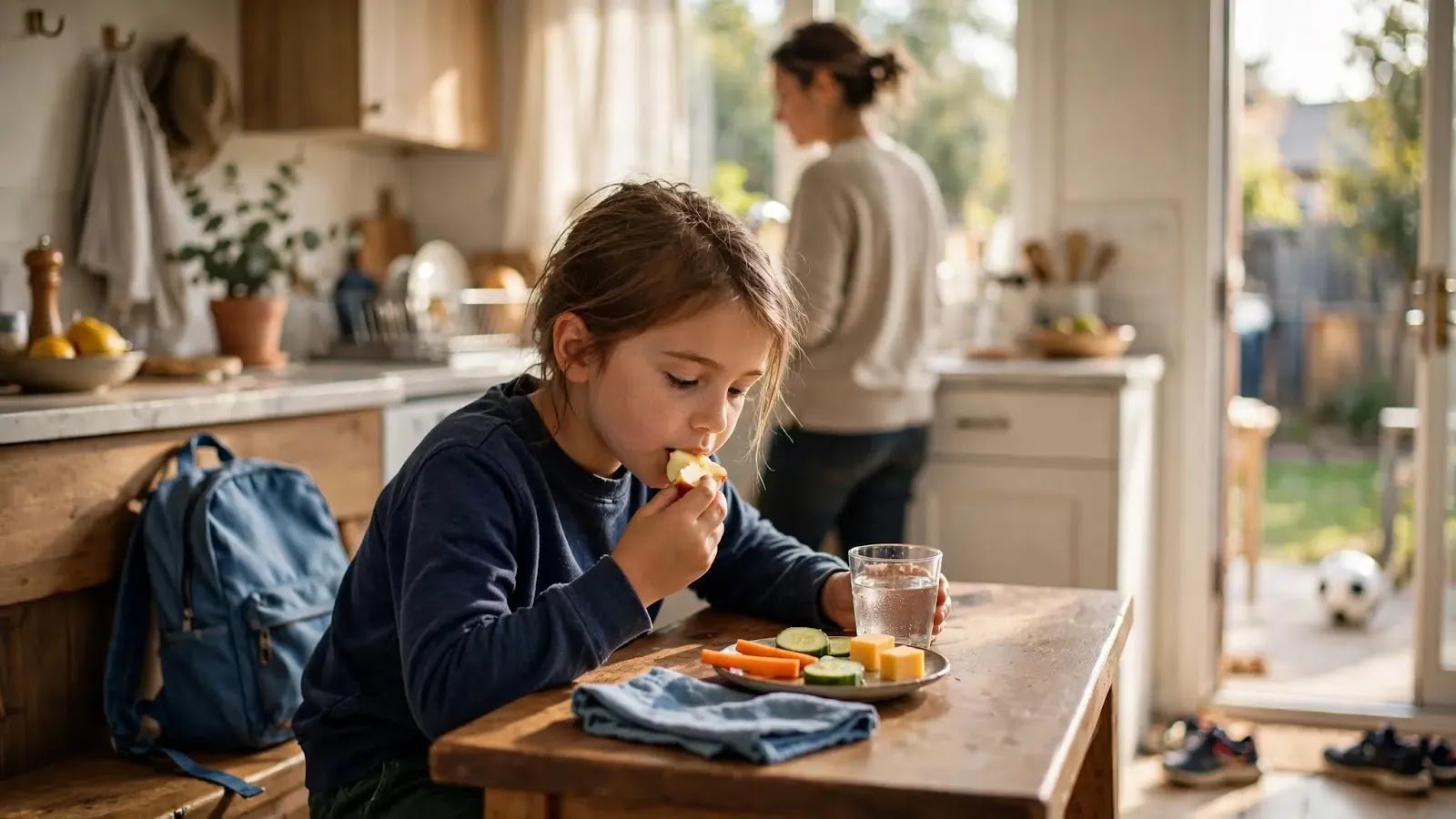
A simple snack and water can become a reliable anchor. Then choose a short reset that tends to leave your child more ready for what comes next.
That might be:
- Playing outside.
- Walking or biking.
- Drawing or building.
- Reading.
- Talking with you.
- Quiet time alone.
The break does not need a universal length. Ask instead:
Does this help my child transition, or does it make the next transition harder?
If twenty minutes outside leads smoothly into homework, it is doing its job. If a “short break” repeatedly becomes ninety minutes of gaming followed by a fight, the break needs a clearer endpoint.
If your child regularly arrives home unusually irritable, tearful, or explosive, the issue may be more emotional than logistical. See why kids sometimes act worse after school and what helps.
3. Decide Where Homework Belongs
Homework does not need to begin immediately after school for every child.
HealthyChildren.org’s homework guidance notes that some children work well soon after school while others benefit from unwinding first.
Two common patterns are:
Home → snack → homework → free time.
or:
Home → snack → reset → homework → free time.
Choose the version that produces the most workable afternoons, then make that the usual pattern instead of renegotiating homework every day.
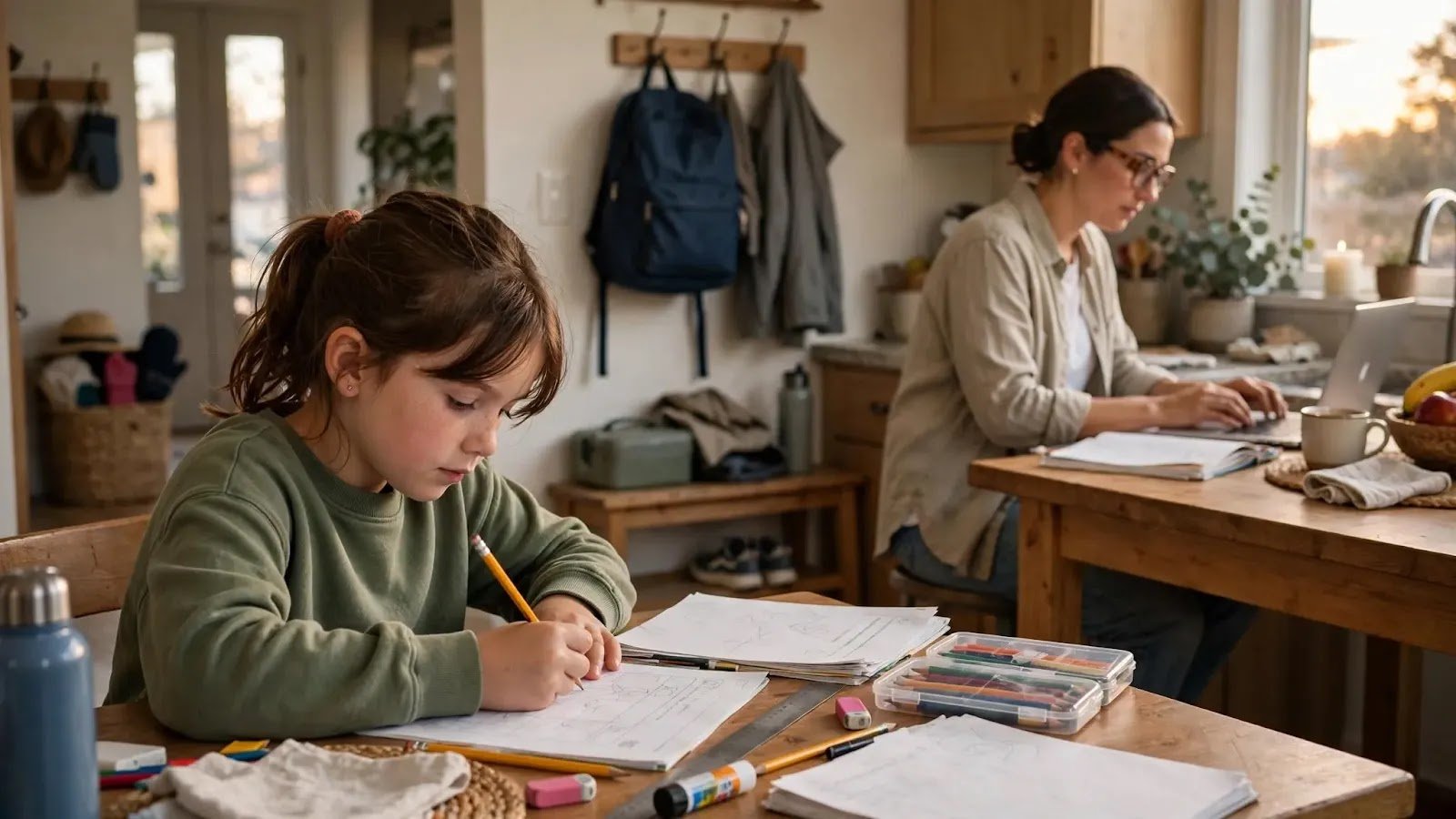
Keep basic supplies in one regular homework-friendly location so starting does not require finding pencils, chargers, paper, and a usable surface first.
If homework itself is becoming the recurring conflict, how to build a homework routine without daily nagging deals with that problem in more depth.
4. Give Responsibilities a Predictable Place
Homework may not be the only thing your child needs to do after school.
There may be a pet to feed, school papers to hand over, an instrument to practice, or a small household job.
Avoid scattering those requests through the entire afternoon.
Instead, give them a predictable place:
Homework → one household responsibility → free time.
or:
Snack → pet care → reset → homework.
Keep the daily load realistic. An elementary-age child does not need homework, piano, a bedroom cleanup, several chores, exercise, reading, tomorrow’s preparation, and a meaningful family conversation all packed into the same hour.
Decide what genuinely needs to happen every school day and what belongs elsewhere.
5. Protect a Real Free-Time Endpoint
A routine is easier to follow when your child knows responsibilities eventually end.
Free time can include play, hobbies, friends, reading, outdoor time, or family-approved screens.
If screens are part of the afternoon, decide where they fit before the device is already on.
For example:
“On school days, gaming starts after homework and your regular job are finished.”
That is easier to understand than deciding from scratch every afternoon.
Make the Routine Visible Instead of Repeating It
If your child needs you to announce every transition, much of the routine still lives in your head.
A younger elementary-age child might use:
- Backpack away.
- Snack.
- Outside time.
- Homework.
- Household job.
- Free time.
An older child may only need a short written checklist.
You can use the Free Family Routine Builder to turn the sequence that works for your household into a simple routine your child can follow.
Let your child help with reasonable decisions too. Ask where the backpack should live, whether homework goes better before or after a break, and which part of the afternoon currently feels rushed.
You still set the necessary boundaries. Participation simply gives your child more ownership of the system they are expected to use.
Have a Regular-Day Version and a Busy-Day Version
A routine that only works when nobody has practice, appointments, or another commitment is too fragile.
Keep the opening anchors familiar:
Arrive → belongings away → snack → check today’s plan.
Then branch.
Regular day: reset → homework → responsibility → free time.
Activity day: change clothes or gather gear → handle anything urgent → activity → finish remaining responsibilities later.
You do not need a completely different routine for every weekday. Keep the beginning predictable and let the middle flex.
Connect the Routine to Tomorrow Morning
Before the school-day loop closes, return anything that needs to go back tomorrow:
- Homework into the backpack.
- Signed papers into the correct folder.
- Library book packed.
- Sports equipment placed where it will be found.
This keeps the next morning from becoming a search operation.
If mornings are a separate struggle, how to build a morning routine that gets kids out the door on time covers that part of the day.
A Simple Starting Routine
If you are building the system from scratch, start here:
Arrival: backpack, shoes, lunchbox, and papers go to their places.
Refuel: snack and water.
Reset: movement, quiet play, or downtime.
Responsibilities: homework plus one realistic household responsibility.
Free time: play, hobbies, friends, or agreed screen time.
Evening handoff: anything needed tomorrow goes back into the backpack or launch area.
Keep the routine simple for several school days before adding anything else.
Adjust the Weak Step—Not the Whole Routine
Give your child time to learn the sequence.
After about a week, ask:
- Which step happens without reminders?
- Where does the routine consistently stall?
- Does the reset actually help?
- Is homework happening at a workable point?
- Does your child still have genuine free time?
Then change the weak point rather than rebuilding everything.
If you already have an established routine but it keeps falling apart in the same places, how to fix a chaotic after-school routine focuses specifically on diagnosing those bottlenecks.
When a Routine Is Not the Main Problem
A routine can reduce unnecessary friction. It cannot solve every problem a child brings home from school.
If your child is regularly extremely distressed after school, suddenly refusing school, persistently exhausted, or showing a major change in behavior, look beyond the schedule and discuss the pattern with school staff and your child’s pediatrician when appropriate.
Likewise, if homework regularly takes far longer than expected or seems unusually difficult despite a reasonable environment and routine, another conversation with the teacher may be more useful than adding another checklist.
A successful after-school routine should eventually answer three questions without you having to repeat them every afternoon:
Where do my things go? What happens next? When does my free time begin?
Once your child can answer those questions independently, the routine is doing exactly what it was built to do.