
How to Get Kids to Listen Without Yelling
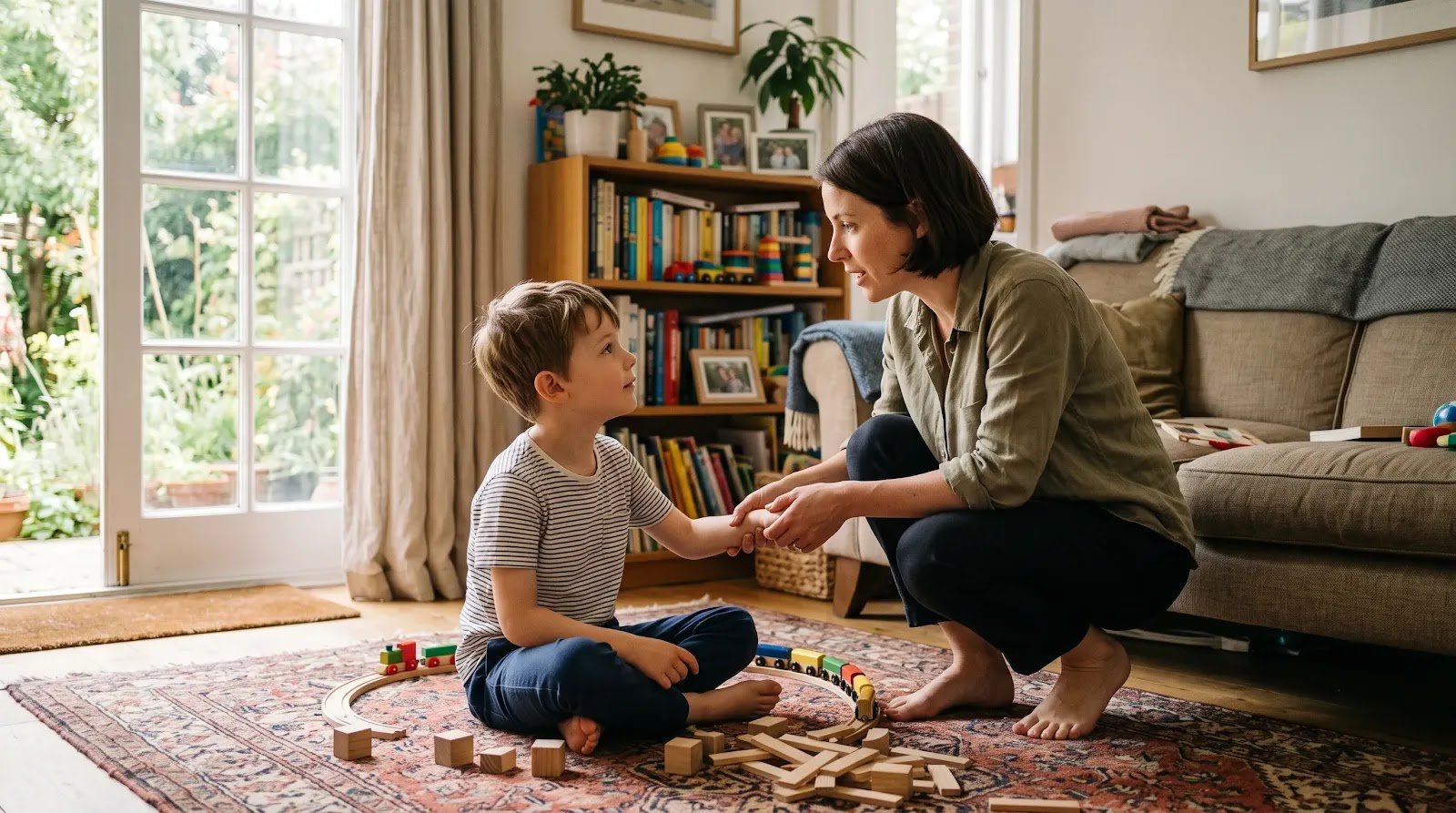
One shoe is on, the backpack is by the door, and your child is still arranging toys as if leaving the house has never been mentioned. You say, “Shoes on, please.” Nothing. You repeat it. Then again. By the fourth reminder, you are yelling—and suddenly they move.
That pattern can teach everyone the wrong lesson: your normal voice is background noise, while the loud voice means the request is finally real. Getting kids to listen without yelling is less about finding a magic phrase and more about changing that sequence: get their attention, give one clear direction, allow a moment to respond, then follow through without escalating.
Why the Repeat-Yell Cycle Gets Stronger
Children do not ignore directions for one single reason. They may be deeply focused, tired, hungry, reluctant to stop something enjoyable, overwhelmed by several instructions, or simply unsure what you meant. Age and context matter too.
The bigger problem begins when the family develops a predictable pattern:
First request → delay. More reminders → more delay. Yelling → action.
If yelling repeatedly becomes the point when something finally happens, waiting for the louder version starts to make sense. The goal is not instant, cheerful obedience. It is to make your first direction easier to understand and your response afterward more predictable.
If repeated reminders are the main struggle in your home, this guide on how to stop repeating yourself to your kids all day goes deeper into that specific pattern.
Use a Five-Part Listening Reset
1. Get Their Attention Before the Direction
An instruction can be perfectly reasonable and still fail because your child never fully registered it.
For important directions, move closer when practical instead of calling from another room. Say your child’s name, pause until you know they have noticed you, then speak. With a younger child, getting nearer to their level or adding a simple gesture may help.
You do not need to demand prolonged eye contact. The point is attention, not a staring contest.
The CDC’s guidance on giving good directions recommends getting a young child’s attention first and making directions specific and appropriate for the child’s age and ability.
2. Give One Concrete Action
“Behave,” “be good,” or “stop messing around” may be clear in your own head but still leave a child guessing about what to do next.
Say the action you want:
- Instead of “Stop messing around,” try “Put the blocks in the basket.”
- Instead of “Be good in the store,” try “Stay next to the cart.”
- Instead of “Quit being wild,” try “Keep your feet on the floor.”
For younger children especially, several tasks bundled together can be harder to hold in mind. “Clean your room, find your backpack, brush your teeth, and put your shoes on” may work better as one immediate step at a time.
For more examples, see how to give clear instructions kids can actually follow.
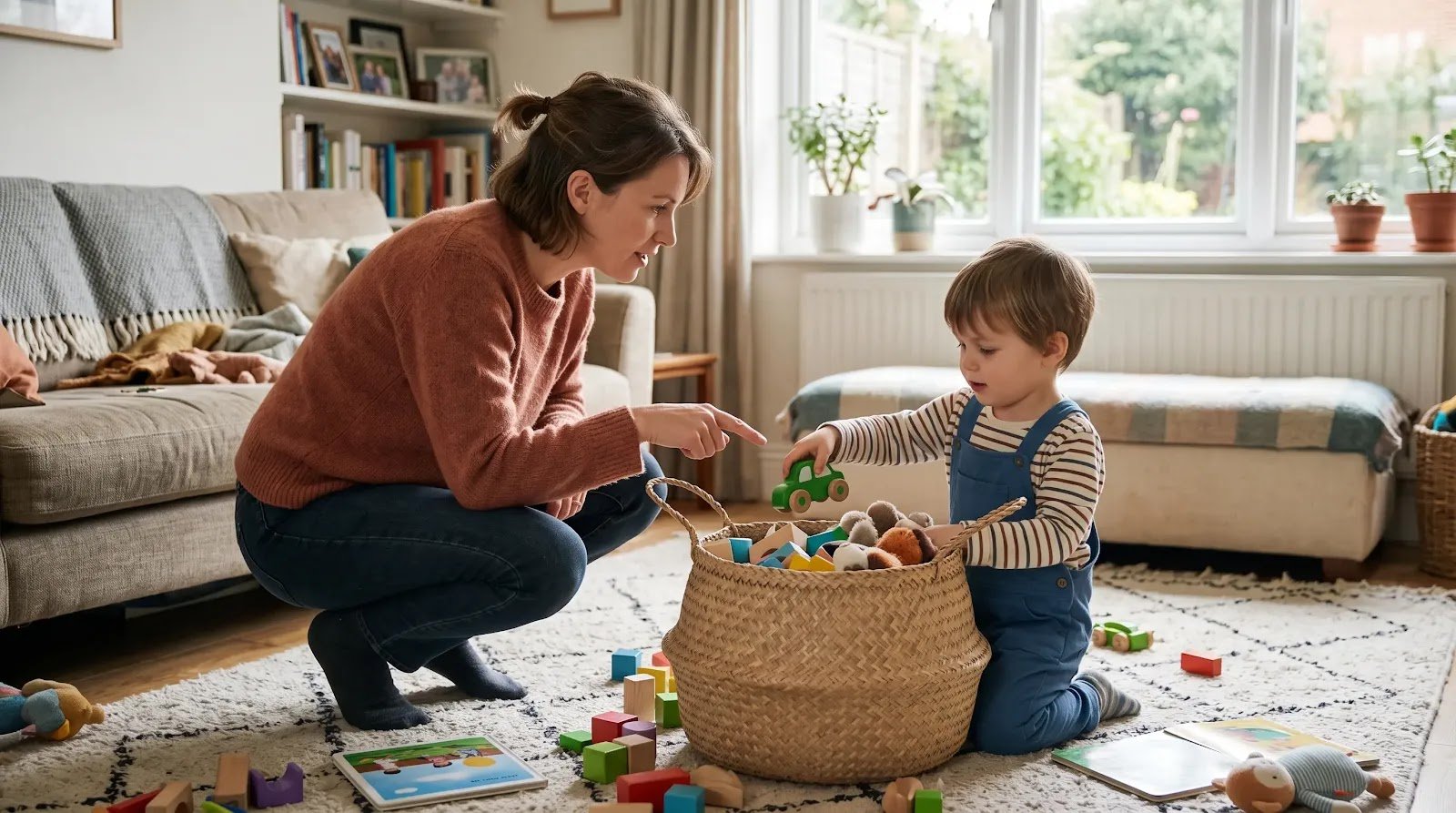
3. Use Fewer Words—and Real Choices
Frustration tends to make instructions longer. A request becomes an explanation, then a warning, then a recap of yesterday. Usually the original task gets less clear, not more.
When tension rises, ask yourself: What actually needs to happen next?
- “Put the tablet on the counter.”
- “Shoes on, please.”
- “Bring your plate to the sink.”
Also avoid turning a requirement into a question when there is no real choice. “Do you want to put your shoes on?” naturally allows “No.” If leaving requires shoes, “It’s time to put your shoes on” is clearer.
Choices can still give a child some control: “Blue shoes or black shoes?” or “Do you want to carry your backpack or lunch bag?” Both options should be genuinely acceptable to you.

4. Give a Brief Moment, Then Follow Through
A child who is building, drawing, reading, or watching something may need a moment to switch attention. Allowing that moment is different from repeating yourself indefinitely.
Once you know your child heard and understood, give them a brief chance to begin. If nothing happens, stay close, restate the expectation if needed, and move to a reasonable follow-through.
That does not require a large punishment. If a toy needs to be put away before the next activity, the next activity can wait. If an object is being used in a way that is not allowed, access to it may need to pause.
The CDC’s guidance on routines and rules emphasizes consistency, predictability, and following through on what you say.
If this is where you tend to get stuck, setting firm limits without being harsh can help separate calm parenting from simply letting a boundary disappear.
5. Notice the Cooperation You Usually Walk Past
Resistance is noisy. Cooperation often slips by unnoticed.
A child who argues for five minutes gets plenty of attention. A child who puts on their shoes after the first request may simply become part of the morning blur.
When you are trying to build a new pattern, name the behavior you want to see again:
- “Thanks for coming when I called you.”
- “You put your shoes on when I asked. That helped us leave on time.”
- “You stopped playing and cleaned up even though you wanted more time.”
The CDC recommends specific praise because it tells young children exactly which behavior was noticed.
What This Can Sound Like in Real Life
You do not need a perfect parenting script. Often the useful change is simply removing the extra words.
- Leaving the house: “It’s time to go. Backpack on, please.”
- Ending play: “Put the cars in the basket first.”
- Ending screen time: “Screen time is finished. Put the tablet on the counter.”
- A child complains while cooperating: “I know you wanted more time.” Then let the original boundary stand.
That last situation matters. Cooperation does not have to look cheerful. A child can dislike your decision, say so, and still do what was asked. You do not have to win the complaint as well as the original issue.
Match the Expectation to Age and Context
A toddler, a 7-year-old, and a 12-year-old should not be expected to process directions in exactly the same way.
Young children often do better with short instructions, one step at a time, gestures, and immediate feedback. School-age children can handle more responsibility but may still lose track during rushed transitions. Older children may respond better when recurring responsibilities are discussed ahead of time instead of arriving as a stream of commands.
Also check the situation before deciding your child simply “won’t listen.” Fatigue, hunger, noise, an unfamiliar routine, a difficult transition, or too many instructions at once can all make cooperation harder.
Realistic expectations do not remove boundaries. They help you distinguish between refusing, forgetting, misunderstanding, and being asked to manage more than your child can reasonably handle in that moment.
If You Yell Anyway, Repair Without Dropping the Limit
Some mornings unravel. You are late, a shoe is missing, everyone is frustrated, and your voice gets louder than you wanted.
You can repair the way you spoke without pretending the original request no longer matters:
“I was frustrated, but I should not have yelled. Let’s try that again. Please put your shoes on.”
HealthyChildren.org from the American Academy of Pediatrics recommends clear, age-appropriate directions, calm communication, positive feedback, and modeling the behavior you want children to learn.
Taking responsibility for your tone does not weaken the boundary. It models how to correct a mistake while still dealing with the issue in front of you.
When “Not Listening” Deserves a Closer Look
Stalling, distraction, complaining, or ignoring a request sometimes can all happen in everyday family life. Look at the broader pattern rather than one difficult morning.
If simple, age-appropriate directions are consistently difficult across home, school, daycare, or other settings—or you are also noticing concerns involving hearing, language, learning, development, or everyday functioning—bring those observations to your child’s pediatrician or another qualified professional.
The goal is not to label your child as a “bad listener.” It is to understand whether something more than an ordinary family power struggle may be getting in the way.
Try the Reset in One Predictable Moment
Do not try to overhaul every interaction in your house at once. Pick one recurring trouble spot: shoes before school, toy cleanup, bath time, getting into the car, or coming to dinner.
- Get close enough to have your child’s attention.
- Give one specific direction.
- Keep the wording short.
- Allow a brief moment to begin.
- Follow through calmly if needed.
- Notice when your child cooperates.
If the same battle happens at roughly the same time every day, reducing the number of verbal reminders may help too. The Free Family Routine Builder can help turn repeated instructions into a more predictable sequence your family can follow.
The aim is not a child who obeys every request instantly and happily. It is a family pattern in which your normal speaking voice carries a clear expectation—so volume no longer has to be the signal that you finally mean it.
Sources & Editorial Standards
This guide was checked against current CDC guidance on giving good directions, routines and consistent follow-through, and specific praise and rewards. Communication guidance was also reviewed against HealthyChildren.org from the American Academy of Pediatrics.
Parenting strategies should be adjusted for a child’s age, abilities, development, temperament, and individual needs.