
20 Easy Sunday Reset Ideas for Families

A Sunday reset does not need two hours, matching storage bins, a spotless kitchen, and a family that is mysteriously excited about meal prep.
Sometimes the most useful reset is much smaller:
Find Monday’s shoes.
Check the calendar.
Wash the one uniform somebody needs tomorrow.
Then stop and enjoy what is left of Sunday.
The 20 ideas below are meant to be a menu, not a checklist. Pick the ones that remove the most friction from your week and ignore the rest.
Try the 3-Reset Rule: Choose one idea that prepares Monday, one that resets the home, and one that helps the family feel ready for the week. You do not need to complete all 20.
Get Monday Out of Your Head
1. Empty the Backpacks
Friday’s backpack can hide an impressive amount of information by Sunday.
Take out old snack wrappers, loose papers, library books, notices, and anything that needs a signature.
Then put back what actually needs to leave the house Monday.
This is not a full school-organization project. It is simply preventing the 7:20 a.m. discovery of a paper that has been sitting there all weekend.
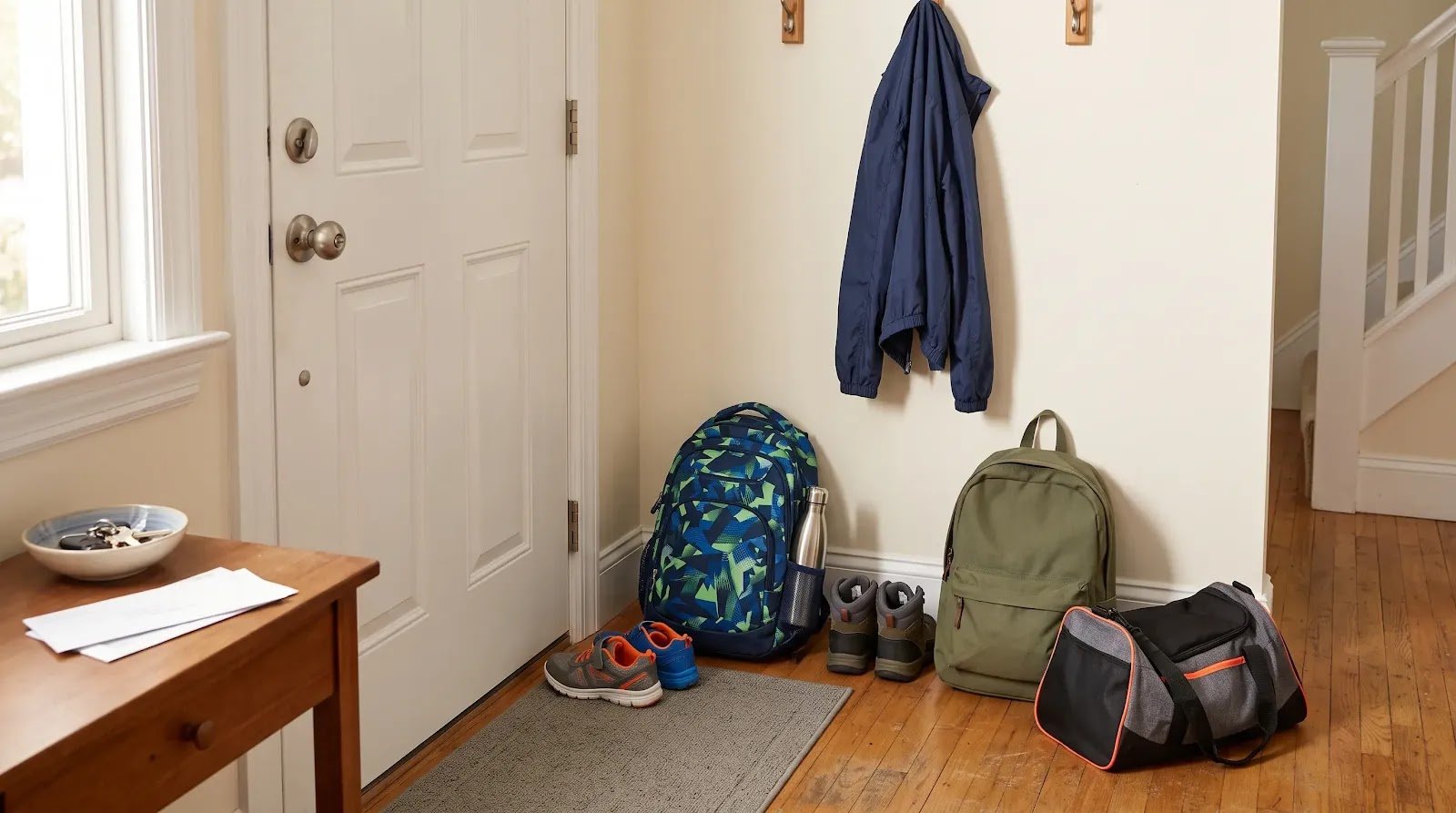
2. Build a Monday Launch Spot
Put the items that need to leave together in one place:
- Backpacks.
- Shoes.
- Jackets.
- Sports equipment.
- Instruments.
- Anything unusual needed that day.
The goal is not a beautiful entryway.
The goal is fewer searches tomorrow.
3. Check Monday’s Weather
A quick weather check can answer practical questions before the morning rush:
Coat?
Rain gear?
Different shoes?
Hot enough that the water bottle matters more than usual?
Only prepare what the forecast genuinely changes.
4. Choose Monday Clothes
You do not need to lay out seven outfits.
Start with Monday.
This is especially useful if mornings repeatedly stall over:
“I don’t have anything to wear.”
For younger children, two reasonable choices can be enough.
5. Charge the Things That Actually Need Charging
School laptop.
Tablet required for class.
Watch.
Headphones.
Whatever Monday genuinely requires.
Plugging it in Sunday evening is easier than discovering a 4% battery during breakfast.
Make the Week Visible
6. Do a Five-Minute Calendar Scan
Look only for the things that change the normal routine.
Appointments.
Practices.
Early departures.
Late pickups.
School events.
Work commitments that affect childcare or transportation.
You do not need to narrate the entire week to the children. The purpose is to catch surprises while there is still time to handle them.
The American Academy of Pediatrics notes that family routines work best when they are regular and predictable while still allowing flexibility. HealthyChildren.org’s guidance on family routines specifically recommends reviewing household routines and preparing ahead when doing so makes daily transitions easier.
7. Solve One Transportation Problem Early
If Tuesday has two activities in opposite directions, Sunday is a better time to notice than Tuesday at 4:45.
Decide only what needs deciding:
Who is driving?
Does someone need a ride?
Is pickup different?
One solved logistics problem can be more valuable than an elaborate weekly planning session.
8. Put One Important Reminder Where It Will Be Seen
Picture day Wednesday?
Library books Tuesday?
Medication refill Thursday?
Put the reminder into whatever system your family actually checks: calendar, phone reminder, whiteboard, or note by the door.
Do not create a new organization system solely for Sunday resets.
9. Let Each Child Name One Thing Coming Up
Ask:
“Is there anything this week you think we need to remember?”
An older child may remember:
“I need poster board Thursday.”
or:
“Coach said practice is earlier.”
It also gives children a small amount of practice looking ahead instead of having adults hold every detail for them.
10. Pick One Thing to Look Forward To
The weekly calendar should not contain only obligations.
Add something small:
Friday pizza.
A Wednesday walk.
Saturday pancakes.
A movie night.
A visit with someone the family likes.
This does not need to be expensive or impressive. It simply gives the coming week something pleasant that is already waiting for you.
Reset the House Without Cleaning All Day
11. Clear One High-Traffic Surface
Do not tidy the entire house.
Choose the surface that makes Monday feel calmer:
Kitchen table.
Kitchen counter.
Entryway bench.
Homework desk.
One clear surface can create more practical relief than reorganizing a closet nobody needs tomorrow.
12. Do a Ten-Minute Shared-Space Pickup
Set a short timer and return obvious things to their homes.
Books to shelves.
Toys to baskets.
Dishes to kitchen.
Shoes out of the walkway.
Stop when the timer stops.
If cleaning has become a much larger household problem, use our full guide to creating a simple family cleaning routine rather than trying to solve it all on Sunday.
13. Run One Strategic Load of Laundry
Not all the laundry.
Ask:
“What clothing problem could become urgent this week?”
Sports uniforms.
School clothes.
Work clothes.
Towels if everyone suddenly discovers there are none.
Wash the load that prevents the most predictable problem.
14. Reset the Kitchen for Breakfast
This can be very small:
- Clear the sink enough to use it.
- Run or empty the dishwasher if needed.
- Put breakfast basics where they belong.
- Check that clean lunch containers actually exist.
You are not deep-cleaning the kitchen.
You are giving Monday morning somewhere to begin.
15. Refill One Family “Always Running Out” Item
Every family has one.
Water bottles.
Lunch napkins.
Snack bin.
Toilet paper.
Pet food.
School pencils.
Refill the one thing that repeatedly creates an avoidable weekday scramble.
Take a Little Pressure Off Weeknight Meals
16. Choose Three Dinners, Not Seven
Sunday does not need a complete culinary strategy.
Look at the busiest evenings and decide three dinners.
That may be enough to answer:
“What are we eating tonight?”
on the nights when nobody has energy to decide.
Leave the rest flexible for leftovers, simple meals, takeout, or plans that change.
17. Prep One Breakfast Shortcut
You do not need a refrigerator full of matching containers.
One useful shortcut might be:
- Put cereal and bowls where younger children can reach them appropriately.
- Wash fruit.
- Make overnight oats.
- Prepare one batch of something your family already eats.
- Simply confirm that tomorrow’s breakfast food exists.
The best prep is the prep your family will actually use.
18. Make the Grocery “Top-Up” List
Instead of planning a giant shopping trip, scan the basics.
Milk.
Bread.
Fruit.
Lunch items.
Whatever is likely to run out before your normal grocery day.
Add only those items to the list.
A reset should reduce decisions, not create a second job.
Help Sunday Still Feel Like Sunday
19. Give Everyone 15 Minutes to Reset Their Own Way
The family does not have to prepare for Monday as one synchronized unit.
One child may pack a bag.
Another may tidy a bedroom floor.
A parent may check the calendar.
Someone else may simply shower and get comfortable for the evening.
The reset can happen in parallel.
This is especially useful if children are old enough to manage some parts of their own routines without an adult narrating every step.
20. Return to the School-Night Bedtime Rhythm
Sunday evening is where the weekend meets Monday morning.
You do not need to make Sunday night grim or send everyone to bed unusually early.
But if weekend sleep has shifted later, begin returning toward the normal school-night sequence.
HealthyChildren.org notes that school-age bedtime routines benefit from predictable steps and that keeping weekend wake times reasonably close to the usual schedule can make returning to the weekday rhythm easier. Its guidance on bedtime routines for school-age children also recommends small evening tidying so needed items are easier to find in the morning.
If Sunday evening itself routinely turns chaotic, our guide to making Sunday night easier for the whole family covers the full handoff into Monday rather than just individual reset ideas.
Build Your Own Three-Idea Sunday Reset
If twenty ideas make Sunday feel less relaxing just by looking at them, ignore seventeen.
Pick:
One Monday-prep idea.
Maybe backpacks.
One home idea.
Maybe clearing the kitchen table.
One family idea.
Maybe checking the calendar and choosing something fun to look forward to.
Try those three for a few Sundays.
If they genuinely make the week easier, keep them.
If they do not, replace them.
You can also use the Free Family Routine Builder if you want to turn the few reset steps that work into a repeatable family routine.
Keep the Reset Smaller Than the Weekend
The purpose of a Sunday reset is not to squeeze maximum productivity out of the final hours of the weekend.
It is to remove a handful of predictable problems before Monday arrives.
If your family spends Sunday rushing between activities already, do not add a ninety-minute reset simply because somebody online has one. Our guide to creating a weekend routine without overscheduling the family can help protect breathing room first.
Find the backpack.
Check the week.
Reset one useful part of the house.
Then let Sunday be Sunday.