
Free Printable Bedtime Routine Chart for Kids
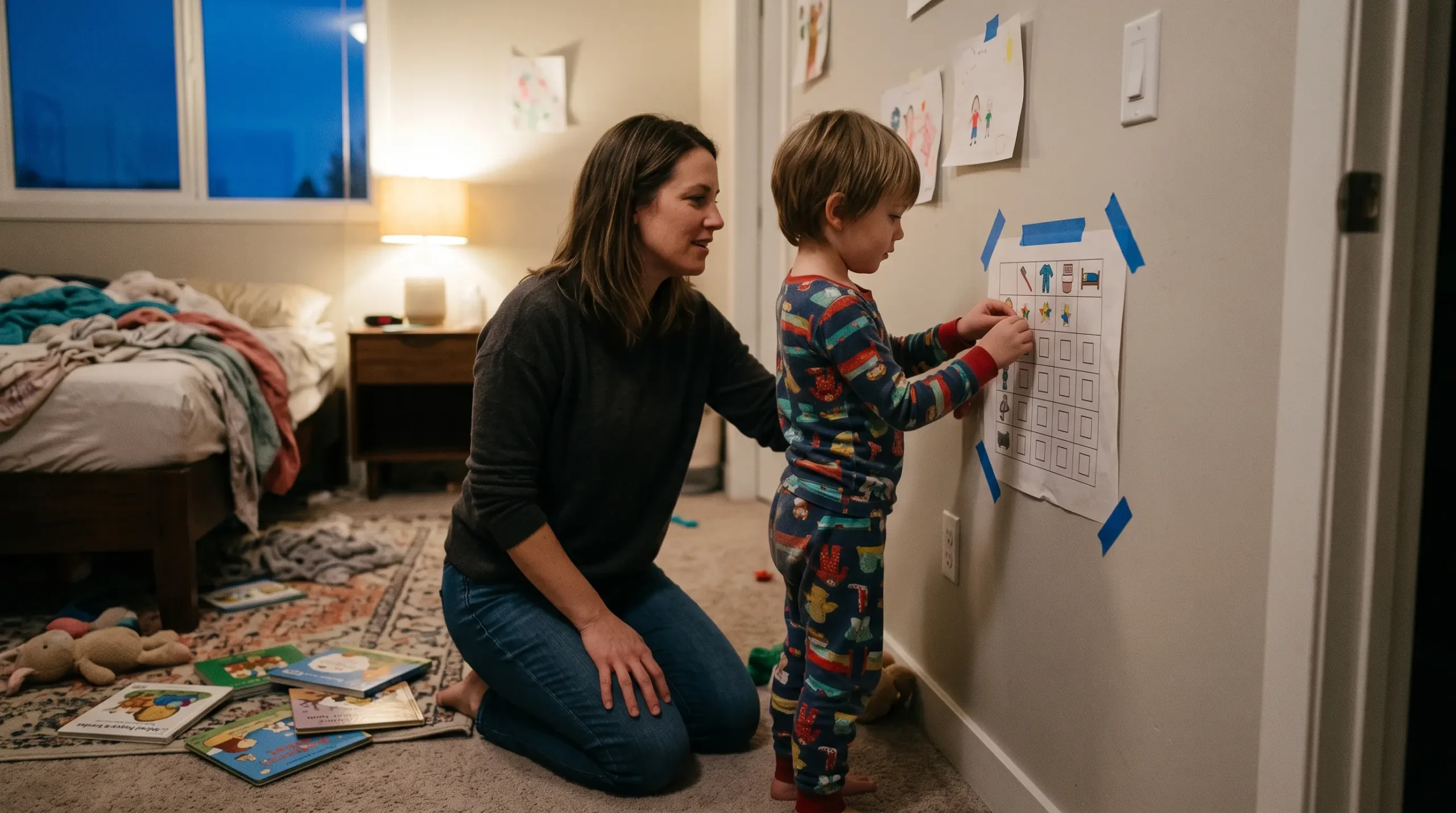
This free printable bedtime routine chart for kids helps turn evening instructions into a simple visual checklist. Instead of reminding your child about every step, you can point to the chart and work through the routine together.
The two-page PDF includes a ready-to-use weekly chart and a blank version you can customize. It is especially useful for preschoolers and early elementary-age children who benefit from seeing what comes next.
Download Your Free Bedtime Routine Chart
The printable includes two options:
- Page 1 — Ready-to-use chart: Six bedtime steps with checkboxes for Monday through Sunday.
- Page 2 — Blank customizable chart: Six empty rows where you can write or draw the steps that work for your child.
Get the Free Printable Bedtime Routine Chart (PDF)
Print the page you prefer on standard US Letter paper (8.5 × 11 inches). You can use pencil checkmarks, stickers, or a reusable dry-erase marker if you laminate the chart. Supervise younger children when using small stickers or markers.
How to Use the Bedtime Routine Chart
- Choose your version. Start with the ready-to-use chart if its steps match your evenings. Otherwise, use the blank page.
- Show your child the sequence. Read the steps together before bedtime. Younger children can recognize the numbers or draw small pictures beside the words.
- Place it somewhere visible. A bedroom wall, low bulletin board, or another accessible spot can work.
- Follow the steps in order. Let your child mark a checkbox after completing each task, with help when needed.
- Use it again tomorrow. The seven-day layout gives you a simple way to repeat the routine without making a new chart every evening.
Because the final step is going to bed, a parent can mark that box later or the next morning. You do not need to interrupt bedtime just to finish the chart.
What’s Included in the Ready-to-Use Chart?
The first page contains six familiar steps:
- Tidy up a few things.
- Use the bathroom and wash hands.
- Put on pajamas.
- Brush teeth with appropriate adult help.
- Enjoy a story or quiet time.
- Say goodnight and turn out the lights.
This follows the general idea behind the American Academy of Pediatrics’ Brush, Book, Bed guidance: include toothbrushing, a shared book or other calming connection, and a predictable bedtime.
You can change the order of the earlier preparation steps to suit your household, while keeping toothbrushing after the last food or drink other than water.
Customize the Chart for Your Child
Not every child needs six steps. If your child is younger, easily overwhelmed by long checklists, or already handles some tasks independently, use the blank chart to create a shorter sequence.
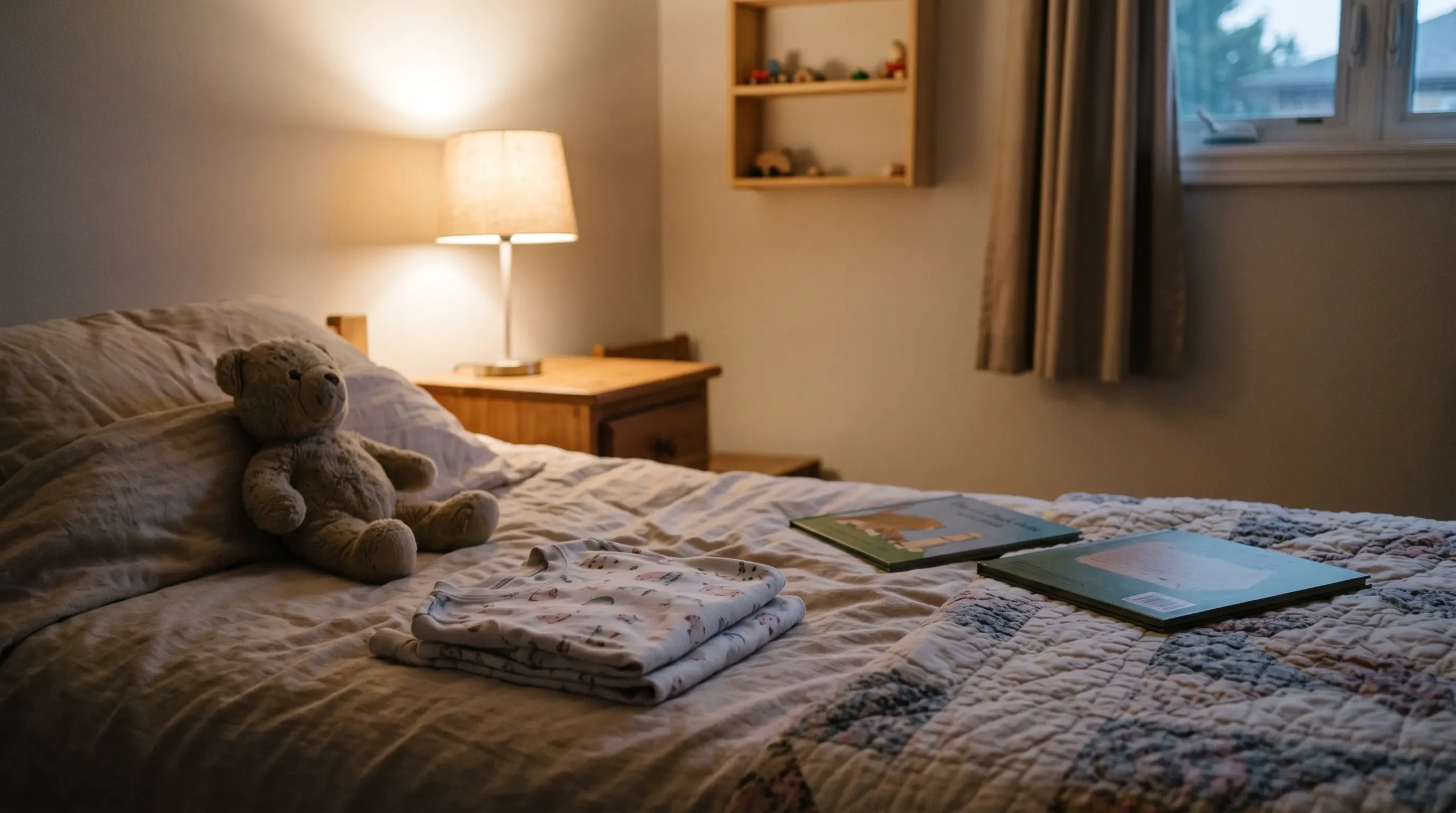
For example, a younger child might follow just four visible steps:
- Bathroom.
- Pajamas.
- Brush teeth.
- Story and goodnight.
For a child who finds transitions difficult, you might include a specific step such as “Choose one stuffed animal” or “Pick tomorrow’s clothes.” Choose tasks your child understands rather than filling every available row.
If your family has different caregivers or alternating household schedules, focus on keeping a few familiar bedtime steps consistent where practical. The chart should adapt to the child, not demand that every evening look identical.
What If Your Child Doesn’t Want to Use the Chart?
Try showing the chart earlier in the evening, when nobody feels rushed. Invite your child to choose a pencil color or draw a small symbol next to a step.
If the checkboxes become another source of frustration, stop tracking completion. Simply pointing to the next step may be enough.
A missed checkbox is not a behavior failure, and the chart should never be used to punish a child for struggling to fall asleep. It records familiar bedtime actions, not how quickly someone falls asleep.
If your child regularly delays bedtime with repeated requests, the separate guide on what to do when your child stalls at bedtime addresses that specific challenge.
What This Printable Can and Cannot Do
The chart is a visual reminder. It can make the order of bedtime tasks clearer and give children an age-appropriate way to participate.
It does not guarantee easier sleep, replace comforting support, or solve ongoing sleep difficulties. If your child experiences persistent sleep problems or significant bedtime distress, discuss your concerns with their pediatrician.
For a broader explanation of setting up the evening itself, see How to Create a Bedtime Routine Kids Can Actually Follow. You can also use the Free Family Routine Builder to organize other parts of your household schedule without overloading this bedtime chart.
Try It for a Few Evenings
Print one page, choose the steps your child already understands, and introduce the chart before the bedtime rush begins.
After a few evenings, notice which steps are helpful and which ones need changing. You might discover that four clear steps work better than six, or that your child prefers pictures instead of written instructions.
The best chart is the one your family can use comfortably. It does not need a perfect row of checkmarks to be useful.