
How to Create a Family Meal Routine That Works on Busy
Family dinner sounds simple until everyone gets home at a different time. Someone has homework, someone needs a ride, and dinner is still a question mark at 6 p.m.
A family meal routine can make those evenings easier without requiring everyone to sit down at exactly the same time. The goal is to create a few dependable habits: a realistic dinner window, a simple way to get food ready, and a chance to spend time together when possible.
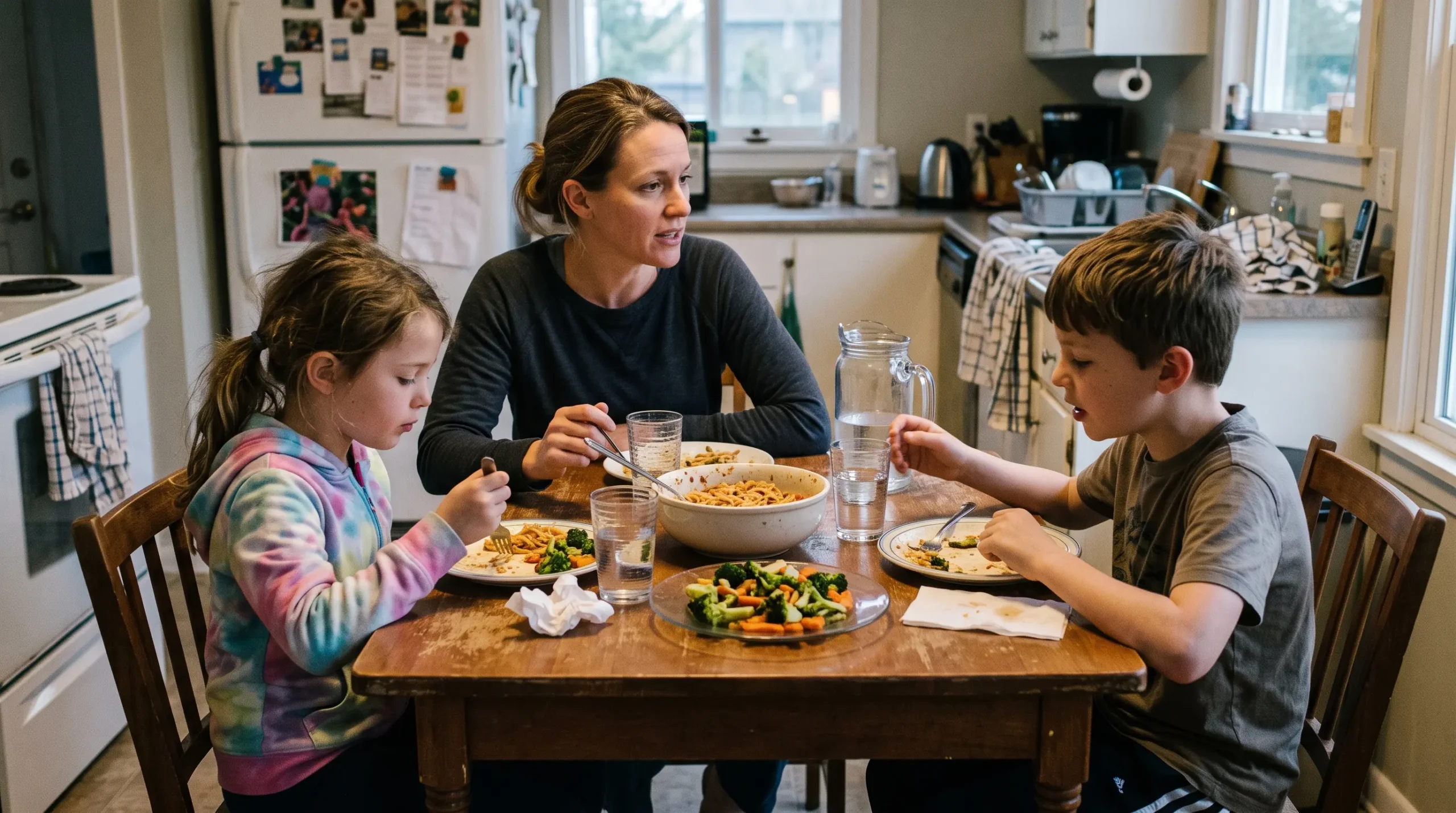
1. Choose a Dinner Window Your Family Can Actually Keep
Start with your real evening schedule, not an ideal one.
Look at when people usually arrive home, when younger children need to eat, and which evenings involve late activities. Then choose a dinner window that works on your most predictable weeknights.
For example, instead of insisting that everyone eat at 6:00 sharp, your family might aim to begin between 6:00 and 6:30.
Try this: Pick two or three weeknights when a shared meal is realistic. You can build from there rather than treating every missed dinner as a failure.
If an adult works evenings or children have activities at different times, a regular shared breakfast or another convenient meal may sometimes be more realistic.
2. Build a Three-Part Routine Around Dinner
The easiest routine to remember has a beginning, a middle, and an ending. Keep those parts similar even when the menu changes.
Before dinner: Give everyone a small role
About 10 minutes before eating, invite family members to help with a task that fits their age and abilities.
- Young children: Carry napkins, put out placemats, or choose between two suitable side dishes.
- Older kids: Set plates, fill water glasses, or help assemble a simple salad.
- Teens: Warm prepared food safely, organize serving dishes, or take responsibility for one dinner setup task.
Supervise children around hot food, sharp utensils, and kitchen equipment according to their abilities.
You do not need to assign every family member a job. One or two small contributions are enough to make dinner feel like a shared responsibility.
During dinner: Keep the connection simple
When possible, put devices aside and give everyone a chance to eat without rushing. Conversation can be as simple as talking about something funny from the day.
You do not need a long discussion, and children do not have to answer questions if they would rather eat quietly.
After dinner: Use a short reset
Before everyone disappears into their evening activities, clear the dishes and wipe the table. Older children can help put away food safely.
Keep cleanup manageable. The point is to avoid leaving every task for one exhausted adult.
If you want to organize this sequence into a repeatable household plan, the Free Family Routine Builder can help you arrange the steps around your family’s schedule.
3. Make the Food Simple Enough for a Busy Night
A dependable dinner routine becomes difficult when every meal requires an hour of cooking. Instead of planning an elaborate menu, keep a few familiar, flexible meal combinations available.
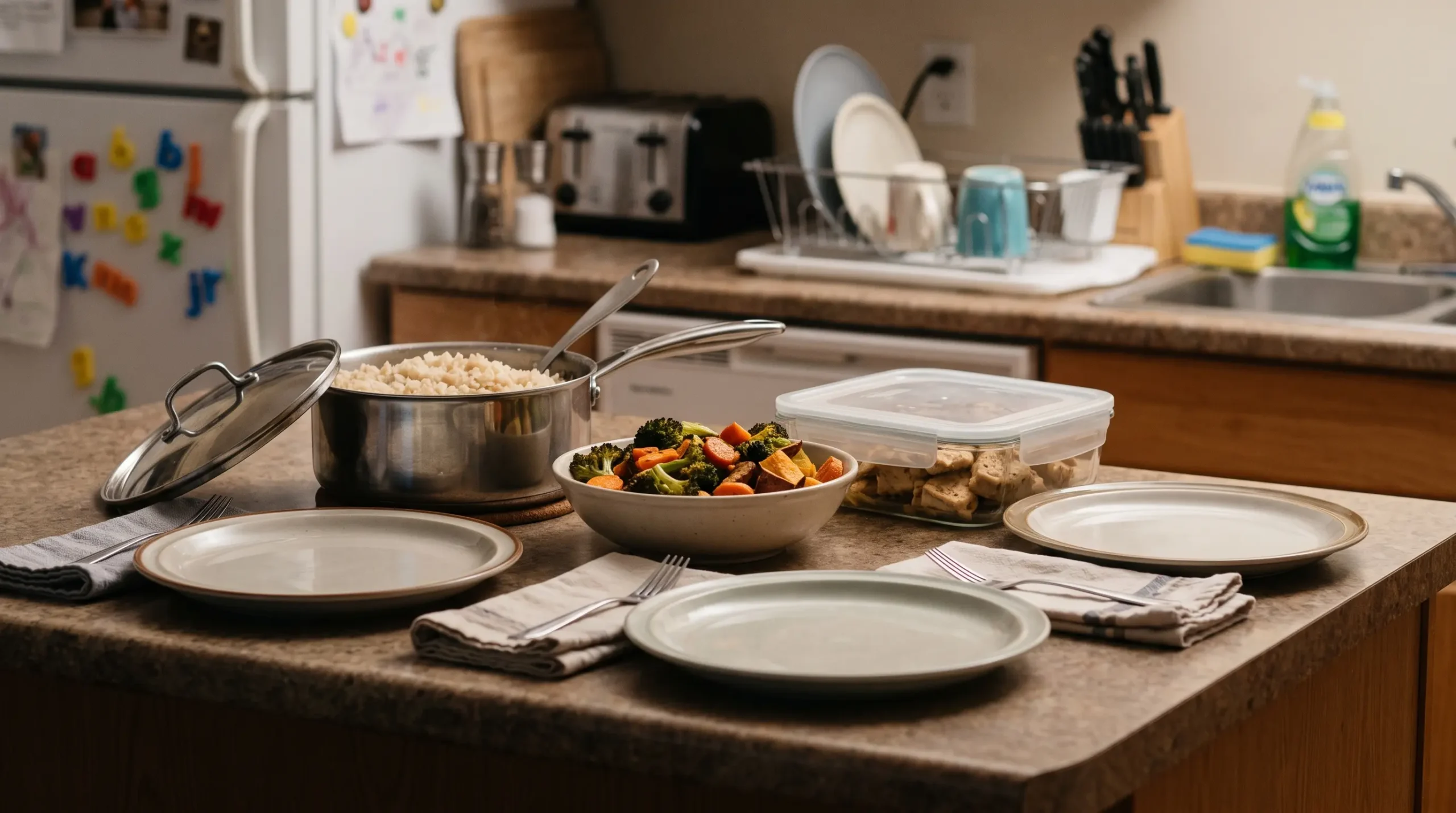
Some practical options include:
- Build-your-own bowls: Rice or another grain, beans or cooked protein, and vegetables.
- Quick pasta night: Pasta, a simple sauce, and an easy vegetable or protein on the side.
- Sandwich-and-sides night: Sandwiches with fruit, vegetables, or another suitable side.
- Leftover night: Properly stored leftovers combined with something fresh.
These are flexible dinner formats, not a complete nutrition plan. Adjust ingredients for your family’s ages, dietary needs, allergies, and preferences.
Make one decision easier: Keep two familiar backup meals available for evenings when plans fall apart. A routine is more useful when it can survive a delayed pickup or an unexpectedly tiring day.
4. Have a Different Version for Different Weeknights
Your routine does not have to look identical every evening. Give yourself three versions to choose from.
Regular night: Everyone is home around the same time
Follow your usual sequence: a short preparation period, dinner together, and a quick cleanup.
Late-activity night: Someone arrives home later
Let those who need to eat earlier do so. Save a suitable portion for the person arriving late rather than keeping hungry children waiting.
If possible, a family member can sit and talk with the late arrival while they eat, even if everyone else has already finished.
Exhausted night: Nobody has much energy
Use a backup meal, serve it with minimal preparation, and shorten the cleanup routine to the essentials.
That still counts. Dinner does not need to be homemade from scratch or beautifully presented to fit your family routine.
5. Keep Dinner From Becoming Another Daily Argument
Even a well-organized dinner routine can become stressful if it turns into a test of perfect behavior.
Keep a few expectations simple: wash hands, speak respectfully, and help according to ability. Avoid trying to settle major disagreements or correct every behavior while everyone is eating.
Food should not become a power struggle, either. Offer appropriate foods, including something familiar when possible, without requiring a child to finish everything on their plate. The American Academy of Pediatrics recommends avoiding pressure and punishment around eating in its guidance for families with picky eaters.
Connection matters more than creating a perfect conversation. If everyone seems tired, try something easy, such as asking what made them laugh today.
For evenings when you want a little more conversation, explore these 50 family dinner conversation starters. Choose one question rather than turning the whole meal into an interview.
The American Academy of Pediatrics also encourages families to share meals when possible and make room for enjoyable conversation in its guidance on family routines.
Try the Routine for One Week
For your first week, make only three decisions:
- Choose your anchor nights: Identify two or three evenings when eating together seems realistic.
- Agree on the basic sequence: A short setup, a relaxed meal, and a manageable cleanup.
- Prepare a backup: Decide what dinner looks like when your schedule changes unexpectedly.
At the end of the week, ask what felt easy and what caused unnecessary stress. Maybe the dinner window needs to move later, or perhaps everyone needs a smaller cleanup job.
Change one thing and try again.
A useful family meal routine is not one that happens perfectly every night. It is one your household can return to, even after a long and unpredictable day.