
How to Teach Kids to Disagree Respectfully
Your child thinks the family should do something differently. You disagree. Within seconds, what could have been a useful conversation turns into “That’s not fair!” or “You never let me decide!”
To teach kids to disagree respectfully, help them state a different opinion, explain one reason, and respond to the other person without insults or pressure to agree. Start with small, low-stakes disagreements when everyone is calm. Practise the words together before expecting your child to use them during a frustrating moment.
Children do not need to agree with adults, friends, or siblings about everything. They need to learn that a different opinion can be expressed clearly while still respecting the other person’s right to have one.

1. Teach a Simple Way to Say “I Disagree”
Instead of beginning with a long lesson about respect, give your child a short, usable way to express a different opinion.
For many school-age children, three parts are enough:
- State the difference: “I see it differently,” or “I have another idea.”
- Give one reason: “I think that because…”
- Invite a response or suggest a next step: “What do you think?” or “Could we try…?”
For example, imagine two children deciding which game to play.
Instead of:
“Your game is boring! We’re playing mine.”
They could try:
“I’d rather play the building game because we didn’t finish our castle yesterday. Could we play that first?”
The second statement does not guarantee agreement. It gives the other child something useful to respond to without being insulted.
Do not require your child to memorize a perfect script. Some children prefer shorter phrases, and some communicate better with a little preparation. The skill is expressing a real opinion without attacking someone else.
The PBS KIDS guidance on social problem-solving includes helping children communicate their feelings, consider another perspective, and disagree respectfully. These skills can be taught through ordinary conversations and practice.
2. Explain That Different Disagreements Need Different Responses
One reason respectful disagreement can be confusing for children is that adults sometimes invite discussion and sometimes make a final decision.
Explain the difference instead of expecting your child to guess.
Different Opinions: Nobody Has to Win
Your child thinks one movie is better than another. Their friend disagrees.
Neither person needs to prove the other wrong. They can explain their preferences, listen, and continue liking different things.
A useful phrase is:
“We like different movies. That’s okay.”
Children can learn that disagreement does not always require a vote, compromise, or final agreement.
Shared Decisions: Look for a Workable Next Step
Two children want to use the same materials for a group project. Their different preferences now affect something they need to do together.
They might need to take turns, combine ideas, choose between alternatives, or ask an adult for help.
The goal is not to persuade the other person to surrender. It is to discuss what can work fairly and safely.
Safety Rules: The Decision May Not Be Negotiable
A child may disagree with wearing a seat belt or following a safety instruction. Adults still need to enforce necessary safety limits.
However, you can distinguish following an immediate safety rule from being allowed to ask questions about it.
For example:
“You can disagree with this rule and ask me why we have it. The seat belt still needs to stay fastened.”
That distinction matters: respectful disagreement does not mean children control every outcome, and parental authority does not require treating every question as disrespectful.
The American Academy of Pediatrics’ guidance on family arguments encourages parents to take children’s opinions seriously and remain open to changing a decision when a child presents a reasonable case.
3. Show the Difference Between Questioning an Idea and Attacking a Person
Children may know that insults are discouraged but still struggle to recognize when their words have shifted from disagreement to a personal attack.
Practise noticing the difference:
- Attack: “That’s a stupid idea.” Different opinion: “I don’t think that idea will work because we don’t have enough time.”
- Attack: “You never know what you’re talking about.” Different opinion: “I remember it differently. Can I explain what I saw?”
- Attack: “You’re being ridiculous.” Different opinion: “I don’t agree with that decision. Can you tell me why you chose it?”
Ask your child what each sentence is about. Is it discussing the idea or judging the person?
This gives children a more concrete target than simply saying, “Be nicer.”
Also make an important distinction: a child saying “No,” “Stop,” or “I don’t want that” is not automatically being disrespectful. Clear boundaries do not always require gentle wording or a detailed explanation.
4. Let Your Child Practise Disagreeing With You
Children learn something important when they express a reasonable disagreement and discover that the adult does not immediately become offended.
Choose an ordinary family decision that genuinely allows some discussion.
For example, suppose you suggest visiting the park on Saturday morning, but your child would rather go in the afternoon.
Instead of dismissing the objection, invite a reason:
Parent: “I was thinking we’d go in the morning.”
Child: “I think afternoon would be better because my friend can come then.”
Parent: “That’s a useful reason. Let me check whether afternoon works with our other plans.”
The child has not been promised the outcome they want. But they have learned that explaining a different opinion can be worthwhile.
Sometimes the original plan can change. Sometimes it cannot. Tell your child which parts of the decision are open to discussion.
For instance, if you cannot change the outing time because of another commitment, you might acknowledge the suggestion and explain the actual constraint rather than pretending it was never considered.
When children repeatedly say they feel unheard, the issue may extend beyond disagreement skills. Our guide to what to say when your child feels you never listen addresses that specific communication problem.
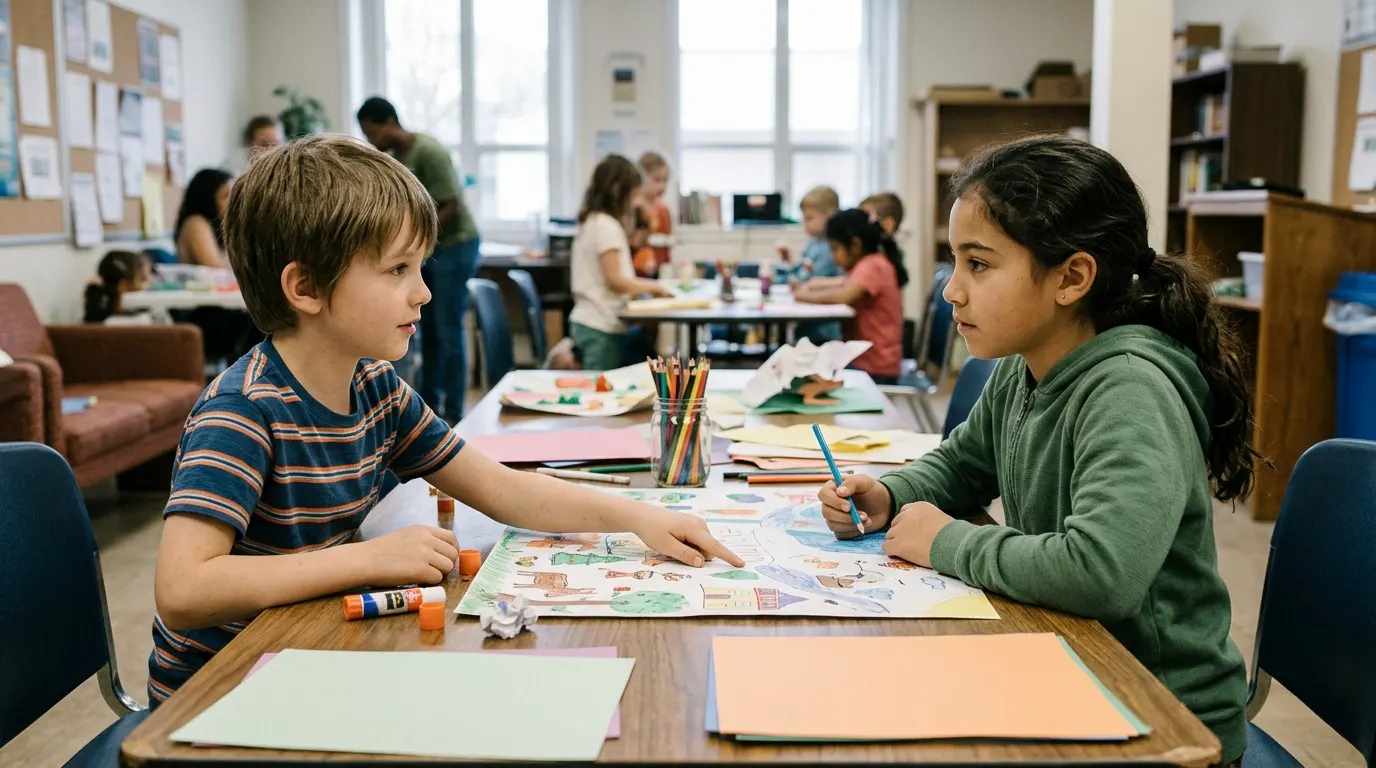
5. Practise Disagreement With Friends and Classmates
Disagreeing with a parent is different from disagreeing with a classmate. The relationship, setting, and available choices can change what is appropriate.
Help your child prepare for familiar situations rather than teaching one phrase for every conflict.
When a Friend Wants a Different Activity
Your child wants to draw. Their friend wants to play outside.
They might say:
“I’d like to draw right now. Do you want to draw together, or should we do different things for a while?”
This gives the friend room to choose without requiring your child to abandon their preference.
When a Classmate Disagrees During Group Work
Your child believes their idea would work better.
They could say:
“I have another suggestion. Could I explain it before we decide?”
Encourage your child to hear the classmate’s reasoning, too. The aim is a useful group decision, not winning an argument.
When Your Child Disagrees With a Teacher
Suppose a child thinks an assignment was misunderstood or a classroom decision was unfair.
If the situation is safe and appropriate for discussion, they might ask privately:
“I understood the instructions differently. Could you help me see what I missed?”
Older children may be comfortable offering a specific explanation or asking when they can discuss a concern.
But a child should not be expected to negotiate every serious concern alone. If the situation involves mistreatment, intimidation, discrimination, or another safety issue, they should be able to tell a parent, counselor, or other trusted adult rather than being instructed to handle it only through polite debate.
6. Practise Before an Argument Happens
It is difficult to learn a new communication skill while already upset. Short practice during a calm moment gives children a chance to experiment without the pressure of a real argument.
Responsive Classroom describes teaching respectful disagreement through modeling, observation, and repeated practice in a classroom setting. Families can adapt the general idea to low-pressure conversations at home.
A Five-Minute Practice Activity
- Choose a harmless difference: For example, whether a pretend family pet should be named Rocket or Biscuit.
- Model one response: “I prefer Rocket because it’s easy to remember. What do you like about Biscuit?”
- Switch roles: Let your child express the opposite opinion while you listen.
- Change one element: Practise asking a question, giving a reason, or accepting that you still disagree.
- End without forcing agreement: Notice what made the conversation comfortable and what could be said more clearly.
Do not turn the activity into a competition for the best argument. Avoid scoring your child’s tone or treating a disagreement as failure simply because no one changed their mind.
When the skill becomes familiar, invite your child to use it during a small real-life decision.
7. What to Do When Your Child Disagrees Rudely
Learning to disagree respectfully does not mean children will always express frustration well.
If your child shouts, “That’s the dumbest rule ever!” you can address both the message and the delivery.
For example:
“I can hear that you disagree with the rule. I want to understand your reason, but we need to talk without insults. Do you want to try again now or take a break first?”
This approach does not require pretending the insult was acceptable. It also avoids making the child’s original concern disappear.
If emotions are high, postpone the conversation until your child is more able to participate. The Child Mind Institute’s guidance on conflict-resolution skills recommends helping children manage intense emotions before asking them to solve the disagreement.
When the conversation resumes, keep the correction specific:
- Identify the words or behavior that caused the problem rather than labeling your child as disrespectful.
- Ask what they were trying to communicate.
- Help them find a clearer way to express the same point.
- Continue addressing the original issue instead of repeating the lesson about manners.
For a child who regularly shuts down when a conversation feels critical, how to start difficult conversations without making your child shut down covers the opening and timing of those talks in more detail.
8. Adjust the Skill to Your Child’s Age and Communication Needs
There is no single age when every child can manage an extended, two-sided disagreement. Keep expectations matched to their language, development, experience, and individual needs.
Preschoolers
Use short, concrete phrases such as “I want a turn,” “I like this one,” or “I don’t agree.”
Help them identify what they want and support them through waiting, disappointment, or taking turns when appropriate. They will generally need more adult guidance than older children.
Elementary-School Children
Help them add one reason, listen to another explanation, and suggest an alternative when a shared decision is needed.
Use examples from games, family plans, classroom projects, and everyday preferences.
Preteens and Teenagers
Give more room for explanations, questions, and different perspectives. Let older children challenge a decision’s reasoning without assuming that questioning it is inherently disrespectful.
They may also need help recognizing when a conversation has become repetitive and when to pause or return to it later.
Children Who Find Spoken Disagreement Difficult
Some children need extra processing time, visual reminders, or an alternative way to express their ideas.
They might prefer writing their view, practising privately, communicating with a trusted adult present, or using their usual communication supports.
Do not make sustained eye contact, an exact speaking volume, or a specific facial expression the universal test of respect. Focus on whether the child can communicate their position without intimidation or personal attacks, using a method accessible to them.
9. Teach That Respect Does Not Require Giving In
This lesson is particularly important for children who avoid disagreements because they worry about upsetting others.
Being respectful does not mean saying yes to everything, hiding discomfort, or letting the louder person decide.
Your child can:
- Have an opinion that differs from a friend’s.
- Decline an unwanted activity.
- Say that a joke or comment makes them uncomfortable.
- Ask an adult to explain a decision.
- End a conversation that is no longer productive, when it is safe to do so.
Also teach a clear safety exception: if someone threatens, hurts, coerces, or pressures your child to do something unsafe, they do not have to continue a respectful debate to protect the other person’s feelings.
They can refuse, move away when possible, and seek help from a trusted adult. Safety and personal boundaries come before conversational politeness.
10. Help Kids Accept That Some Disagreements Stay Unresolved
A successful disagreement does not always end with both people choosing the same thing.
Sometimes children can acknowledge a difference and move on. Sometimes they need more time or a decision from an adult. And sometimes they realize the relationship matters more than reaching agreement about an ordinary preference.
You can help your child recognize a few possible endings:
- Agreement: “We found a plan we both like.”
- Compromise: “We each changed part of our original idea.”
- Different preferences: “We still disagree, but we can leave it there.”
- A decision with limits: “I understand your reason. The rule still applies, and we can talk about it again when appropriate.”
- Outside support: “We cannot work this out safely or fairly by ourselves, so we need help.”
Do not use “agree to disagree” to dismiss a child who is reporting harm, exclusion, or a boundary violation. Those situations may require adult action even when another person sees things differently.
If the difficulty is specifically about siblings negotiating minor shared problems, our separate guide to helping siblings solve small conflicts on their own provides a process for reaching a workable solution.
Common Mistakes That Make Respectful Disagreement Harder to Learn
Even well-intentioned guidance can become confusing if the expectations change depending on who is speaking.
- Calling every objection backtalk: Children may stop distinguishing between questioning a decision and behaving hurtfully. Make the acceptable ways to disagree explicit.
- Requiring an immediate perfect response: A frustrated child may need time to think or calm down before explaining their view.
- Demanding agreement as proof of respect: A child can understand another person’s position without changing their own.
- Correcting tone but ignoring the concern: Address inappropriate behavior while still returning to what the child was trying to communicate.
- Changing every boundary after a well-worded objection: Listening seriously does not mean every rule is negotiable. Explain the relevant limits consistently.
Parents will sometimes handle a disagreement poorly, too. If you interrupted, dismissed a reasonable question, or raised your voice, acknowledge that specifically and demonstrate a better response when possible.
Your actions provide a more convincing example than telling your child to show respect while refusing to model it yourself.
Try One Respectful Disagreement This Week
Choose one harmless decision where your child genuinely has room to express a preference: a family activity, a game, or part of a weekend plan.
Invite a different opinion. Ask for one reason. Give your own view without dismissing theirs. Then decide whether the situation calls for agreement, compromise, or simply accepting two different preferences.
Afterward, you can ask a short question:
“Did you feel like you could tell me what you thought, even though we didn’t completely agree?”
Pay attention to how your child answers. If they say no, ask what would have helped them express their view. That gives you something specific to adjust the next time.
The goal is not a child who never argues. It is a child who gradually learns to express disagreement, listen without surrendering their own viewpoint, respect boundaries, and know when to seek help.
Start with one small conversation. The useful practice is learning that people can think differently and still treat each other with dignity.