
How to Help Kids Handle Disappointment in Everyday Life
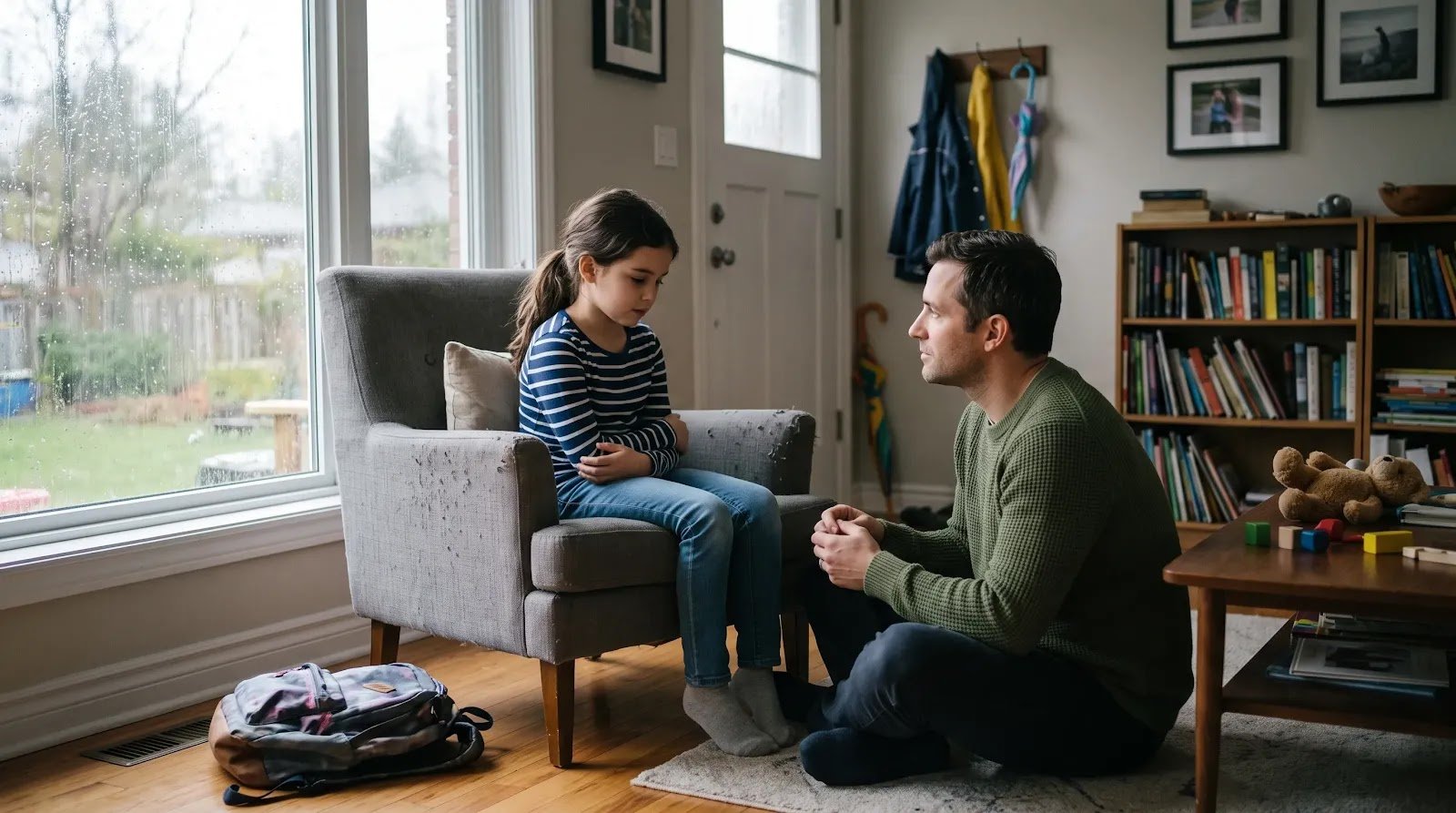
The birthday party is canceled.
The toy they wanted is not coming home with you.
Their friend cannot play.
They did not get the part, score, grade, or answer they hoped for.
To an adult, some of these disappointments may look small.
To a child who was counting on a different outcome, they can feel very real.
Helping kids handle disappointment does not mean making the feeling disappear.
It means helping them experience the letdown, stay within reasonable behavioral limits, and gradually learn what to do when life does not go the way they hoped.
A simple response to remember is:
Name It → Hold What’s True → Allow the Feeling → Find the Next Step.
1. Name It: Let the Disappointment Be Real
When your child is upset, your first instinct may be to make it better:
“It’s not a big deal.”
“We’ll get something else.”
“Don’t be sad.”
“There will be another chance.”
Those responses usually come from kindness.
But perspective works better after your child knows you understand why the outcome mattered.
Try:
“You were really looking forward to going. You’re disappointed that it got canceled.”
Or:
“You really hoped they would choose you. It hurts that they didn’t.”
Current CDC emotion-coaching guidance recommends noticing, listening to, naming, and validating children’s emotions while still setting limits on behavior when needed.
HealthyChildren.org similarly describes emotion coaching as acknowledging and naming feelings rather than treating the emotion itself as the problem.
2. Hold What’s True: Do Not Change Every Outcome
Your child can be disappointed and the answer can still be no.
They can want another episode and screen time can still be finished.
They can desperately want the toy and you can still leave the store without it.
They can hate that the outing was canceled and the outing can still be canceled.
Try combining empathy with clarity:
“You really wanted another episode. I understand why you’re disappointed. We’re still stopping for tonight.”
Or:
“I know you wish I could change the answer. I can’t change it.”
You do not need five new explanations once the limit is clear.
Repeatedly arguing the case can accidentally turn a finished decision into an ongoing negotiation.
Do Not Rush to Replace Every Disappointment
Some problems should be fixed.
If a missing homework page can easily be printed again, print it.
If plans changed because somebody entered the wrong time, correct the mistake.
But some disappointments do not have a replacement.
Your child was not invited.
The item is too expensive.
The team chose someone else.
A friend canceled.
The weather ruined the outing.
Immediately creating a substitute every time can make it harder for a child to learn that disappointment can be felt without needing to be erased.
Sometimes the useful response is simply:
“I can’t fix this one. I’m here while you’re disappointed.”
If your instinct is to solve almost every difficult feeling your child brings you, how to listen to your child without fixing every problem goes deeper into that pattern.
3. Allow the Feeling Without Allowing Every Behavior
Disappointment is allowed.
Hitting is not.
Feeling furious about losing something is allowed.
Breaking it is not.
Being upset that the answer is no is allowed.
Insulting everyone in the room is not.
Try:
“You can be really disappointed. You may not throw the game pieces.”
Or:
“I know you’re angry about the plan changing. You may not kick the door.”
This distinction is especially important because validating a feeling does not require approving whatever behavior follows it.
For younger children who are deeply overwhelmed, CDC guidance recommends safety and calming first, with emotion coaching after the child is able to engage again.
Do Not Demand an Immediate Recovery
Your child hears bad news.
You acknowledge the disappointment.
Five seconds later:
“Okay, but let’s move on now.”
Sometimes children recover quickly.
Sometimes they need a little time.
You do not need to turn disappointment into an all-day event—but you also do not need to produce a cheerful child on schedule.
Depending on age and situation, the next few minutes might involve:
- Quiet company.
- A little space.
- A hug if they want one.
- A drink or snack.
- Sitting somewhere calmer.
- Simply not discussing the problem for a few minutes.
The first goal is not perspective.
It is getting through the first wave safely.
4. Find the Next Step After the First Wave Passes
Once your child is calmer, help them sort the situation into two categories:
What cannot change?
and:
What can I still do?
A friend canceled today’s plan.
You cannot uncancel it.
But your child might:
- Ask about another day.
- Choose something else to do.
- Take some quiet time first.
A grade was lower than expected.
The grade may already be final.
But your child might:
- Ask what they misunderstood.
- Practice something before the next assignment.
- Talk with the teacher if clarification is appropriate.
HealthyChildren.org’s resilience guidance encourages helping children notice what remains within their control rather than treating a setback or disappointment as permanent.
But not every disappointment needs to become a lesson.
Sometimes the next step is:
“Nothing needs fixing. Today just didn’t go the way you hoped.”
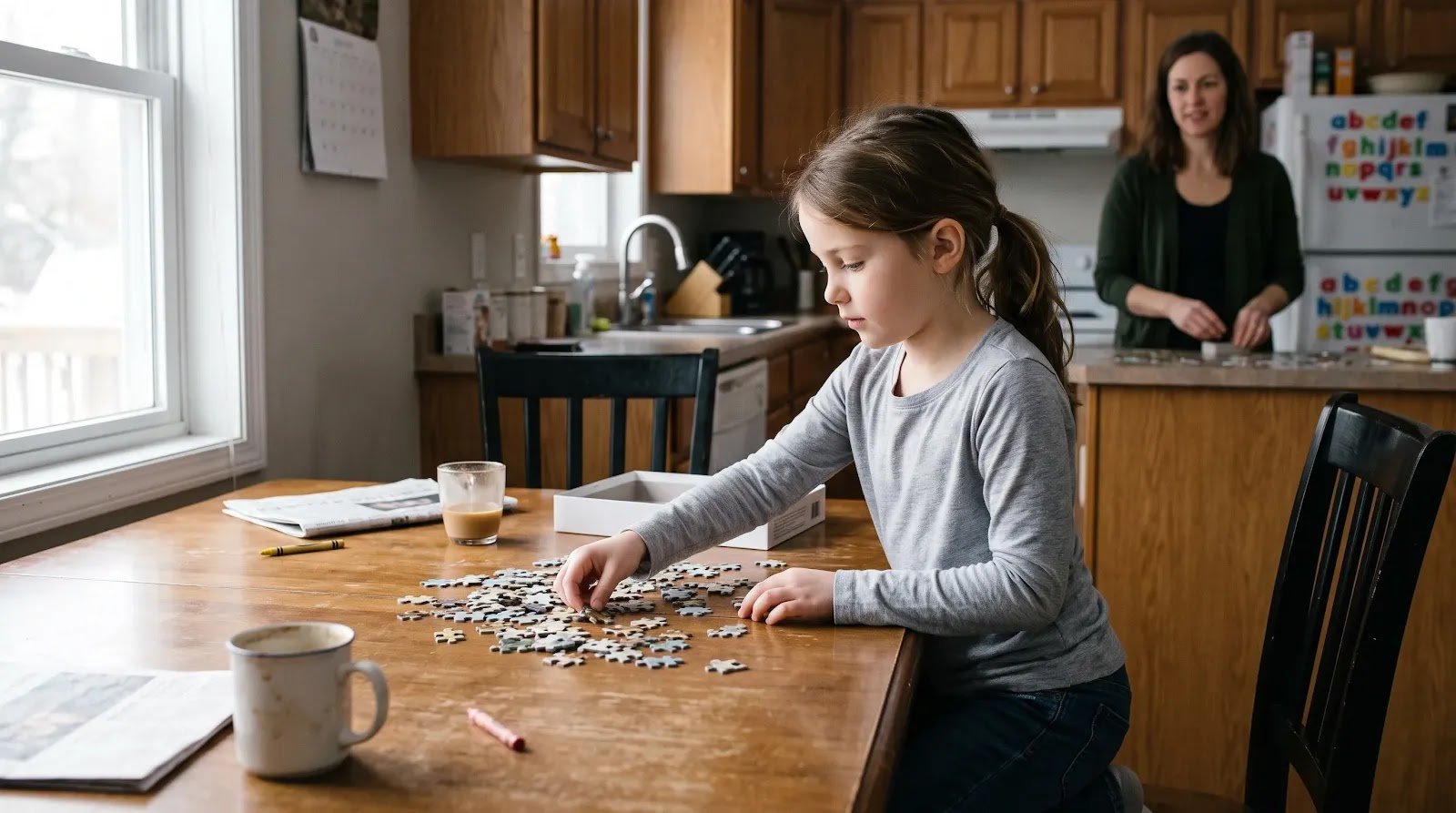
Keep Small Disappointments the Size They Are
Sometimes the child’s disappointment becomes the parent’s emergency.
A missed invitation becomes an investigation.
A lower grade becomes an hour-long strategy meeting.
Not getting picked becomes an immediate hunt for another opportunity.
Before intervening, ask:
“Does my child need me to solve this?”
“Do they need me to listen?”
“Can this manageable disappointment simply be something they experience with support?”
Support does not always require intervention.
Sometimes staying available while your child handles an ordinary setback is the support.
Do Not Turn Disappointment Into Forced Positivity
“Look on the bright side.”
“At least…”
“Everything happens for a reason.”
A little perspective may eventually help.
Timing matters.
If your child just learned they were not invited, did not get selected, or lost something important to them, immediately listing reasons they should feel grateful can sound like:
“You shouldn’t feel this.”
Give the disappointment some space first.
Later you might ask:
“Do you want to think about what could still make the weekend good, or would you rather leave it alone for now?”
The goal is flexibility—not requiring every unwanted experience to become an inspirational lesson before bedtime.
Be Careful With “At Least”
Your child says:
“I didn’t make the team.”
You answer:
“At least your friend did.”
Or:
“At least you tried.”
The statement may be factually true.
It may also arrive too early.
Try acknowledging first:
“You worked hard and really wanted that spot. I know you’re disappointed.”
Perspective can come later if your child wants it.
Do Not Automatically Contact Another Adult to Remove the Setback
Your child does not make the team.
Gets a disappointing grade.
Has a friendship problem.
Is left out of an activity.
There are situations where adult intervention is appropriate—especially around safety, bullying, unfair treatment, or a legitimate school concern.
But ordinary disappointment does not always need a parent to immediately contact the coach, teacher, friend, or another parent.
For school-age children and teens, ask first:
“Do you want me to listen, help you think through options, or is there something you need an adult to help with?”
This helps preserve support without automatically taking over the problem.
Differentiate Everyday Disappointment From Losing
Disappointment covers many situations:
A canceled plan.
A denied request.
A disappointing grade.
Not being invited.
Something selling out.
A friend becoming unavailable.
Competition adds another layer: there is often a winner, a loser, sportsmanship, and behavior toward the other person.
If the recurring problem is specifically that your child melts down after losing games or competitions, how to help a child handle losing without melting down focuses on that narrower skill.
Let Your Child See You Handle Ordinary Letdowns
Children watch adults encounter disappointment too.
You do not need to pretend everything is fine.
Let them occasionally hear a realistic recovery:
“I’m disappointed the restaurant is closed. I was looking forward to it. Let’s figure out another plan.”
Or:
“That didn’t go how I hoped. I’m frustrated, so I’m going to take a minute before I decide what to do.”
The useful lesson is not perfect calm.
It is that disappointment can be named, felt, and eventually followed by another action.
Adjust Your Response to Age
Preschoolers and younger children: Keep words short and concrete. They may need much more adult help while the feeling passes.
For example:
“You wanted the blue cup. It’s being washed. You’re mad about that. You can use the green or yellow one.”
Do not expect a preschooler to discuss perspective calmly during the peak of a strong reaction.
School-age children: Once calm, help them distinguish between what cannot change and what they can still do. Ask whether they want listening, ideas, or time.
Preteens and teens: Disappointment may involve friendships, grades, sports, social plans, independence, or opportunities that feel very important. Avoid minimizing the event simply because you know it may look smaller years from now.
Start with the experience they are having now.
When Disappointment Seems Bigger Than the Situation
One intense reaction does not automatically mean something is wrong.
Age, temperament, tiredness, hunger, accumulated stress, and how much the child cared about the outcome can all affect the response.
Look at the broader pattern.
Consider talking with your child’s pediatrician or another appropriate qualified professional if reactions to ordinary setbacks are consistently extreme, prolonged, or significantly interfere with school, sleep, relationships, eating, activities, or everyday functioning—or if you have another concern about your child’s emotional well-being.
This is not about diagnosing disappointment.
It is about noticing when the difficulty extends well beyond ordinary letdowns.
Use the Four Steps When You Do Not Know What to Say
Your child’s plan falls apart.
The answer is no.
They do not get what they hoped for.
Return to:
1. Name It:
“You’re really disappointed.”
2. Hold What’s True:
“The answer is still no,” or “The plan really is canceled.”
3. Allow the Feeling:
Give disappointment some room without allowing unsafe or hurtful behavior.
4. Find the Next Step:
When your child is ready, ask what is still within their control.
Sometimes the next step is a new plan.
Sometimes it is practice.
Sometimes it is asking for help.
And sometimes there is nothing to do except feel disappointed and let the feeling gradually pass.
That is part of the skill too.
The goal is not a child who never minds hearing no, missing out, or seeing plans change.
It is a child who gradually learns:
“I don’t like this outcome. I can feel disappointed. And I can still handle what comes next.”