
How to Give Clear Instructions Kids Can Actually Follow
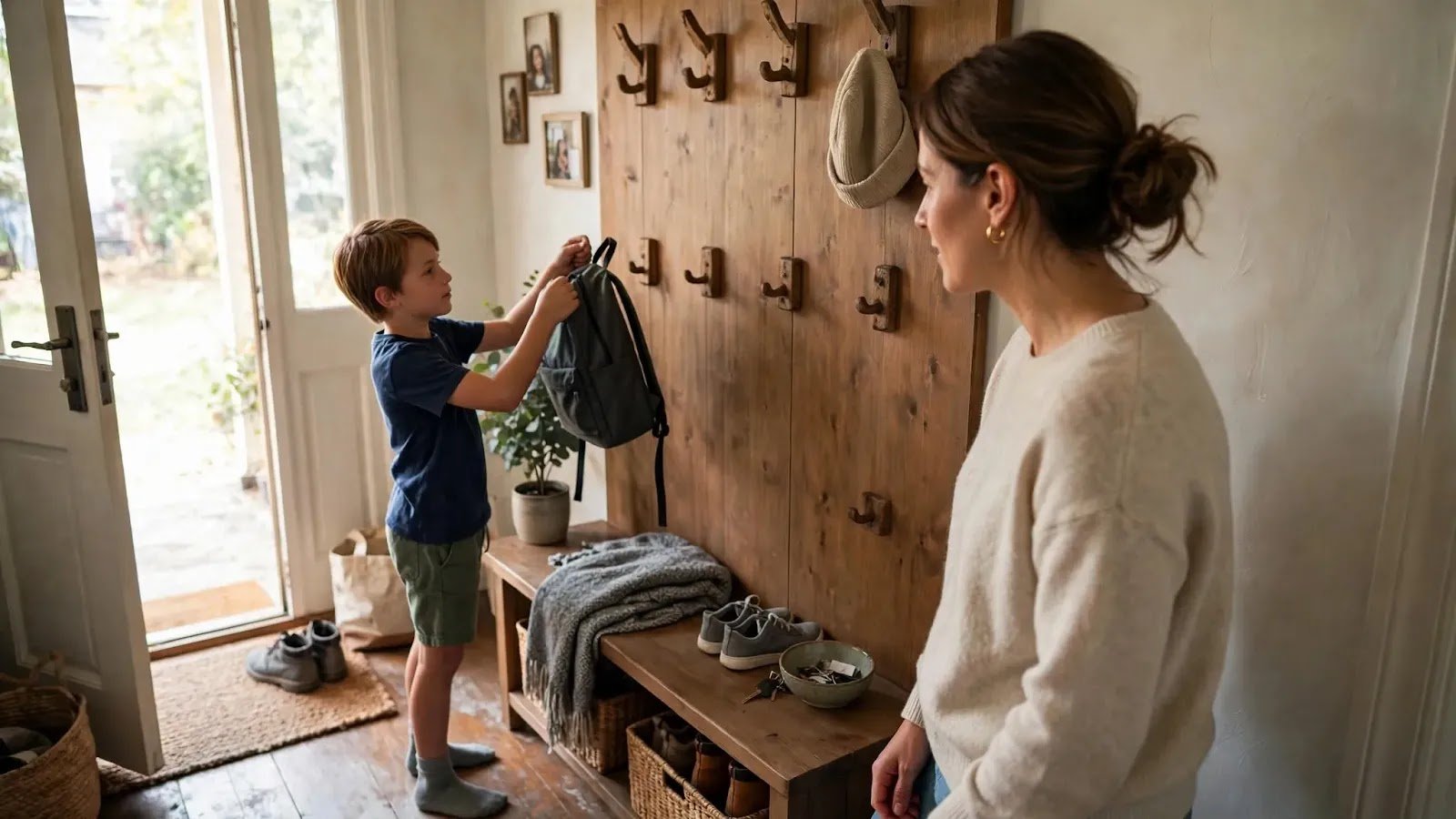
“Go get ready.”
Five minutes later, your child returns wearing one sock and carrying a toy dinosaur.
You stare at them.
They stare back.
To you, “get ready” meant: use the bathroom, get dressed, brush teeth, find shoes, finish packing, and meet by the door.
To your child, it may not have described any specific action at all.
Before deciding your child “doesn’t listen,” debug the instruction itself.
A direction is easier to follow when your child:
- Actually received it.
- Knows the exact action you mean.
- Can manage the number of steps.
- Knows what “finished” looks like.
Think:
Attention → Action → Size → Finish Line.
1. Attention: Make Sure the Instruction Arrived
You are in the kitchen.
Your child is in another room building, watching, reading, or deeply involved in play.
You call:
“Put your shoes on!”
No response.
So you say it louder.
But before deciding they ignored you, ask:
Did I know they were attending to me when I gave the direction?
The CDC’s current guidance on giving directions recommends getting the child’s attention first—for younger children, that can mean moving closer, saying their name, and making sure they are actually attending before speaking.
You do not need to demand intense eye contact from every child.
You do need some sign that the direction entered the conversation.
Compare:
From another room:
“Clean up! We’re leaving!”
with:
Nearby:
“Maya, pause for a second. Put the blocks in the basket. We’re leaving after that.”
The second instruction has a much better chance of being received.
2. Action: Name Something the Child Can Actually Do
Consider:
“Be good.”
“Behave.”
“Fix your attitude.”
“Get yourself together.”
Adults may know what those phrases mean in context.
Children may not.
HealthyChildren.org recommends clear, age-appropriate directions and specifically cautions against broad instructions such as “You’d better be good.”
Replace the abstract goal with an observable action.
Instead of:
“Behave in the store.”
try:
“Stay beside the cart and ask before picking something up.”
Instead of:
“Clean up.”
try:
“Put the blocks in the blue basket.”
Instead of:
“Stop being wild.”
try:
“Walk inside the house.”
A strong instruction creates a picture of what success looks like.
Tell Kids What to Do, Not Only What to Stop
“Don’t run.”
“Stop yelling.”
“Don’t throw that.”
Those identify the problem, but they may not tell the child what replaces it.
The CDC recommends stating the desired behavior clearly.
- “Don’t run” → “Walk beside me.”
- “Stop yelling” → “Use your regular voice.”
- “Don’t throw the car” → “Put the car on the floor gently.”
This is especially useful with younger children, who may stop one behavior without knowing what the acceptable alternative is.
Make a Direction Sound Like a Direction
Sometimes parents soften a required instruction until it sounds optional:
“Could we maybe think about putting shoes on soon?”
If shoes need to go on now, say:
“Please put your shoes on now.”
Respectful and direct can exist in the same sentence.
Likewise, avoid asking:
“Do you want to get dressed?”
if “no” is not actually an available answer.
You can still offer a real choice inside the requirement:
“It’s time to get dressed. Blue shirt or green shirt?”
The CDC specifically recommends limited choices between acceptable options when appropriate.
3. Size: Match the Number of Steps to the Child
Listen to this:
“Go upstairs, put your pajamas on, put your dirty clothes in the hamper, brush your teeth, bring your water bottle down, and pick your book.”
An adult hears a logical sequence.
A young child may hear:
“Go upstairs.”
Then notice a Lego piece.
The evening takes a different turn.
CDC guidance stresses that directions should fit the child’s age and abilities and makes an important distinction:
Inability is not the same as disobedience.
For a younger child:
“Put your pajamas on.”
Then:
“Now put your dirty clothes in the hamper.”
CDC guidance recommends one direction at a time for toddlers and preschoolers because shorter instructions are easier for them to remember and complete.

Do Not Narrate Familiar Routines Forever
One-step instructions are a teaching tool—not the permanent goal.
A 4-year-old may need:
“Brush teeth.”
Then:
“Put pajamas on.”
An older child who has practiced the same sequence for years should gradually need less narration.
Move recurring instructions into a routine:
“After breakfast, do your morning routine.”
A checklist or predictable environment can carry some of the memory that used to live in your voice.
The Free Family Routine Builder can help when several recurring directions really belong in one repeatable sequence.
If your bigger problem is saying the same instruction five times even after the child understands it, see how to stop repeating yourself to your kids all day. That article focuses on repetition and follow-through; this one focuses on making the original direction clear.
Use “First, Then” When the Sequence Matters
Your child wants to play.
The backpack needs packing first.
Instead of several separate reminders:
“First pack your backpack, then screen time.”
Or:
“First shoes on the shelf, then go play.”
The sentence gives the child a clear first action and a clear next event.
Use “first, then” to describe the real plan—not as a threat you do not intend to follow.
4. Finish Line: Define What “Done” Means
You say:
“Clean your room.”
Your child puts three toys away.
“Done!”
You walk in and see clothes, books, cups, and craft supplies.
You think they avoided the task.
They may genuinely think they completed what you meant.
Define the endpoint.
“Clean your room today means toys in bins, dirty clothes in the hamper, and dishes in the kitchen. The bed doesn’t need to be made.”
Or:
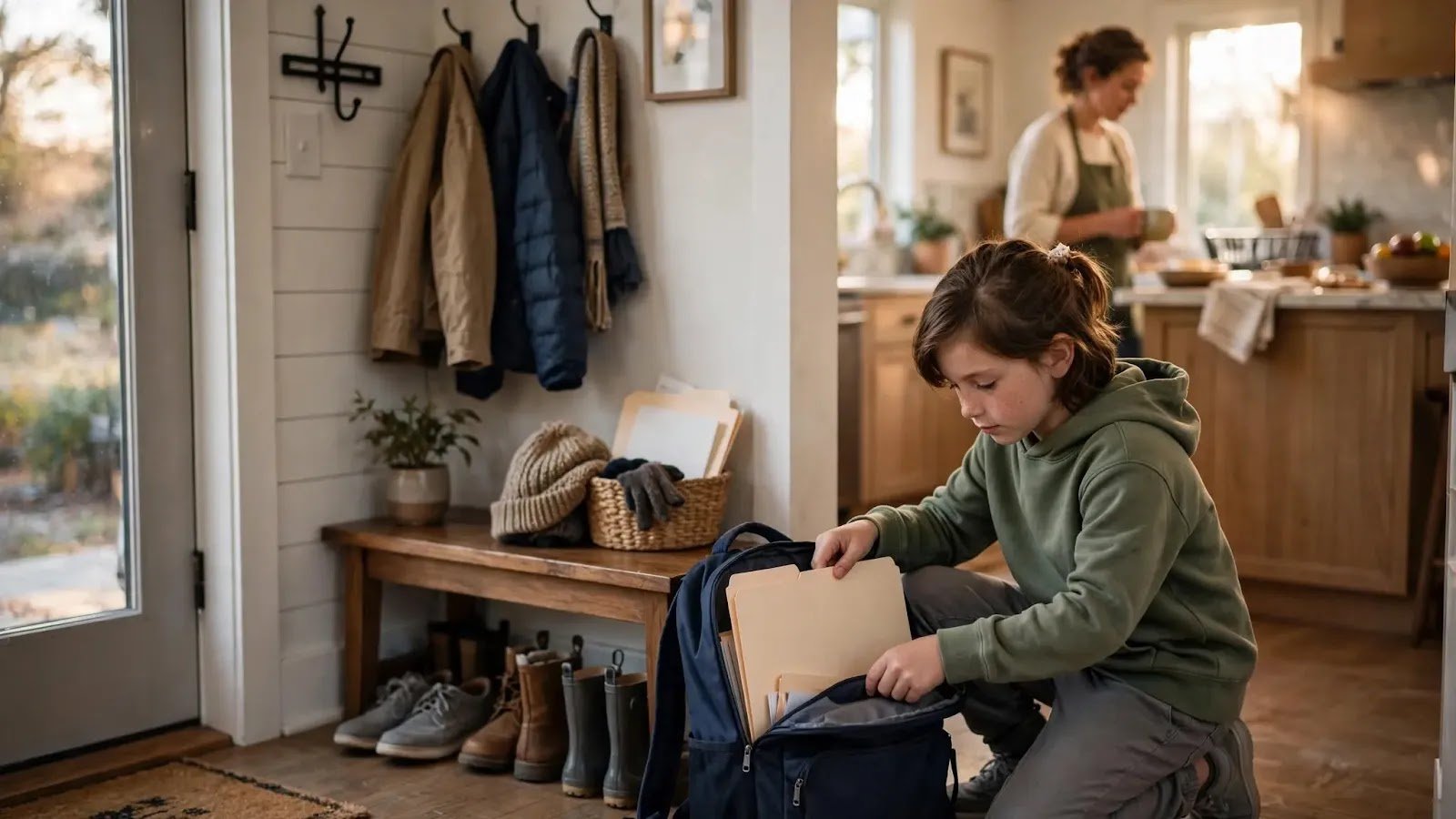
“Homework is finished when the work is done and the folder is back in your backpack.”
Or:
“Ready to leave means shoes on, backpack on, and you’re by the door.”
Now you and your child are evaluating the same job.
Do Not Keep Adding Jobs Mid-Instruction
You say:
“Put your plate in the sink.”
Your child gets up.
Then:
“Grab your water bottle too.”
Then:
“And take your shoes upstairs.”
Then:
“Don’t forget your sweater.”
The original direction has become a moving target.
Unless something is urgent, let the child complete the first task before adding another.
Use Explanations Only When They Help the Action
A child is stepping toward a parking lot.
This is not the time for a paragraph about traffic safety.
Say:
“Hold my hand.”
Explain when you are safe.
In lower-pressure situations, a short reason can clarify the action:
“Move the glass farther from the edge so it doesn’t get knocked over.”
The explanation should support the direction—not bury it.
Use Repeat-Back Selectively
You do not need:
“Repeat what I just told you.”
after every ordinary request.
But repeat-back can help when:
- There are several steps.
- Safety matters.
- The plan is unusual.
- This task is frequently misunderstood.
Try:
“Tell me the plan before you go.”
Your child says:
“Helmet on, stay on our block, come home when the timer rings.”
Now you know whether the plan you said is the plan they heard.
HealthyChildren.org also recommends having children relay directions back when you need to check understanding.
Give a Short Moment to Shift Gears
You give the direction.
Your child pauses.
Before they move, you repeat it.
Then repeat it again.
Some children need a brief moment to shift attention from one activity to another.
If there is no safety urgency, look for movement toward the direction rather than demanding an instantaneous response.
A short processing pause is different from hearing:
“Put your shoes on now.”
and choosing to continue playing for another ten minutes.
Skip Sarcasm and Say the Actual Request
“Do you think the dishes will walk themselves to the kitchen?”
“Wow, I wonder who left these shoes here.”
Adults understand the implied request.
Children may mostly hear irritation.
Say:
“Please take your plate to the kitchen.”
Clear communication asks less decoding from everyone.
Notice When the Direction Works
Your child puts away the shoes.
You immediately move to the next task.
Sometimes pause long enough to say:
“Thanks for doing that when I asked.”
Or:
“You remembered all three steps.”
CDC guidance recommends specific praise when children follow directions so they know exactly what behavior worked.
You do not need to celebrate every ordinary request.
But successful listening should not become completely invisible while failed listening gets all the attention.
When the Instruction Is Clear and the Answer Is Still “No”
A perfectly clear instruction cannot guarantee cooperation.
You can:
Get close.
Use a specific action.
Give one manageable step.
Define “done.”
And your child may still say:
“No.”
At that point, stop redesigning an instruction they already understand.
You can say:
“I know you don’t want to stop playing. The direction is still to put your shoes on.”
Now the problem has moved from comprehension to boundaries and follow-through.
If a consequence is needed, how to explain consequences without lecturing can help keep that next step brief.
Scale Instructions Down as Independence Goes Up
Toddlers and preschoolers: Use short, concrete, mostly one-step directions.
“Put the car in the basket.”
“Hold my hand.”
Early elementary kids: Familiar two- or three-step routines may become manageable, while new tasks still need breaking down.
“Put your lunchbox in the kitchen, hang your backpack, then wash your hands.”
Older elementary kids: Shift toward outcomes.
“Before dinner, clear everything off your bedroom floor and put it where it belongs.”
Tweens and teens: Use expectations and deadlines more than constant commands when they can manage the details independently.
“Be ready to leave by 5:30 with your equipment.”
The goal of clear instructions is not to control every movement more precisely.
It is to give enough information for success—and gradually need to provide less as the skill becomes theirs.
Run the Instruction Debugger Before Repeating Yourself
The next time a direction goes nowhere, check four things:
Attention: Did I know they received it?
Action: Did I name the exact behavior I wanted?
Size: Was the task manageable for this child’s age and familiarity?
Finish line: Did they know what completing it looked like?
If one of those failed, improve the instruction.
If all four were clear and your child still chose not to do it, that tells you something useful too:
The problem is probably no longer understanding what you asked.